Remote Heart Rate Detection | rPPG
Labvanced supports remote photoplethysmography (rPPG), allowing researchers to collect heart rate (BPM) data using participants’ webcams, eliminating the need for physical sensors or lab equipment. Physiological measurements can be recorded remotely or online, during cognitive, behavioral, or affective tasks, without the need for physical sensors.
Overview | What is rPPG?
Remote photoplethysmography (rPPG) is a computer-vision–based method for estimating heart rate by analyzing subtle changes in skin color caused by blood flow. These changes are captured using a standard camera, such as a participant’s webcam.
Unlike traditional PPG, which requires contact sensors (e.g., finger clips or wearables), rPPG works without physical contact, making it suitable for remote, online, and naturalistic research settings.
rPPG enables the integration of cardiovascular signals into remote and large-scale studies, expanding what can be measured beyond self-report and behavioral data.
rPPG in Labvanced: How it works
Labvanced integrates rPPG directly into the experimental workflow, allowing researchers to collect physiological data alongside behavioral and task-based measures. Activating remote heart rate detection can be done with just a few simple clicks.
rPPG in Labvanced
- Activated easily as part of a study configuration
- Runs during tasks, stimuli presentation, or defined time windows
- Can be combined with surveys, reaction time tasks, and experimental manipulations
Participant Experience
- No wearables or sensors required
- Uses the participant’s webcam
- Client-side processing, ie. GDPR-compliant
- Suitable for remote participation on personal devices
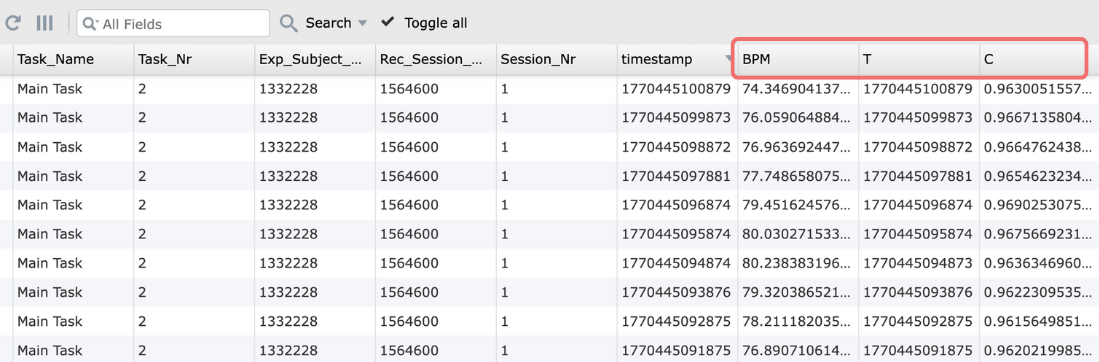
In this demo, remote heart rate detection is activated. The relevant values (BMP, timestamp, and confidence intervals of the measurement) will be displayed in real-time.
Data Collected with rPPG in Labvanced
- Heart rate (BPM)
- Time-stamped measurements aligned with experimental events
- Confidence intervals
- Exportable together with other study data for analysis
Methodological Foundation
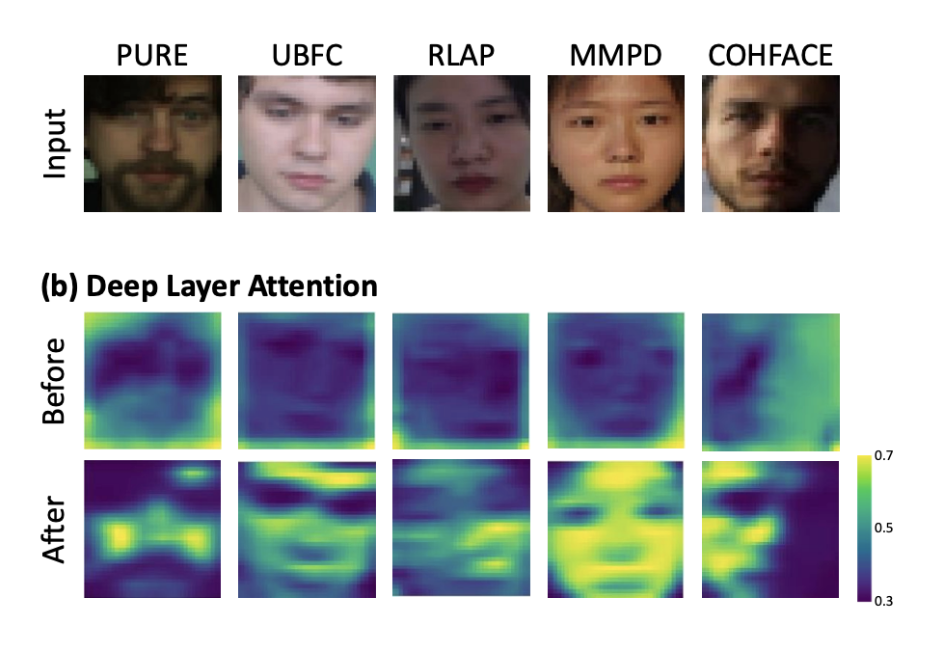
Labvanced’s rPPG implementation is based on computer-vision and signal-processing methods that demonstrate robust remote heart rate estimation from video recordings under realistic conditions.
This research-driven foundation ensures that rPPG measurements in Labvanced align with state-of-the-art scientific methods while remaining practical for online experimental use.
Benefits | rPPG in Behavioral and Cognitive Research
Physiological measures provide insight into processes that are not always accessible through self-report or behavior alone. rPPG makes these measures accessible in online research environments.
Key research benefits:
- Multimodal integration
- Combines heart rate data with behavioral, cognitive, and self-report measures
- Non-intrusive measurements
- No physical sensors that could interfere with task performance or participant comfort
- Remote data collection
- Enables physiological research outside the lab
- Scalable study designs
- Supports larger and more diverse participant samples
Use rPPG in your next study
rPPG extends Labvanced’s capabilities beyond behavioral data, enabling researchers to collect physiological signals remotely.
- Combine heart rate with cognitive tasks and surveys
- Run studies remotely at scale
- Expand the range of measurable research outcomes
Explore rPPG in Labvanced or contact us to discuss physiological measurement options for your research.