Remote Physiological Measurement
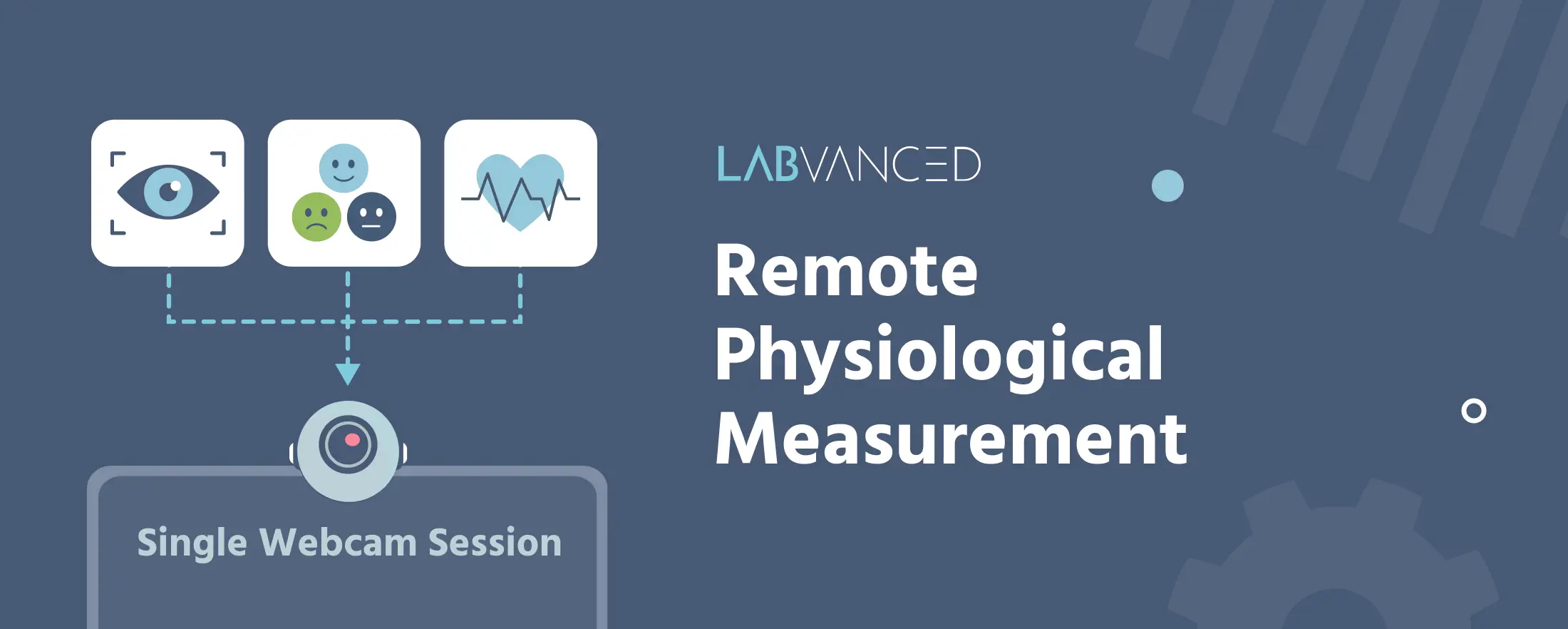
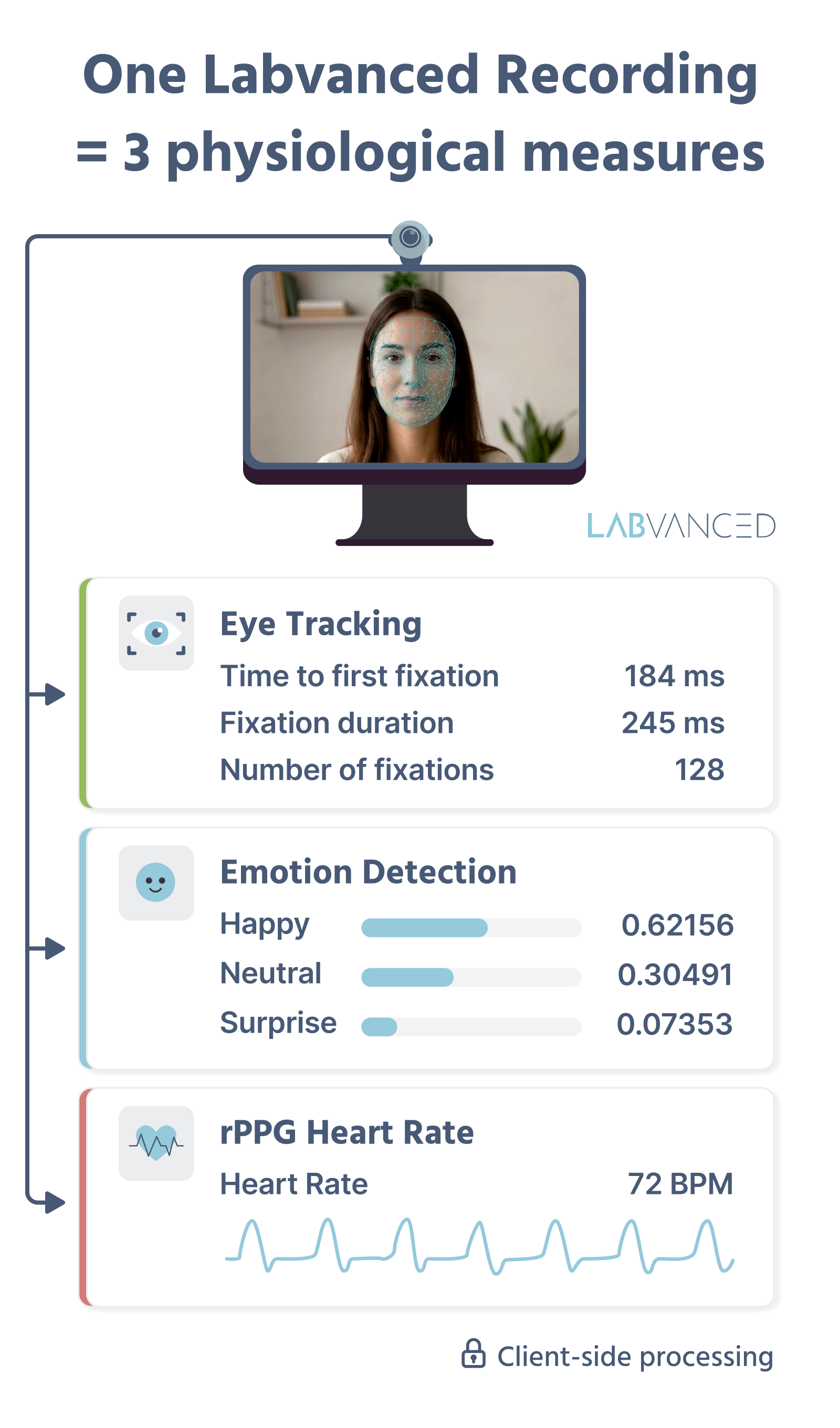
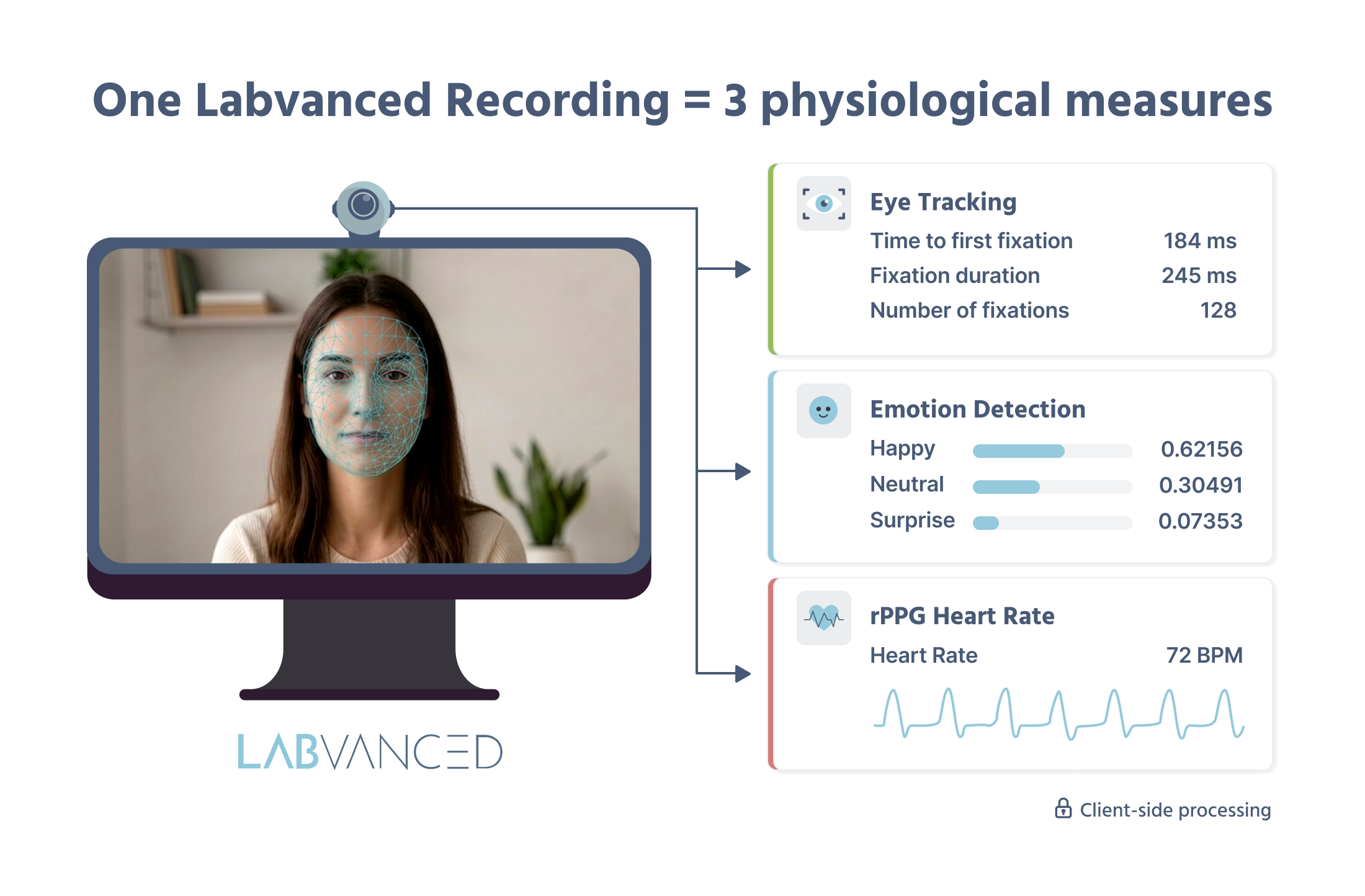
Labvanced enables remote physiological monitoring by capturing three physiological signals, eye tracking, emotion detection, and heart rate detection (rPPG), from a single participant webcam at the same time. Researchers can combine gaze, facial expression, and cardiovascular data in one study without purchasing an EEG system, GSR sensors, or a dedicated hardware eye tracker.
Table of Contents
Overview | What Is Remote Physiological Measurement?
Physiological measurement is the use of bodily signals, gaze behavior, facial expression, cardiovascular activity, to index psychological and cognitive states. Traditionally, each signal has required its own dedicated hardware: an eye tracker, a facial-coding rig, a pulse oximeter or ECG electrodes, each with its own calibration procedure, its own data stream, and its own synchronization problem when combined.
Labvanced's Physiology Toolbox collapses that hardware stack into a single biosensing input: the participant's own webcam, controlled by a single Physiology Toolbox Version setting that governs all three signals at once.
Three Signals, One Webcam: How It Works
All three signals are processed by the same on-device pipeline that reads the participant's webcam feed, so enabling more than one does not mean opening more than one camera stream or asking the participant to grant permission twice. Each detector runs independently, gaze estimation and fixation detection, facial-expression classification, and rPPG-based heart rate estimation, and reports its output on a shared, time-aligned data grid so that a researcher can line up a gaze shift, a change in facial affect, and a heart rate fluctuation against the same trial timestamp.
The choice of which signals to run is entirely up to the researcher. A study that only needs gaze and facial affect, for instance, can enable eye tracking and emotion detection and leave heart rate detection off, with no requirement to turn on all three at once.
| Signal | What It Measures | Accuracy |
|---|---|---|
| Eye Tracking | Gaze position, fixations, Areas of Interest (AOIs) | 1.4 to 1.8 visual degrees accuracy (depending on configuration settings) for real online participants with Eye Tracking 2.0; 1.3 visual degrees and Pearson r > 0.9 vs. EyeLink 1000 in a controlled laboratory validation (Kaduk et al., 2024) |
| Emotion Detection | Categorical emotion labels, valence, arousal | Above 90% accuracy averaged across emotions, with variation between individual emotions (Labvanced's own proprietary algorithm; independent validation study outstanding) |
| Heart Rate Detection (rPPG) | Beats per minute (BPM), confidence interval | Expected within 1 to 3% of actual heart rate (Labvanced's own proprietary algorithm; independent validation study outstanding) |
Each detector is a separate feature toggle in the study's Physiology settings. All three process video on the participant's own device. No raw video ever reaches Labvanced's servers; only the numeric outputs (gaze coordinates, emotion labels, BPM values) are transmitted, which keeps every combination GDPR-compliant by design.
Why Researchers Don't Need to Own the Equipment
Running this kind of multimodal study through dedicated hardware typically requires an eye tracker, a facial-coding system or a trained human coder, and a pulse oximeter or ECG setup, purchased, calibrated, and synchronized separately, before the first participant is scheduled. That cost and complexity is a large part of why multimodal physiological research has stayed confined to well-funded labs.
Labvanced removes the equipment requirement entirely. Because gaze, facial affect, and heart rate all come from the same webcam feed, a participant needs nothing beyond the camera already built into their laptop or phone, in the lab or fully remote. This is also why the three signals are treated as a coordinated capability rather than three unrelated features: combined, they let a researcher measure attention (gaze), affective response (emotion), and physiological arousal (heart rate) in one session, a combination that would otherwise require assembling and synchronizing three separate pieces of hardware.
Methodological Foundation
Webcam eye tracking has been independently validated against hardware: a peer-reviewed comparison against the EyeLink 1000 found 1.3 visual degrees of accuracy and a Pearson correlation above 0.9 in a controlled laboratory setting (Kaduk et al., 2024). With Eye Tracking 2.0, that accuracy is now reached by real online participants on their own devices, ranging from 1.4 to 1.8 degrees depending on configuration settings.
Emotion detection and heart rate detection (rPPG) are Labvanced's own proprietary algorithms, based on published research in each field. Independent validation studies are still outstanding, and Labvanced is looking for research labs interested in running that work.
Data Collected
Combining eye tracking and emotion detection with remote physiological measurement means every study exports a full, structured record of simultaneous physiological data collection, not just raw video.
- Eye tracking: gaze position (X, Y), fixation count, fixation duration, time to first fixation, AOI-level metrics, timestamp, confidence interval
- Emotion detection: eight categorical emotion labels (angry, contempt, disgust, fear, happy, neutral, sad, surprise), continuous valence and arousal scores, timestamp, confidence score
- Heart rate detection (rPPG): beats per minute (BPM), timestamp, confidence interval
All three data streams are time-stamped against the same trial clock and exportable together with behavioral and questionnaire data in a single CSV, XLSX, or TSV file.
Webcam Eye Tracking
Capture gaze patterns and visual attention with built-in, code-free and peer-reviewed webcam eye tracking.
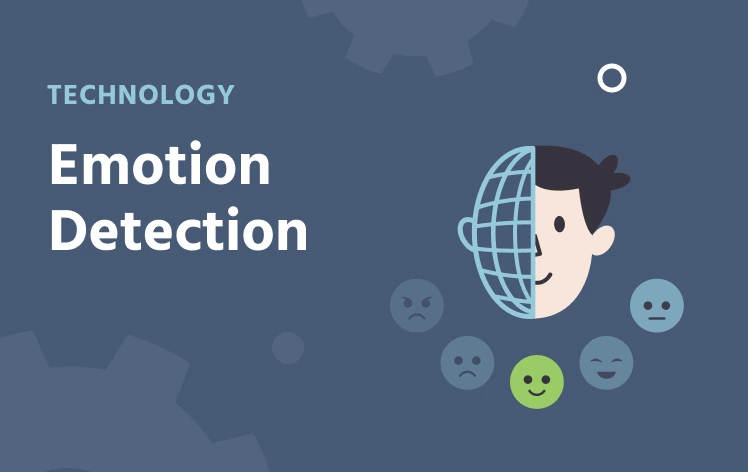
Emotion Detection
Classify facial expressions into categorical emotions with continuous valence and arousal scores.
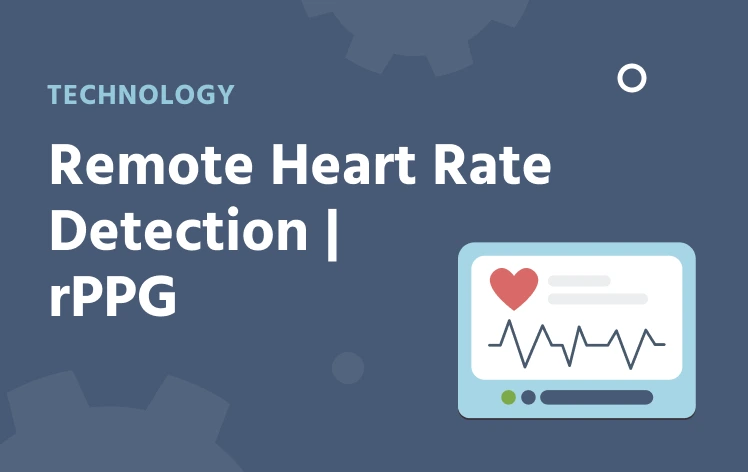
Heart Rate Detection (rPPG)
Estimate beats per minute from the participant's webcam feed using remote photoplethysmography.
Combine with Behavioral Data
Physiological signals sit on the same experiment timeline as everything else Labvanced records, so a study is rarely limited to eye tracking, emotion detection, and heart rate alone. These behavioral measures run in the same session and export on the same shared timestamp grid, lining up what a participant did against what their body was doing at the same moment:
- Mouse tracking: continuous cursor movement, useful for research on decision processes, hesitation, or interface interaction. See Mouse Tracking.
- Reaction time: millisecond-level response latency for each trial. See Precision Timing / Reaction Timing.
- Task responses: the participant's actual answers, choices, and ratings
Research Applications
Combining physiological signals opens research questions that no single measure can answer alone:
- Affective and attentional processing: relating what a participant looked at (gaze) to how they felt about it (emotion) and how aroused they were (heart rate) in the same moment
- Cognitive load and stress research: tracking heart rate alongside gaze and facial affect during demanding tasks, without wearable sensors
- Marketing and UX research: measuring visual attention, emotional response, and physiological arousal to an interface, advertisement, or product image in a single remote session
- Human-AI interaction: capturing how gaze, affect, and arousal shift as a participant interacts with an AI system or agent
- Remote and large-scale multimodal studies: running physiological protocols with distributed participant samples that would be logistically impossible with hardware-dependent methods
When Hardware Is the Right Choice Instead
Webcam-based measurement isn't a substitute for clinical instrumentation everywhere: EEG, GSR, and ECG-grade cardiac data all require physical sensors, and hardware eye trackers still beat webcam-based gaze estimation when a paradigm needs sub-degree precision or high sampling rates.
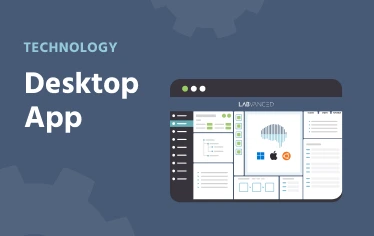
For research that genuinely requires that instrumentation, Labvanced's desktop app connects to EEG, GSR, and other hardware devices through the Lab Streaming Layer (LSL) protocol, so external hardware recordings can be synchronized against the same experiment timeline used for the webcam-based signals above. The right choice depends on the research question: webcam-based physiological measurement scales to remote, large, and distributed samples; hardware remains the standard where raw neural or electrodermal signal is the object of study itself.
Common Questions
Can eye tracking, emotion detection, and heart rate detection run in the same study?
Do I need special hardware to collect physiological data in Labvanced?
How accurate is webcam-based physiological measurement?
Is webcam-based physiological data collection GDPR-compliant?
Use Remote Physiological Measurement in Your Next Study
Combine gaze, facial affect, and heart rate data in a single remote or in-lab session, without assembling separate hardware for each signal.
- Enable any combination of eye tracking, emotion detection, and heart rate detection in the same task
- Run fully remote, in-lab, or hybrid studies with the same setup
- Export all three signals aligned to one experiment timeline, alongside behavioral and questionnaire data