
5 Famous Social Psychology Experiments
There are countless social psychology experiments that have been influential. Here, we highlight five powerful experiments in social psychology that have shaped the development of the field.

1. Solomon Asch’s Experiments on Conformity

Solomon Asch carried out a series of psychological tests known as the Asch Conformity Experiments in the 1950s to find out how much social pressure from the majority group could persuade a person to conform. Asch’s experimental hypothesis was centered around how people gave in to peer pressure and whether they would disregard their own opinions in order to fit in with the group. The experiment summary of the Asch conformity studies is that several lines with different heights are presented and the participant is challenged by the confederate’s answers to either agree or disagree.
The Asch experiment's basic design comprised a subject and a cohort of accomplices. The participants were informed that they would be performing a visual perception task in which they would need to match a given line's length to one of three comparison lines.
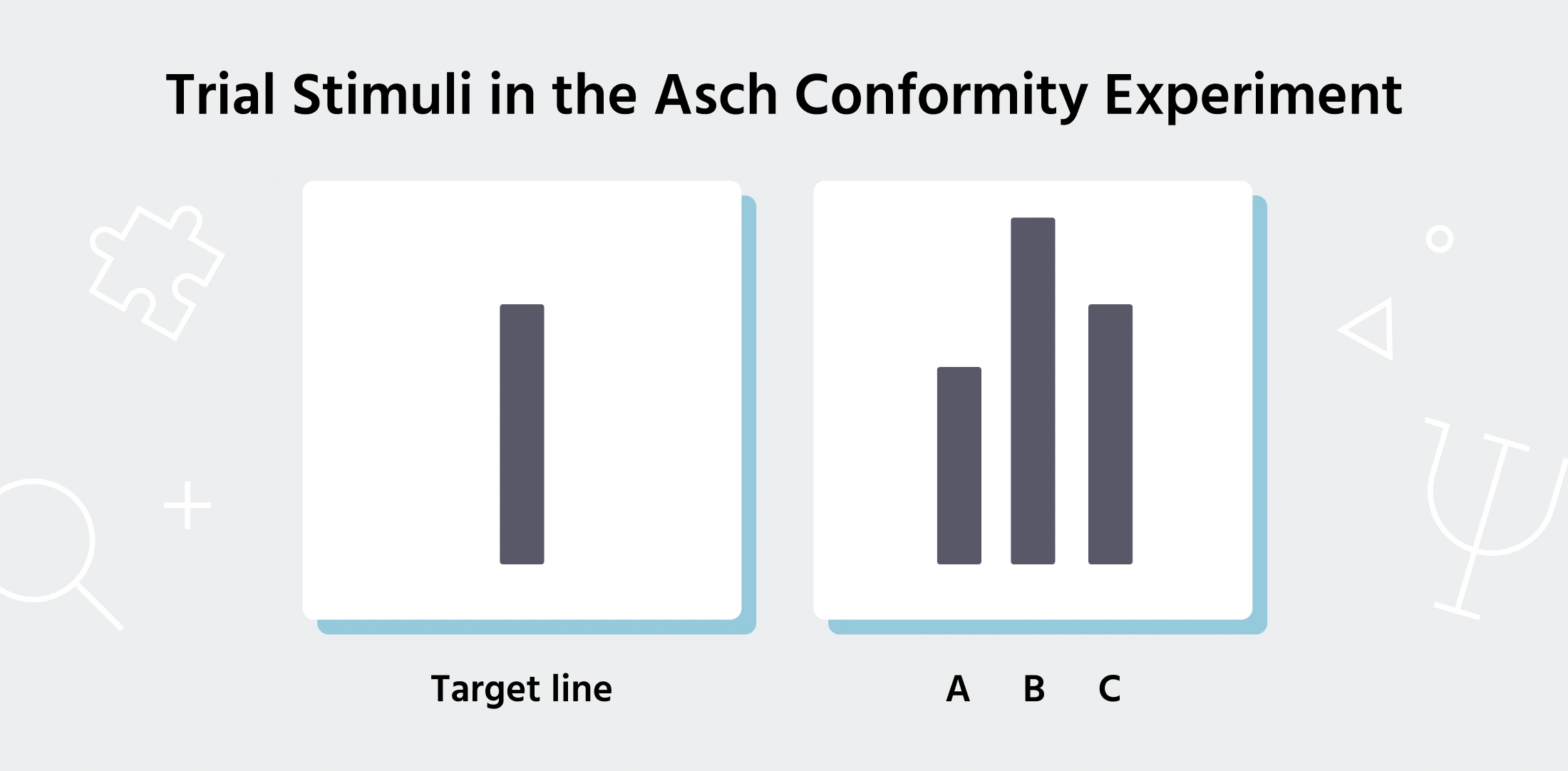
Out of all the participants in each group, only one was truly ‘naïve’; the others were ‘confederates’ who were told to provide false answers on purpose for specific trials. Thus, the ‘naive’ participant would be challenged by the ‘confederates’ who provided wrong answers. This would essentially place the ‘naive’ participant in a challenging position to be in.
Throughout the trials, the confederates would intentionally select the incorrect response. The crucial query was whether the ‘naive’ participant would follow their own accurate assessment or adhere to the false majority opinion. The results and findings demonstrated that even in cases where the right response was evident, a sizable portion of the ‘naive’ participants would agree with the confederate group's inaccurate responses.
The degree of conformity was influenced by several factors:
- Group Size: Up to a certain point, conformity grew in proportion to the size of the majority. The rate of conformity did not significantly increase after a certain number of confederates.
- Unanimity: A participant was far less likely to comply if even one other person in the group provided the right response. The pressure to fit in was significantly lessened when there was a dissident voice.
- Task Difficulty: Participants found it more difficult to trust their own judgment when the task was more ambiguous or difficult, ie. when the comparison lines were more similar in size, leading to an increase in conformity.
- Response Type - Public vs. Private: When participants were required to provide their answers in public, they were more likely to comply, as opposed to when providing answers privately. Thus, one factor that clearly affected conformity was the fear of social rejection.
Today, researchers increasingly weigh whether an AI-driven agent can take on this same confederate role instead of a trained human accomplice; see AI Confederate: Methodology and Validity for the methodological case and what doing it rigorously requires.
In summary, the Asch Conformity Experiment results emphasize the strong influence of social pressure on individual behavior and the propensity to conform even in the face of clear evidence to the contrary, have become classic studies in social psychology.
A preview of the data and Asch Conformity Experiment results recorded in Labvanced can be seen in the image below, such as the values for the presented line heights, choices, and reaction times:
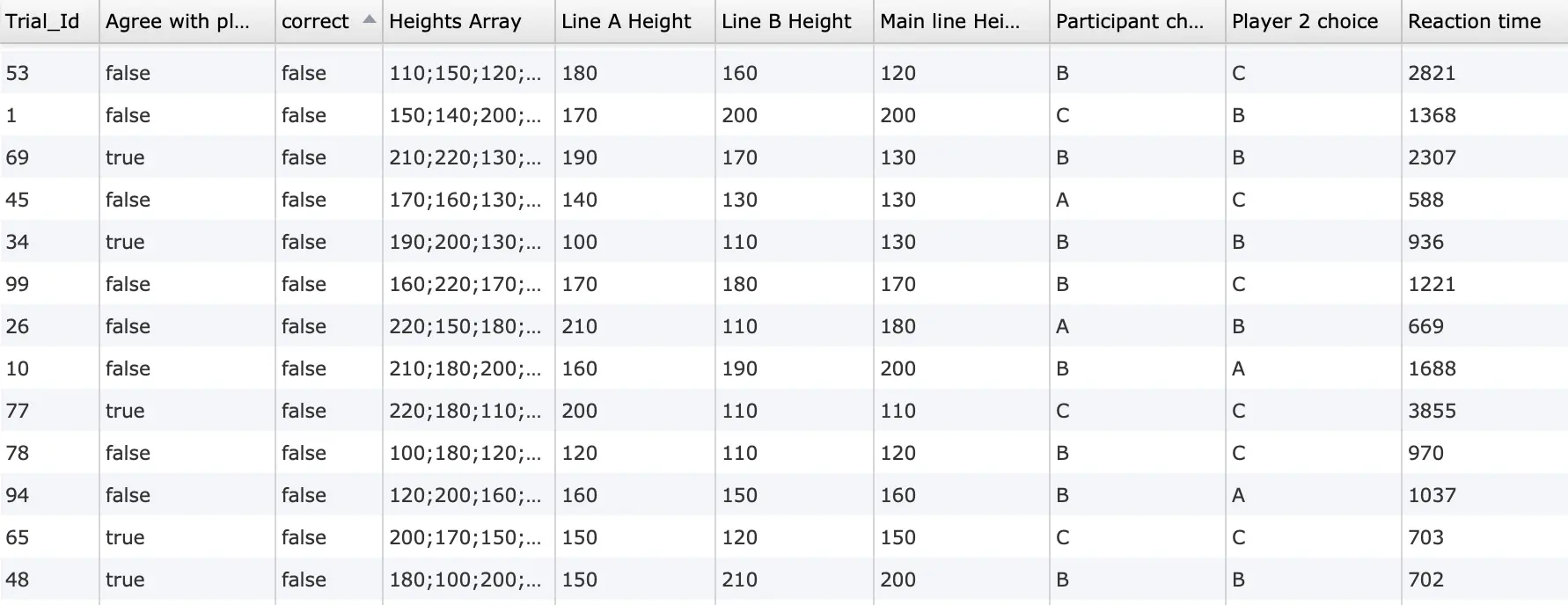
View of the data collected from an online version of the Asch Conformity Experiment conducted with Labvanced.
Try it out in Labvanced:
- Asch Conformity Experiment (single participant): In this Labvanced study, the participant indicates their selection after the confederate’s answer is displayed (this is done automatically by using variables and randomizing the choices).
- Asch Conformity Experiment (real-time, multi-participant): In this version of the Asch conformity study, two actual participants are required for the experiment to begin (the third player’s choice is automatically selected). You can simply import these studies and use them as a basis for your experiment but first you have to create your free account to begin.

2. Bobo Doll Experiment by Albert Bandura: Social Learning Theory

Social psychologist Albert Bandura carried out a groundbreaking study in 1961 called the Bobo Doll experiment, which made a substantial contribution to our understanding of children's social learning and aggression. Bandura was curious about how children learn to pick up new behaviors by imitation and observation.
In this experiment, children interacted with a life-sized inflatable doll called Bobo while being exposed to adult models who were aggressive and non-aggressive. The conditions of the study were as follows:
- Aggressive Model Condition: Children witnessed a role model act violently against the Bobo doll. Along with hitting and kicking, the aggressive actions included verbal abuse.
- Non-Aggressive Model Condition: Children witnessed a role model who did not act aggressively toward the Bobo doll.
- Control Group: No adult role model was seen interacting with the Bandura Bobo doll.
Children were placed in a room with the Bobo doll and other toys after looking at the conditions / models. The purpose of the study was to determine whether the children would imitate the violent acts they witnessed.
The Bobo Doll study produced some fascinating results. Compared to the control group and the non-aggressive model, children who watched the aggressive model were more likely to act aggressively toward the Bobo doll. This finding aligned with Albert Bandura's social learning theory which postulates that people learn new abilities through observing and imitating the behaviors of others. The girls in the aggressive model condition also reacted more physically aggressive when the model was male, but they responded more verbally when the model was female. The observation of how frequently they punched Bobo broke the general pattern of gender-inverted effects. It was also found that boys were more likely than girls to imitate same-sex models.
Our knowledge of the roles that imitation and observational learning play in children's development of aggressive behaviors has greatly increased as a result of Bandura’s Bobo doll study.
3. Stanford Prison Experiment by Philip Zimbardo

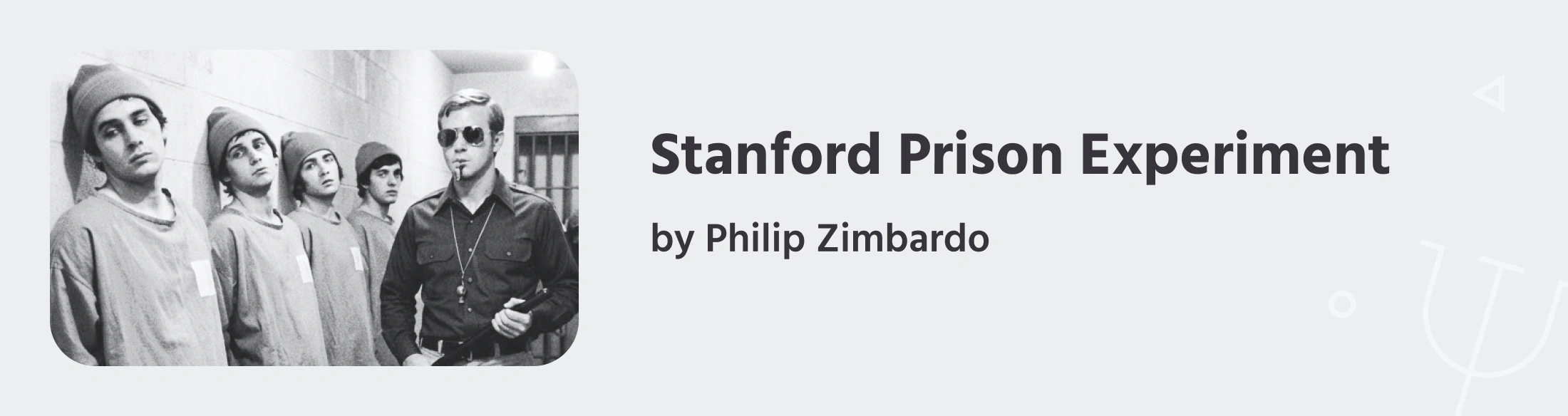
Social psychologist Philip Zimbardo carried out a study at Stanford University in 1971 that is known as the Stanford Prison Experiment. The experiment's goal was to find out how people would act in a prison simulation if they were in positions of power or powerlessness.
Out of the 75 volunteers, Zimbardo and his colleagues chose 24 male college students to take part in the study. The participants were divided into two groups at random and placed in a mock prison located in the Stanford psychology building's basement: guards or inmates.
The participants were completely absorbed in their parts; guards were deindividualized by being outfitted in sunglasses and uniforms, and inmates were given numbers rather than names. The guards started acting abusively and authoritarian toward the inmates as a result of the authority that had been bestowed upon them. In response, the inmates displayed symptoms of severe stress and emotional collapse.
The experiment was supposed to last two weeks, but because of the participants' severe psychological distress, it was called off after just six days! The experiment's inherent ethical issues surfaced as a result of the situation getting worse. The study has sparked ethical questions due to issues like incomplete debriefing, intense simulation, and incompletely informed consent. Because the participants' psychological well-being was compromised, Philip Zimbardo’s Stanford Prison Experiment has come under fire on a number of occasions.
In summary, the results for Philip Zimbardo’s Stanford experiment shed a light on how even ordinary beings can quickly adopt harmful and dangerous behaviors just because of their environment or roles. The Stanford Prison Experiment is frequently brought up in conversations concerning how circumstances can affect behavior and how people can misuse their power when they are in positions of authority.
4. Obedience Experiment by Stanley Milgram
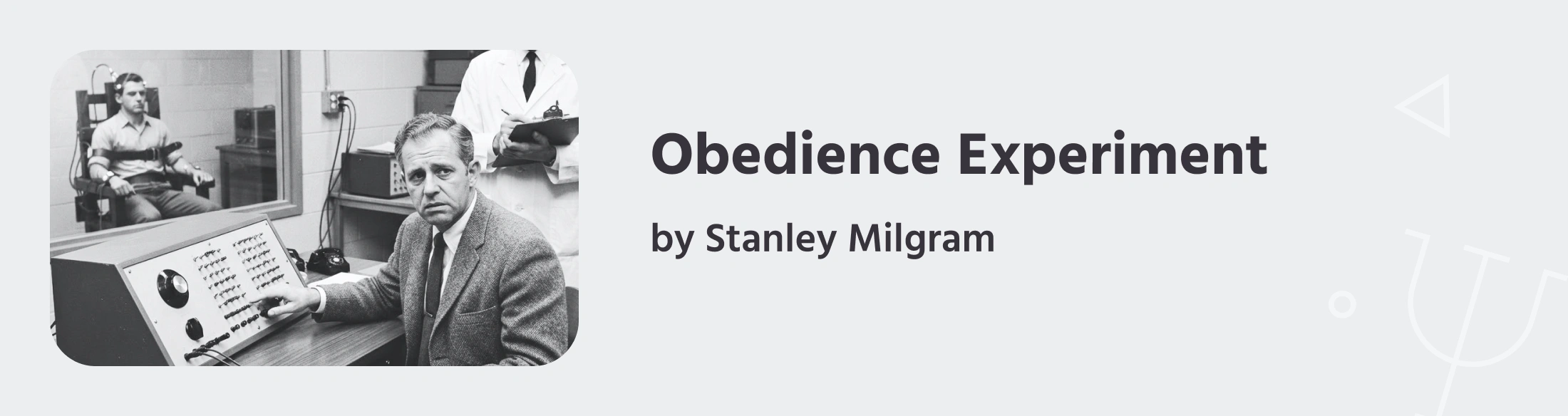
The study setup of the Obedience experiment where the experimenter and student are confederates and the teacher who is the participant is instructed to administer shocks.
The study setup of the Obedience experiment where the experimenter and student are confederates and the teacher who is the participant is instructed to administer shocks.
In the early 1960s, social psychologist Stanley Milgram carried out a number of contentious studies on submission to authority figures and the Milgram Experiment is the most well-known of these studies.
For the Obedience Experiment, three people were involved in the basic setup of the experiment: the learner (an associate of the experimenter), the teacher (a participant), and the experimenter (an authority figure). The ‘teacher’ participant was informed that the overall aim of the study was to examine the impact of punishment on learning and was directed to shock the student with progressively stronger electric shocks each time they erred on a memory task. The teacher participants were led to believe that the shocks were real (even though they weren't). Thus this setup was a mask for the real aim of the study: to assess to what extent an individual will be obedient to an authority figure, even in the case where their obedience is causing severe harm to others.
As the experiment went on, the experimenter (ie. the authority figure) would give the participant instructions to intensify the shocks while the learner, or confederate, made deliberate mistakes. Voltage levels ranging from mild to severe were labeled on the shocks, with the highest level indicating possible danger from 15 volts to 450 (danger – severe shock). Thus, the teacher could see how dangerous the high shock levels were and know they were ‘inflicting’ pain (even though the shocks were not real).
In summary, the key discovery of Milgram's Obedience to Authority experiment was that a sizable fraction of participants kept shocking the confederate even after they showed signs of distress, objected, and finally fell silent. The experiment result showed that a significant number of participants used the shock generator to its maximum capacity, demonstrating a high degree of submission to authority.
Because Stanley Milgram's Obedience study caused participants psychological distress, criticism and questions were raised pointing to its ethical issues. However, the study still managed to shed light on how common people might act dubiously or immorally when directed by an authority figure, offering insightful information about the influence of authority and social conformity.
5. The Hawthorne Effect by Henry A. Landsberger

A phenomenon known as the Hawthorne Effect occurs when people adjust their behavior when they become aware that they are being watched or observed by others. A set of experiments carried out at the Western Electric Hawthorne Works in Chicago in the 1920s and 1930s led to the naming of this effect. The initial purpose of the studies was to look into how worker productivity and lighting conditions relate to one another. Elton Mayo also studied in this context how work structure changes (like rest periods) influenced worked outcomes at the factory.
The data from the Hawthorne studies were later reanalyzed and interpreted in the 1950s by social scientist Henry A. Landsberger. His work, especially the 1958 paper "Hawthorne Revisited," was instrumental in making the Hawthorne Effect concept widely known.
Landsberger came to the conclusion that it was the workers' awareness of being observed/studied that actually explained the observed changes in worker productivity, rather than the lighting conditions as first believed. The workers' motivation and performance improved as a result of the researchers' interest and attention.
From then, the results from Hawthorne Effect study has gained widespread acceptance in organizational behavior psychology and social science. It emphasizes how crucial social and psychological elements are in shaping behavior, especially in settings like research or in the workplace where people may behave differently because they are aware that they are being watched or studied. The Hawthorne Effect is frequently brought up when talking about the difficulties in using human subjects in experiments and research because it can be difficult to identify and comprehend the underlying causes of observed behavior when subjects are aware they are being observed.
Social Psychology Experiments Today
While these classic experiments helped establish the field of social psychology by studying complex topics like obedience and conformity, today there are more ethical guidelines that researchers must follow.
Furthermore, due to the digitization of the 21st century, online experiments are becoming more and more popular which allow for participants to complete tasks together using their computers or smartphones.
References
- Asch, S. E. (1952). Group forces in the modification and distortion of judgments. In S. E. Asch, Social psychology (pp. 450–501). Prentice-Hall, Inc.
- Asch, S. E. (1953). Effects of group pressure upon the modification and distortion of judgements. Group dynamics. Asch, S. E. (1956). Studies of independence and conformity: I. A minority of one against a unanimous majority. Psychological monographs: General and applied, 70(9), 1.
- Bandura, A. (1965). Influence of models' reinforcement contingencies on the acquisition of imitative responses. Journal of personality and social psychology, 1(6), 589.
- Bandura, A., Ross, D., & Ross, S. A. (1961). Transmission of aggression through imitation of aggressive models. The Journal of Abnormal and Social Psychology, 63(3), 575.
- Bandura, A., Ross, D., & Ross, S. A. (1963). Imitation of film-mediated aggressive models. The Journal of Abnormal and Social Psychology, 66(1), 3.
- Bandura, A., & Walters, R. H. (1977). Social learning theory(Vol. 1). Prentice Hall: Englewood cliffs.
- Landsberger, H. A. (1958). Hawthorne Revisited: Management and the Worker, Its Critics, and Developments in Human Relations in Industry.
- Milgram, S. (1963). Behavioral study of obedience. The Journal of abnormal and social psychology, 67(4), 371.
- Milgram, S. (1965). Some conditions of obedience and disobedience to authority. Human relations, 18(1), 57-76.
- Zimbardo, P. G. (1973). On the ethics of intervention in human psychological research: With special reference to the Stanford prison experiment. Cognition, 2(2), 243–256.
- Zimbardo, P. G. (1995). The psychology of evil: A situationist perspective on recruiting good people to engage in anti-social acts. Japanese Journal of Social Psychology, 11(2), 125-133.