
Delay Discounting Task
The Delay Discounting Task (DDT) is a tool used to evaluate how individuals value rewards over time. It measures the tendency of individuals to prefer smaller immediate rewards over larger delayed ones. This behavior is known as delay discounting. The DDT helps researchers understand how people make decisions, control impulses and has been widely used in areas like economics, psychology, and neuroscience.
Try out the delay discounting task or import it to your account.
History of the Delay Discounting Task
The origins of delay discounting as a research paradigm trace back to the intersection of economics and psychology. Economists first developed models like the Discounted Utility Model to explain how value is often associated with future outcomes. Psychologists later adapted these ideas to explore human decision-making, especially our tendency to prefer smaller rewards now over larger ones later. Early experiments used simple choices between money now or later to measure how people devalue delayed rewards. Over time, these tasks became more structured by moving from basic paper formats to computerized versions, improving accuracy and allowing wider use (da Matta, 2012).
Overall, the delay discounting task grew from combining economic theories and psychological research and is now widely used to better understand impulsivity and decision-making in both humans and animals.
Description of the Delay Discounting Task
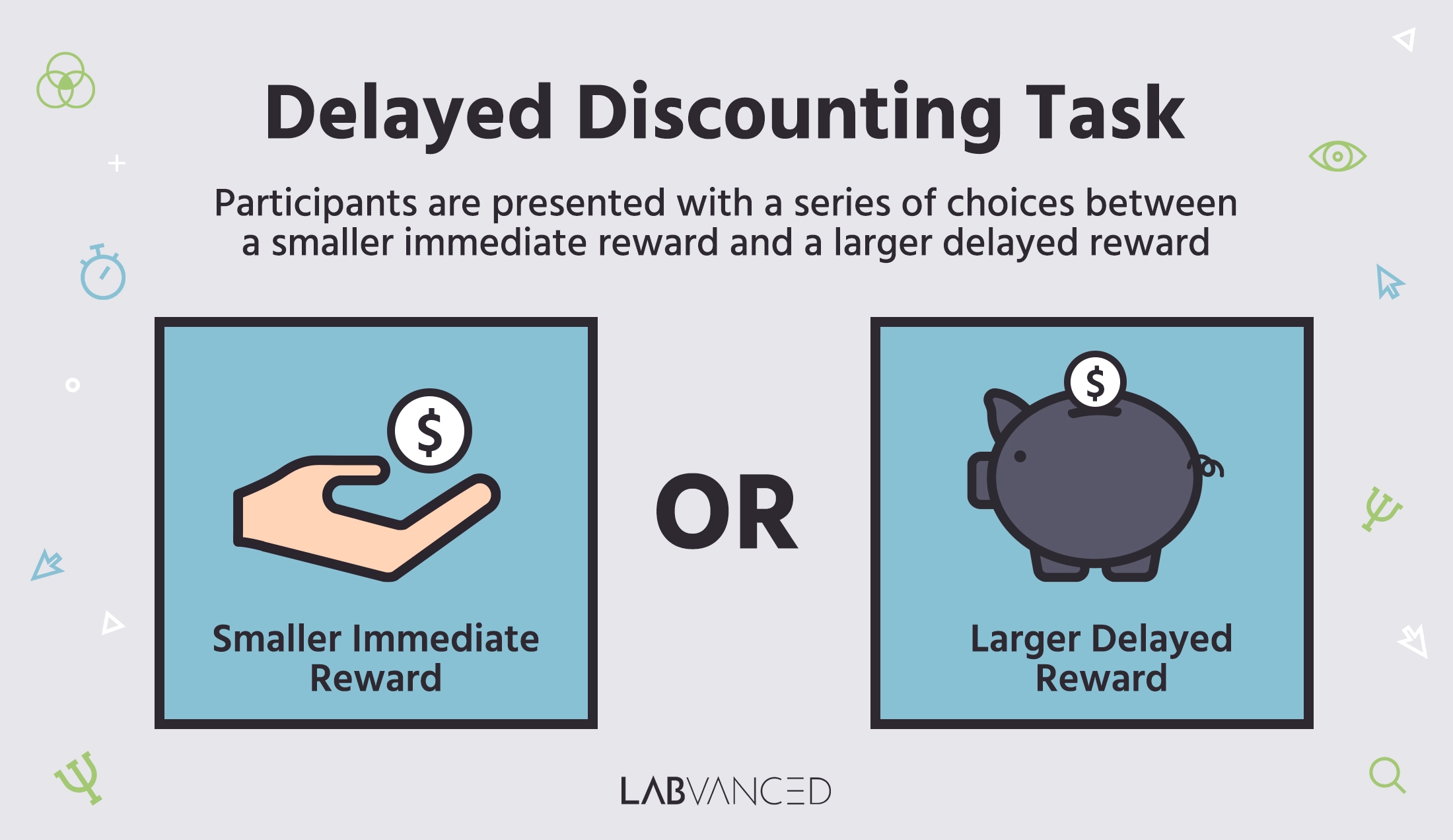
In a typical delay discounting task, the participant is presented with a 2-alternative forced choice between some amount of a delayed reward / commodity or a smaller amount of that, but available immediately. For example, choosing between receiving $100 tomorrow or $101 in a month. This approach reveals an individual's "discounting rate," which indicates their preference for immediate gratification over larger, delayed benefits.
The structure and number of trials can vary in each task, but the common features include systematic manipulation of the reward amounts and delays, with methods like the Fixed Delayed Reward (FDR) or Fixed Immediate Reward (FIR). These make sure that the amounts or delays are adjusted based on the participant’s previous responses and their discounting rate are determined accurately (da Matta et al., 2012).
Example of Trials in the Delay Discounting Task
In a typical delay discounting task, participants are asked to choose between a smaller immediate reward and a larger delayed reward. Below is an example of how the trials progress:
- Receiving $100 today or $101 in a month
- Receiving $100 today or $104 in a month
- Receiving $100 now or $128 in a month
Common Variations of the Delay Discounting Task
The delay discounting task has several common variations to explore different aspects of intertemporal choice. Common procedures include fixed-amount procedures (where participants make choices between a constant immediate reward and a larger delayed reward), a titrating procedure (adjusting the immediate reward to find an indifference point), adjusting-delay procedures (where the delay to the larger reward is varied to find indifference), as well as probabilistic designs (e.g., receive a small amount now for sure, or a larger amount later but at a specific probability).
The stimuli options are diverse, most commonly hypothetical money, but also including real monetary rewards, health outcomes(e.g., getting healthier in the future vs. enjoying unhealthy food now), educational attainment, environmental benefits, or even gambling outcomes. Learn more about the different types of stimuli used in delay discounting tasks here.
Fixed Sequence Procedures
Different delay discounting tasks use distinct methods of presenting reward choices. Here are two examples of fixed variations (Tesch & Sanfey, 2008):
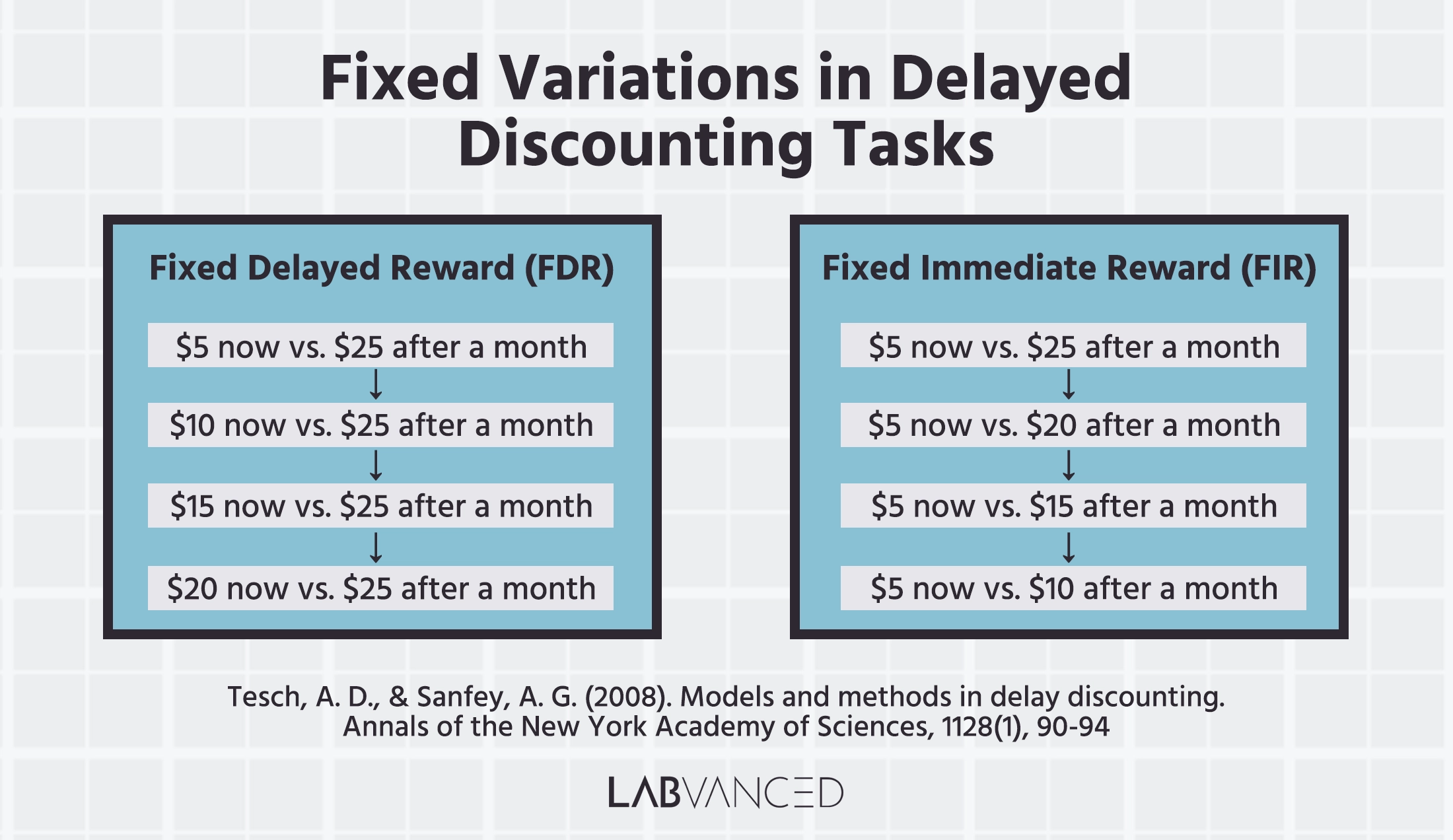
- Fixed Delayed Reward (FDR): In the FDR method, the delayed reward remains constant across trials, while the immediate reward starts at a lower value and gradually increases in each trial until the participant reaches a point of indifference between the two options.
- For example: Choose between $5, $10, $15, or $20 now vs. $25 after a month.
- Fixed Immediate Reward (FIR): In the FIR method the immediate reward remains constant, while the delayed reward is gradually reduced until the participant reaches a point of indifference.
- For example: Choose between $5 now vs. $25, $20, $15, or $10 after a month.
Studies have shown that participants tend to discount delayed rewards more steeply in FIR tasks than in FDR tasks (Tesch & Sanfey, 2008).
Titrating Procedure for the Delay Discounting Task
It is also possible to have more dynamic or adaptive approaches based on the participants choice using a titrating procedure, also known as an “adaptive staircase” approach (Rodzon, K., Berry, M. S., & Odum, A. L., 2011).
A titrating procedure in a delay discounting task adjusts the immediate reward amount offered based on the participant's prior choice. If they pick the immediate reward, then its value would decrease in the next trial; if they pick the delayed option, then immediate value reward increases in the next trial (see example below). This method efficiently pinpoints the "indifference point"—the immediate reward value where both options are equally appealing—for a specific delayed reward.
Here are 3 example trials using a titrating procedure, assuming a fixed delayed reward of $100 in 1 month:
- Trial 1: Would you prefer $50 now or $100 in 1 month? (Initial option presents half of the delayed amount)
- Trial 2 (assuming the participant chooses the delayed reward in 1 month): Would you prefer $75 now or $100 in 1 month? (Increased immediate amount because they preferred the delayed option in Trial 1)
- Trial 3 (if the participant chooses "$75 now" in Trial 2): Would you prefer $62.50 now or $100 in 1 month? (Decreased immediate amount because they preferred the immediate option)
Adjusting-delay Procedure
In an adjusting-delay procedure for a delay discounting task, instead of varying the immediate reward amount, the time delay to the larger / later reward is systematically changed based on the participant's choices (Koffarnus, M. N., & Bickel, W. K., 2014).
For instance, a participant might be asked if they prefer "$500 immediately" or "$1000 in 2 years." If they choose the immediate $500 immediately, it suggests that time delay is too long a wait for $1000, so the next trial can offer $1000 in a shorter delay.
Conversely, if they choose the $1000 in X days, it means X days isn't long enough to significantly devalue the $1000, so the next trial might offer $1000 in a longer delay.
This iterative process zeroes in on the specific delay at which the participant becomes indifferent between the immediate, smaller reward and the larger, delayed reward, allowing for the calculation of their individual discounting rate.
Probabilistic Design for Gains and Losses
Another approach to the delay discounting task is to introduce the factor of probabilities, i.e. probabilistic gains or losses into the task.
For example, the participant will be faced with a fixed gain that would certainly be awarded, or a larger sum in the future with a certain probability of being awarded. The probability would then be stated in a percentage, for example “Receive $100 now” vs. “95% chance of receiving $200 in 3 months.” (Du, W., Green, L., & Myerson, J., 2002).
This approach can also be framed in terms of losses. For example, “Would you prefer… losing $500 immediately vs. losing $1000 in 2 years?” (Cox, D. J., & Dallery, J., 2016).

Trial Progression and Stimuli Presentation in the Delay Discounting Task
In the delay discounting task, the options in the 2-alternative forced choice can be presented either in an ascending, descending or random order (da Matta, A., Gonçalves, F. L., & Bizarro, L., 2012):
- Ascending order: The value of interest increases positively, such as in one day, one month, one year, etc.
- Descending order: The value of interest decreases, such as in one year, one month, one day, etc.
- It is important to note that the ascending and descending approaches typically generate more consistent results, showing a shorter reaction time, when compared with subjects who performed the DDT task with alternatives presented in a random order.
- Random order: A random order involves showing the value options randomly, without following an ascending or descending sequence. It is of relevance to note that the extent of the delay discounting was higher when the task follows a random order sequence.
The way that the delay is handled may influence the observations, making it an important parameter to consider when implementing and administering the delay discounting task (Robles, E., & Vargas, P. A., 2008).
Attention Checks and Catch Trials in the Delay Discounting Task
It is also common to check for inattention in participants whilst they take part in the Delayed Discounting Task. As the task progresses, the participants are presented with a ‘catch trial’ wherein the ‘correct’ answer is obvious. For example:
- Would you prefer $10 today or $5 tomorrow?
- Would you prefer $100 today or $25 in two years?
If a participant fails to choose the sensible / correct answer, then they would be considered to be not paying attention and therefore excluded from the analysis (Almog et al., 2023).
Framing Effects in the Delay Discounting Task
Another important aspect to consider is the framing effect which includes how the reward is framed. For example, this involves assessing the way that time is framed or presented - determining whether there is a difference in participants’ choices when they are asked about receiving a reward in ‘4 weeks’ or in ‘one month’. A study found that when time framed as dates (e.g., on mm/dd/yyyy) there was less discounting compared to the calendar method (e.g. ‘in 3 months), whereas time framed as days (e.g. 28 days) resulted in greater discounting compared to the calendar method (e.g. 1 week) (DeHart, W. B., & Odum, A. L., 2015).
Stimuli Options of the Delay Discounting Task
In DD tasks money is often used as the stimuli in this task due to its universal value, ease of manipulation and generalizability. However, there are studies that have made use of different stimuli (food or alcohol) as rewards enabling the researchers to understand if consumable rewards changed the preferences and impulsivity of the participants. The study showed that consumable rewards such as alcohol and food are discounted more heavily than money (Odum & Rainaud, 2003).
The range of stimuli used in delay discounting tasks extends beyond money, food, or alcohol. Various types have been utilized to explore different research domains.
Read more about these variations here.
Delay Discounting Task Online
In online setups, participants are often required to make choices between getting some amount of pretend money at the moment, or getting a large amount of pretend money some time in the future.
In Labvanced,the delay discounting task comprises two practice trials + 36 task trials. A combination of 12 time intervals (1 day, 4 days, 7 days, 1 week, 2 weeks, 4 weeks, 1 month, 6 months, 12 months, 1 year, 5 year, and 10 years) and three hypothetical discount rates (of k = 0.1, k = 0.05, and k = 0.005) were used to create the task trials. The reward adjustment structure was based on the method described by Leverett et al. (2022).
You can try it out here by clicking on the Participate button or Import it to your account to edit it freely.
Data Collected in the Delay Discounting Task
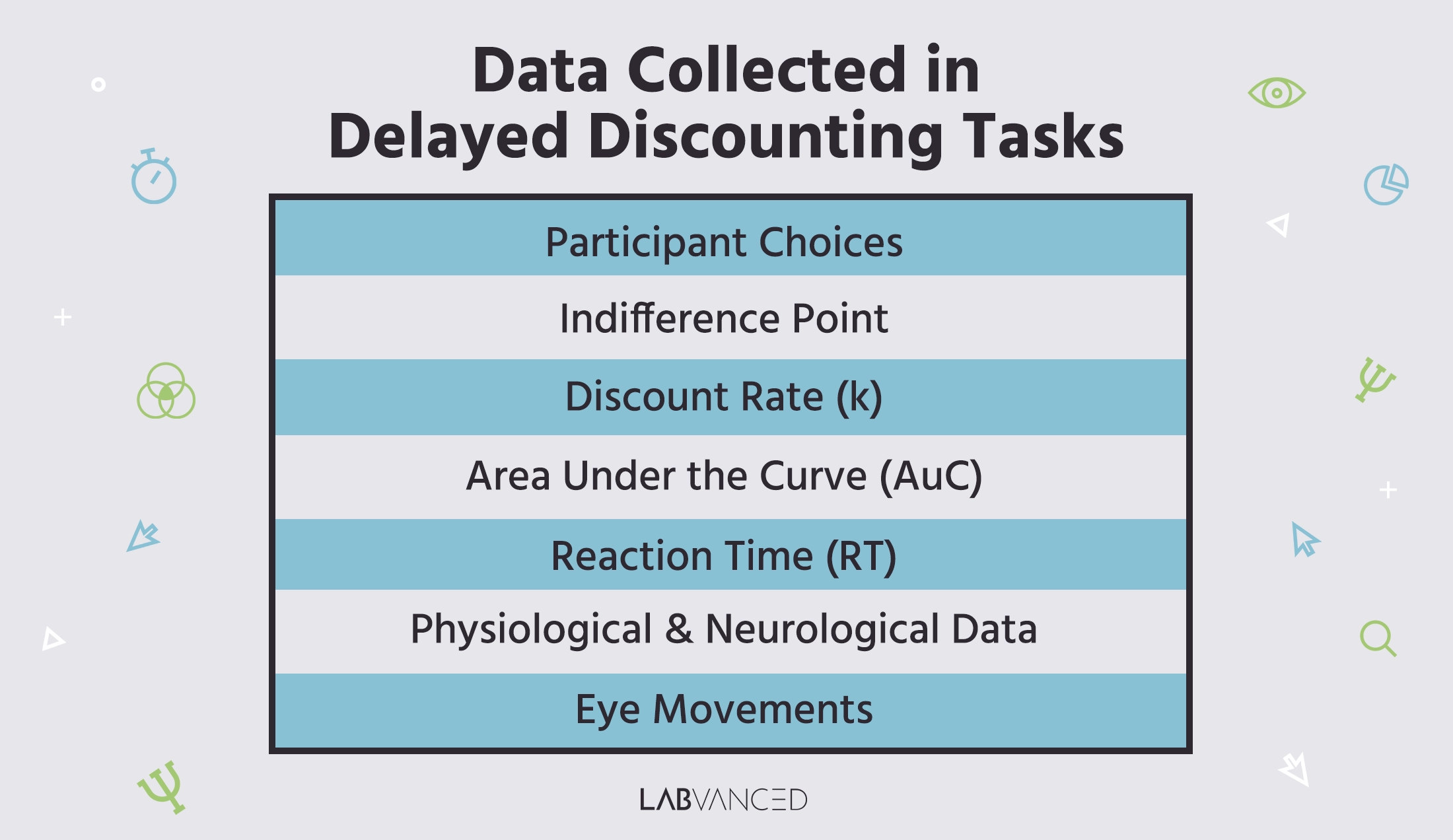
The DDT collects several types of data to analyze an individual's discounting behavior:
- Participant Choices: Selection of a choice between immediate and delayed rewards providing insight into preference patterns.
- Indifference Point: This point represents the subjective value at which the participant perceives the immediate and delayed rewards as equivalent.
- Discount Rate (k): A parameter indicating the rate at which a person discounts future rewards with higher values of k indicating stronger preference for immediate rewards and more impulsive decision-making.
- Area Under the Curve (AuC): Area Under the Curve (AuC) is a simple measure of how much someone prefers immediate rewards over delayed ones. Lower AuC means more impulsive choices; higher AuC means better self-control.
- Reaction Time (RT): The time taken to make each choice.
- Physiological & Neurological Data: Indicators such as heart rate or brain imaging are collected to explore the biological processes of decision-making.
- Eye Movements: Eye tracking metrics can be used to understand how individuals visually process and weigh options during decision-making. For online versions, it is also possible to activate Labvanced’s peer-reviewed webcam-based eye tracking to collect gaze data.
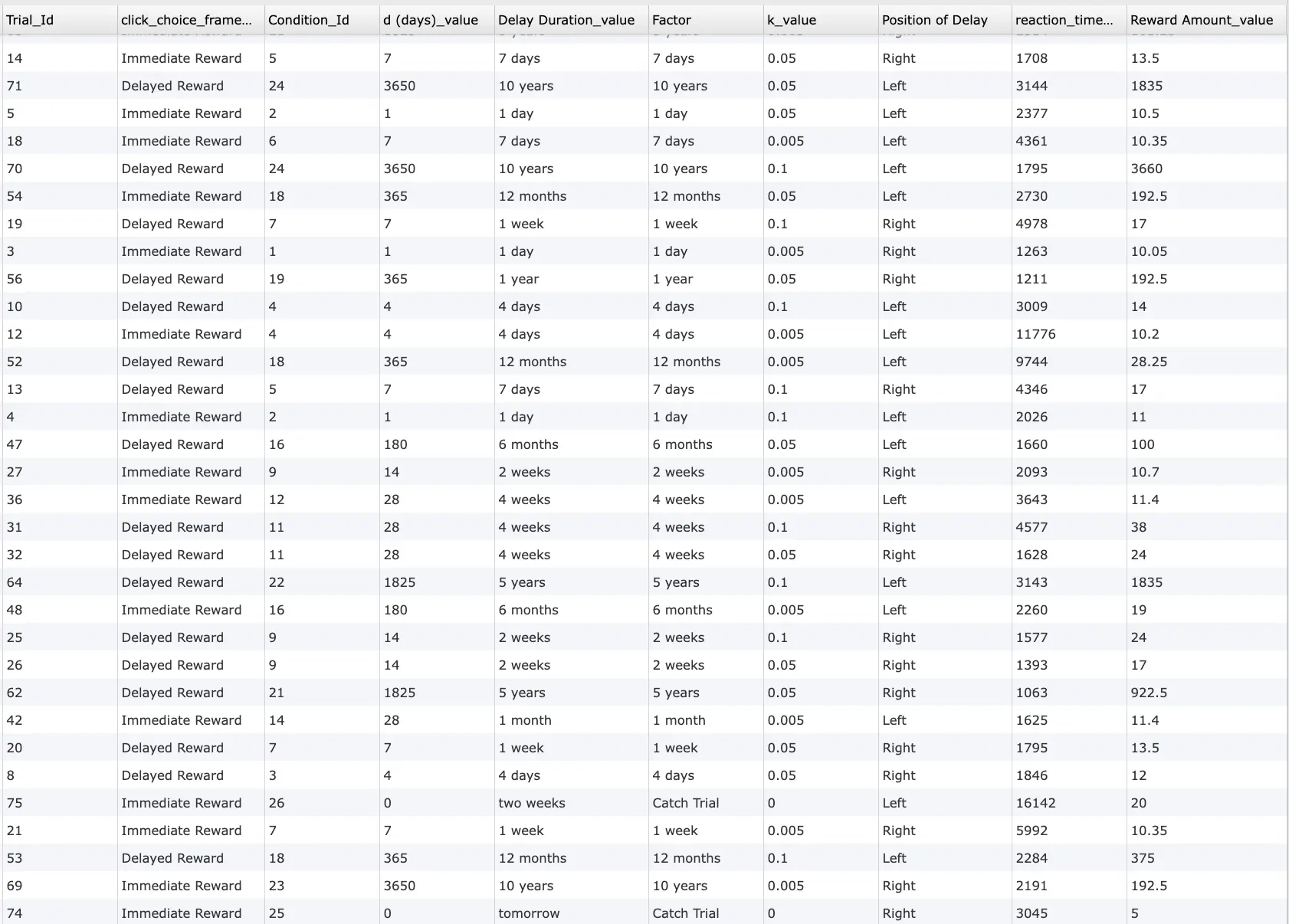
In the image below, you could see what the data collected looks like when it is being recorded in Labvanced. The data shows the basic details of the task such as the trial ID and condition ID. Additionally, further task-specific data is collected such as the click choice frame (the immediate reward option or the delayed option), d value (the delay time interval in days), delay duration value (the time interval of the delay), Factor (the categorical representation of the time delay duration used in each trial, including catch trials)), k-value (the rate at which the amount is discounted), position of delay (whether the delay option was presented on the left/right of the screen), reaction time, reward amount value (the immediate reward amount choice presented) and more!
Possible Confounds to Consider
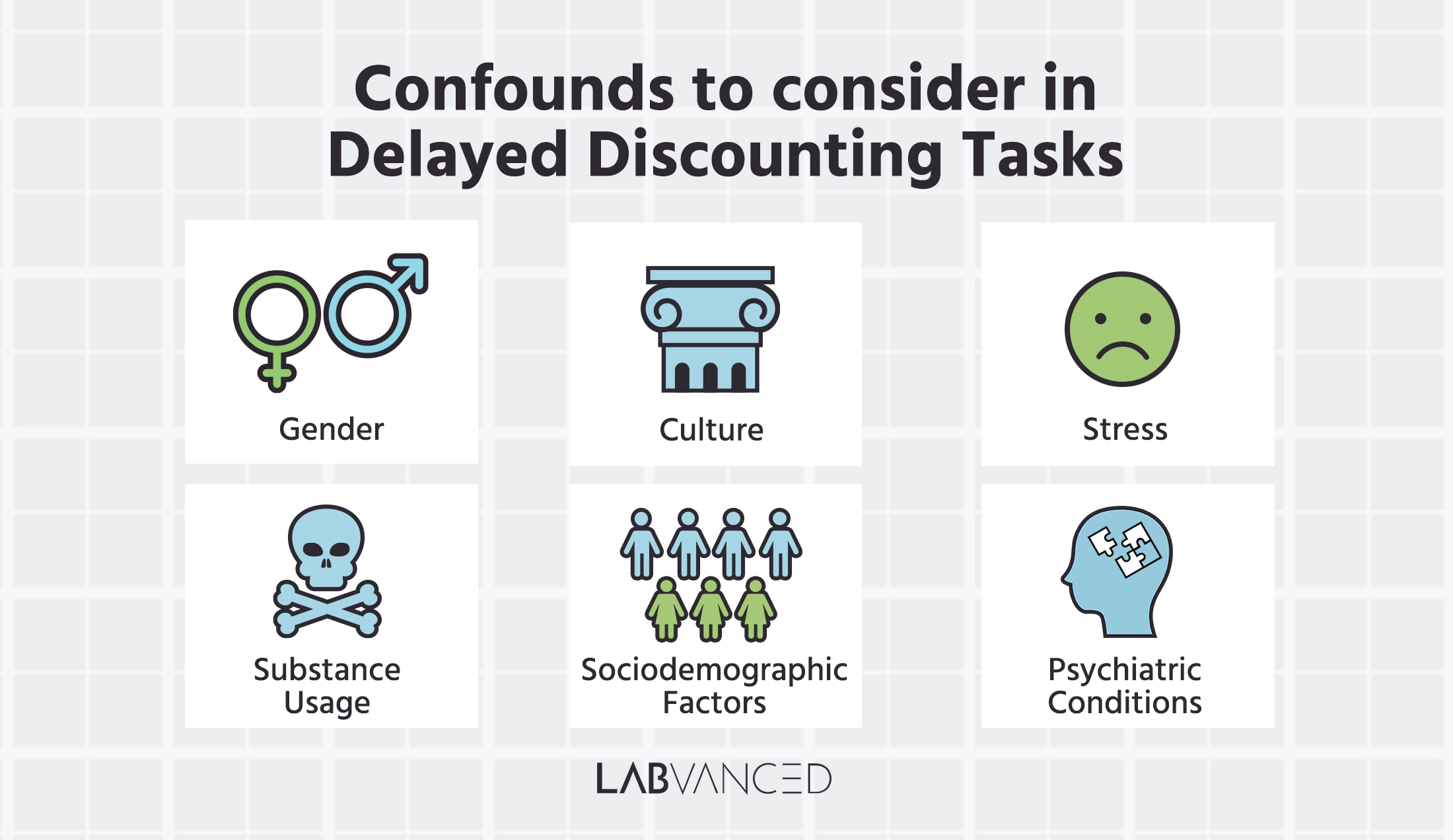
Several factors can influence DDT performance, potentially confounding results:
- Gender: Gender-related motivational and cognitive processes can confound how delay discounting is interpreted. For instance, studies have shown that girls with ADHD may show greater impulsivity (steeper delay discounting) than boys, especially when rewards are immediate and experienced in real time (Rosch & Mostofsky, 2015).
- Culture: Culture can influence how people perceive time and value rewards. For example, Westerners (e.g., Americans) often show more impulsive and inconsistent choices, discounting future rewards more steeply than Easterners (e.g., Japanese), who tend to be more future-oriented and self-controlled (Takahashi et al., 2009).
- Stress: Since stress affects decision-making, it can confound DDT results. Stress can influence how people value future rewards. Studies show that individuals with low perceived stress, tend to choose immediate rewards more often, showing higher impulsivity. In contrast, those with high perceived stress may show more self-control (Lempert et al., 2012).
- Substance Usage: Use of substances like alcohol, smoking or drugs can impact cognitive functions related to delay discounting. Individuals who are heavy smokers or are dependent on substances tend to prefer immediate rewards more than those without such histories (Businelle et a., 2010).
- Sociodemographic Factors: Sociodemographic factors such as parental education, household income, parental marital status can strongly influence performance on delay discounting tasks. In a large-scale study, these factors were found to predict impulsive decision-making more than family history of psychiatric disorders (Sloan et al., 2023).
- Psychiatric Conditions: Psychiatric conditions affect delay discounting in distinct ways, making them an important confounding factor in interpreting. Meta-analytic evidence shows that individuals with disorders like bipolar disorder, borderline personality disorder, depression, and binge-eating disorder tend to discount delayed rewards more steeply than control groups (Amlung et al., 2019).
Associated Cognitive Functions
Performance on the delay discounting task is linked to various cognitive functions. Those mainly include:
- Inhibition Control and Impulsivity: Impulsivity is the tendency to act without forethought and is a complex process related to the inability to withhold a response, lack of inhibition control, and/or the lack of sensitivity to a negative or delayed consequence (Berry, M. S., et al., 2014). A higher preference for immediate rewards indicates greater impulsivity, as it reflects a lack of ability or willingness to wait for a better outcome.
- Decision Making: Decision Making is the cognitive process of selecting a course of action among multiple alternatives. In delay discounting tasks, participants engage in the process of weighing the value of future rewards against immediate gratification.
- Episodic Future Thinking (EFT): It simply means to imagine yourself in future situations. When people think about positive and detailed events that could happen later, they tend to see future rewards as more important. This helps them wait for a bigger reward instead of taking a smaller one right away (Daniel et al., 2015).
Applications of the Delay Discounting Task
Delay Discounting (DDT) has wide-ranging applications across many fields. Here are a few examples:
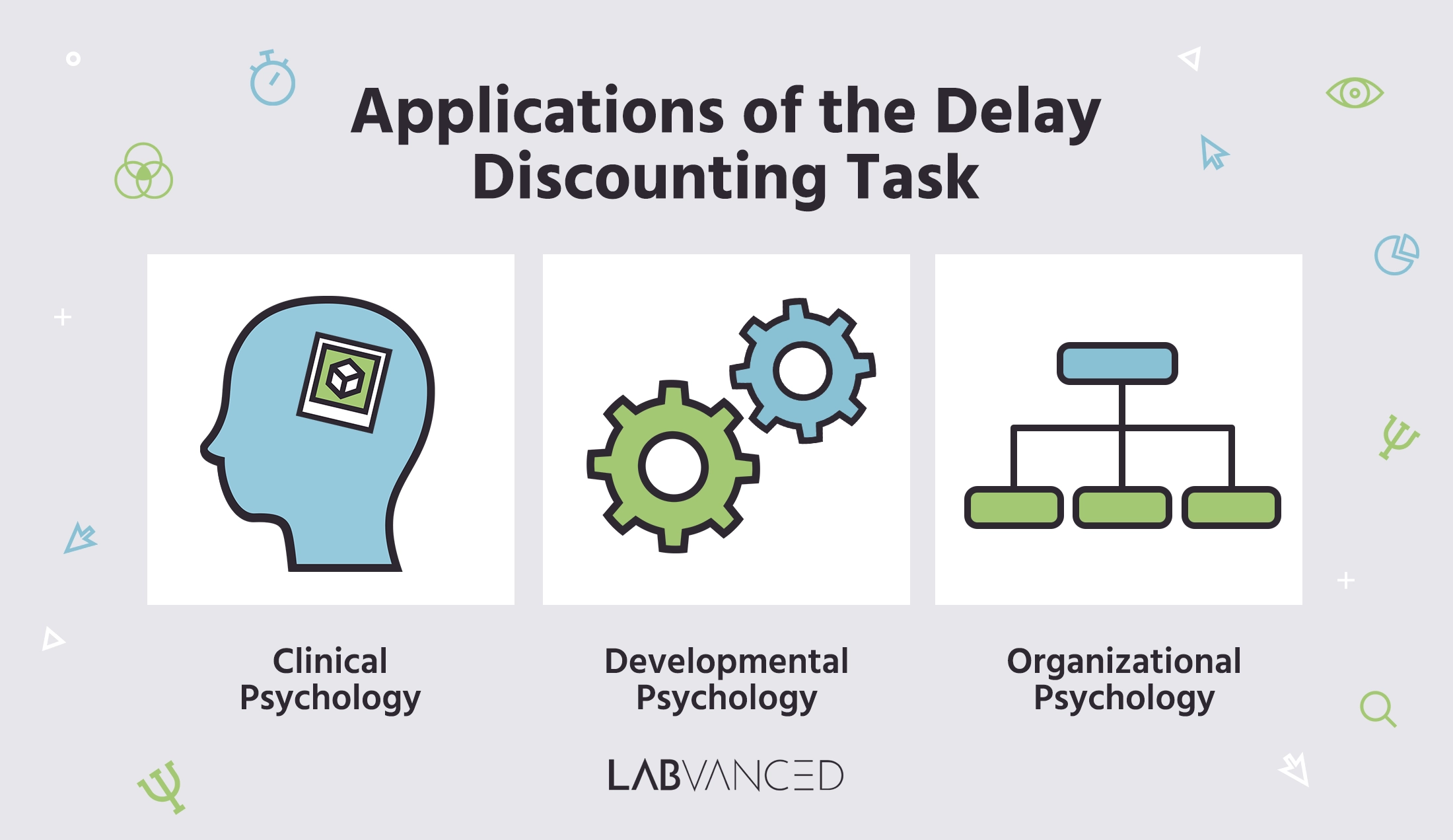
- Gambling: By applying the delay discounting task on participants with problem gambling, researchers aim to understand the impulsivity associated with gambling behaviour. With different time intervals for the delayed payments, the DD task measures how individuals value rewards over time and how that valuation differs among problem gamblers, habitual gamblers, and non-gambling controls. Findings showed that the impulsivity among gamblers comes from both a strong desire for immediate gratification and a general disregard for future consequences (Ring et al., 2021).
- Addiction: The Delay Discounting task is widely utilized in understanding addiction. The DD task is used as a measure of impulsivity related to addictive behaviors, including Internet addiction and substance use disorders and studies show that individuals with addiction tend to have steeper DD rates, indicating a preference for immediate rewards, which reflects impaired impulse control (Cheng et al., 2021).
- Finance management: The Delay Discounting task is also relevant in understanding financial behavior. Higher delay discounting rates are associated with impulsive financial decisions, such as overspending, insufficient saving, and risky investments. Research suggests that individuals with better financial literacy tend to have lower DD rates, making them more future-oriented and better at long-term planning. Improving financial literacy can thus reduce impulsivity and promote responsible financial decision-making (Katauke et al., 2023).
- Psychopathology: A study investigated delay discounting behavior in children aged 9 to 11 and examined the impact of family history of psychiatric disorders on this behavior. By analyzing how cognitive processes regarding reward valuation develop during childhood, the research highlights the significance of impulsivity in early decision-making and its potential implications for future mental health outcomes (Sloan et al., 2023).
- Organizational Psychology: In a study, researchers aimed to determine if the way individuals make choices about rewards influences their job satisfaction. They collected information regarding the participants’ habits and from these details, the researchers figured out how much each person tended to prefer immediate rewards (like eating a treat now) versus waiting for bigger, future rewards (like staying healthy for a long time). The study found that people who tended to prefer immediate rewards were generally less satisfied with their jobs (de Ruijter et al., 2023).
Conclusion
The delay discounting task is a valuable tool for understanding how individuals value future rewards and make decisions over time. Through its flexible and effective design to analyse choices, reaction times, and associated cognitive functions, researchers can gain insights into a wide range of behavioral patterns and actions!
References
Almog, S., Vásquez Ferreiro, A., Berry, M. S., & Rung, J. M. (2023). Are the attention checks embedded in delay discounting tasks a valid marker for data quality?. Experimental and clinical psychopharmacology, 31(5), 908.
Amlung, M., Marsden, E., Holshausen, K., Morris, V., Patel, H., Vedelago, L., Naish, K. R., Reed, D. D., & McCabe, R. E. (2019). Delay discounting as a transdiagnostic process in psychiatric disorders. JAMA Psychiatry, 76(11), 1176.
Berry, M. S., Sweeney, M. M., Morath, J., Odum, A. L., & Jordan, K. E. (2014). The nature of impulsivity: Visual exposure to natural environments decreases impulsive decision-making in a delay discounting task. PloS one, 9(5), e97915
Businelle, M. S., McVay, M. A., Kendzor, D., & Copeland, A. (2010). A comparison of delay discounting among smokers, substance abusers, and non-dependent controls. Drug and Alcohol Dependence, 112(3), 247–250.
Cheng, Y. S., Ko, H. C., Sun, C. K., & Yeh, P. Y. (2021). The relationship between delay discounting and Internet addiction: A systematic review and meta-analysis. Addictive behaviors, 114, 106751.
Cox, D. J., & Dallery, J. (2016). Effects of delay and probability combinations on discounting in humans. Behavioural processes, 131, 15-23.
da Matta, A., Gonçalves, F. L., & Bizarro, L. (2012). Delay discounting: Concepts and measures. Psychology & Neuroscience, 5(2), 135–146.
de Ruijter, M. J., Dahlén, A. D., Rukh, G., & Schiöth, H. B. (2023). Job satisfaction has differential associations with delay discounting and risk-taking. Scientific reports, 13(1), 754.
Daniel, T. O., Said, M., Stanton, C. M., & Epstein, L. H. (2015). Episodic future thinking reduces delay discounting and energy intake in children. Eating Behaviors, 18, 20–24.
DeHart, W. B., & Odum, A. L. (2015). The effects of the framing of time on delay discounting. Journal of the experimental analysis of behavior, 103(1), 10-21.
Du, W., Green, L., & Myerson, J. (2002). Cross-cultural comparisons of discounting delayed and probabilistic rewards. The Psychological Record, 52(4), 479-492.
Jauregi, A., Kessler, K., & Hassel, S. (2018). Linking cognitive measures of response inhibition and reward sensitivity to trait impulsivity. Frontiers in Psychology, 9.
Katauke, T., Fukuda, S., Khan, M. S. R., & Kadoya, Y. (2023). Financial literacy and impulsivity: evidence from Japan. Sustainability, 15(9), 7267.
Koffarnus, M. N., & Bickel, W. K. (2014). A 5-trial adjusting delay discounting task: accurate discount rates in less than one minute. Experimental and clinical psychopharmacology, 22(3), 222.
Lempert, K. M., Porcelli, A. J., Delgado, M. R., & Tricomi, E. (2012). Individual differences in delay discounting under acute stress: The role of trait perceived stress. Frontiers in Psychology, 3.
Leverett, S., Garza, C., & Seaman, K. (2022). The effect of delay duration on delay discounting across adulthood. The Journals of Gerontology: Series B, 77(3), 467-471.
Ring, P., Probst, C. C., Neyse, L., Wolff, S., Kaernbach, C., van Eimeren, T., & Schmidt, U. (2021). Discounting behavior in problem gambling. Journal of Gambling Studies, 1-15.
Robles, E., & Vargas, P. A. (2008). Parameters of delay discounting assessment: Number of trials, effort, and sequential effects. Behavioural Processes, 78(2), 285-290.
Rodzon, K., Berry, M. S., & Odum, A. L. (2011). Within-subject comparison of degree of delay discounting using titrating and fixed sequence procedures. Behavioural processes, 86(1), 164-167.
Rosch, K. S., & Mostofsky, S. H. (2015). Increased delay discounting on a novel real-time task among girls, but not boys, with ADHD. Journal of the International Neuropsychological Society, 22(1), 12–23.
Sloan, M. E., Sanches, M., Tanabe, J., & Gowin, J. L. (2023). Delay discounting and Family History of Psychopathology in children ages 9–11. Scientific Reports, 13(1).
Takahashi, T., Hadzibeganovic, T., Cannas, S. A., Makino, T., Fukui, H., & Kitayama, S. (2009). Cultural neuroeconomics of intertemporal choice. Neuro endocrinology letters, 30(2), 185–191.
Tesch, A. D., & Sanfey, A. G. (2008). Models and methods in delay discounting. Annals of the New York Academy of Sciences, 1128(1), 90-94. Yim, O.-S., Zhang, X., Shalev, I., Monakhov, M., Zhong, S., Hsu, M., Chew, S. H., Lai, P. S., & Ebstein, R. P. (2016). Delay discounting, genetic sensitivity, and leukocyte telomere length. Proceedings of the National Academy of Sciences, 113(10), 2780–2785.