
Labvanced for Classrooms | Hands-on Learning and Psychology Experiments
Labvanced is designed to enhance classroom learning by giving students the opportunity to learn how to set up psychology experiments, develop experiment-building skills and collect data. All without having to code! Students simply have to get familiar with the app and they can start implementing their next psychology experiment with just a few clicks.
Try out the Corsi Block-Tapping Test by clicking the Participate button under the study description or the Import option to add and edit this task with your Labvanced account.
With access to Labvanced’s Public Experiment Library (full of psychology experiment templates) that are customizable and an interface that provides hands-on learning experiences, students can move beyond theoretical knowledge to practical applications, all achieved with ease using a platform trusted by researchers worldwide!
What is Labvanced?
Labvanced is a powerful platform designed specifically for conducting behavioral and cognitive experiments and psychological research using advanced features such as peer-reviewed eye-tracking and multi-user study support via web and native desktop/mobile applications.
Goal of Classroom Use
Classroom use provides your students with the opportunity to:
- Experience hands-on learning and apply terminology to real life experimental scenarios.
- Access and participate in classic paradigms (via the Public Experiment Library)
- Develop their experiment design skills without having to code
- Try statistical tests
- Conduct innovative and powerful research for their thesis / dissertation (examples later)
Hands-on Learning
Below are some examples of how hands on learning can be experienced through the platform:
Trial Design with the Task Wizard
The Task Wizard allows you to build the basic foundations of a study based on a CSV file, allowing you to create and customize your study efficiently.

Study Design
Via the Study Design tab, you can organize your experiments tasks into: blocks, sessions and groups, ideal for longitudinal designs. This is great for students as they can learn specific terminology hands-on by setting up their tasks into sessions, blocks, etc.

Randomization & Balancing Techniques
Apply randomization and balancing techniques to enhance your study's methodology. Students can try out several randomization and balancing techinques and approaches and directly see their impact on stimuli presentation and more.

Access and Participate in Classic Paradigms & Tasks
There is a large collection of tasks, scales, and questionnaires in the Public Experiment Library. You can access and participate in any of these, and by importing them directly into your account, you can also customize them. Students can go through this resource and select what studies to work with, use them as their basis of their own experiment or simply see what other researchers around the world are making.
Try out the Navon Task by clicking the Participate button under the study description or the Import option to add and edit this task with your Labvanced account.
Try Statistical Tests and more
Explore statistical tests and operations, including z-scores, percentiles, variances, and more.

Develop Experiment Design Skills
Labvanced allows you to develop your experiment design skills without the need for coding.
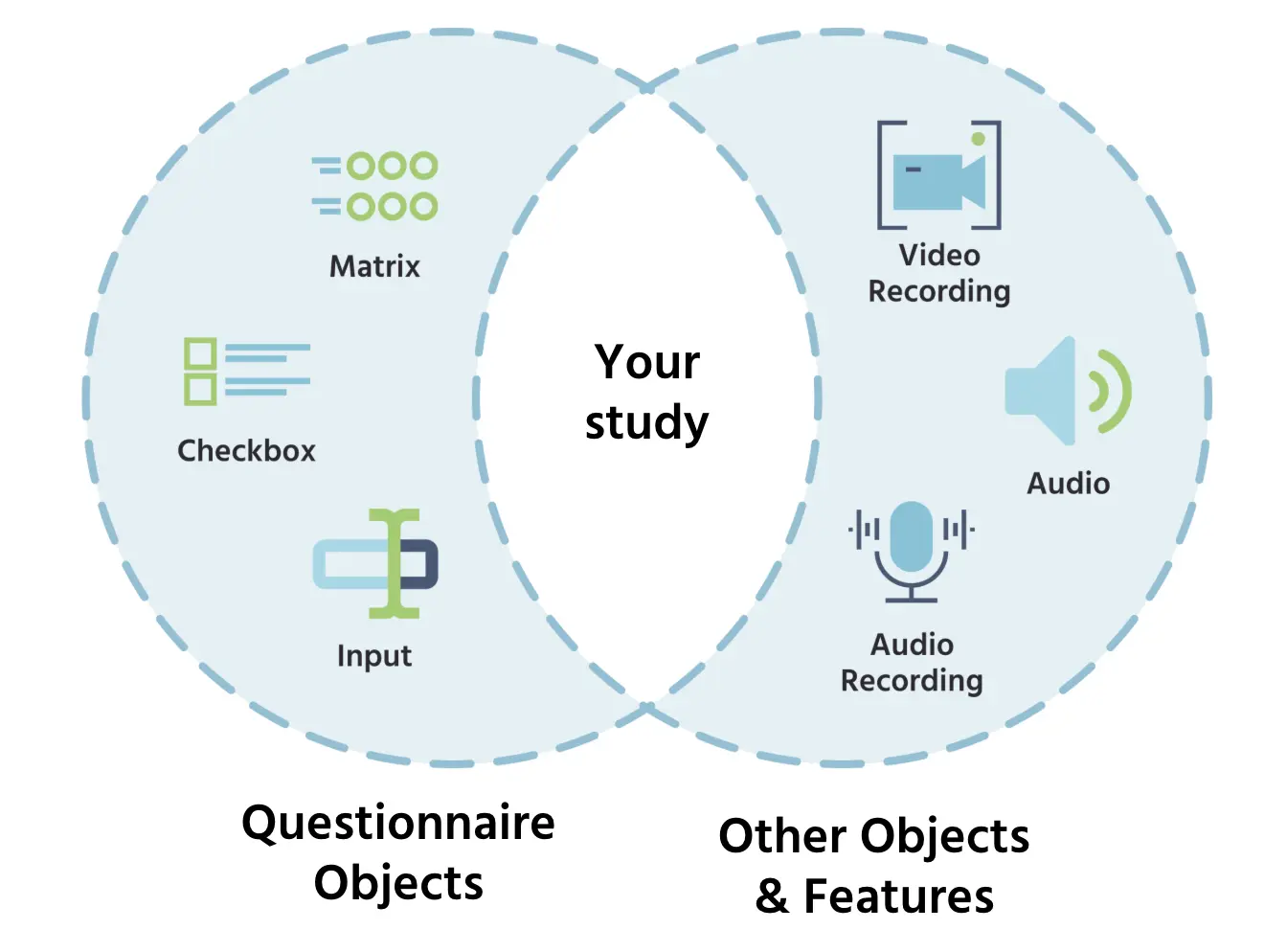
Experimental Flexibility: You have the flexibility to combine various objects and features, enabling you to bring your unique experimental design to life. Whether you are working with simple questionnaires or complex setups, the possibilities for experimentation are limitless.
Management of the Classroom Use
With its resources for managing assignments and facilitating participation in experiments, it stands as an ideal platform to assist professors in teaching experimental and cognitive psychology.
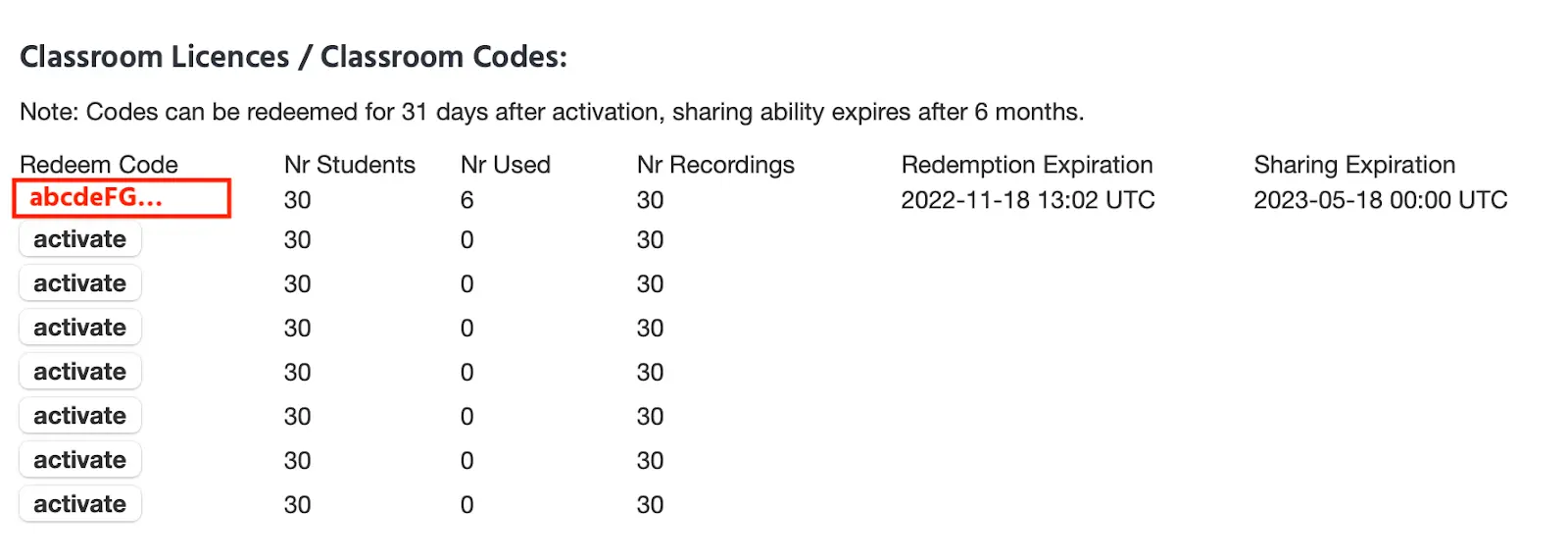
- There are Redemption Codes (additional data recordings) available which can be redeemed after activation.
- Researchers and student seats can be effectively managed and controlled.
- Collaboration is also possible with student seats.
Manage Assignments
The Participants tab, lets you manage classroom-related assignments and quizzes with ease.

By introducing your students to Labvanced, you are giving them access to an innovative and powerful app that can help take their experiment-design skills, knowledge and experience to greater heights!
Ready to add Labvanced to your psychology curriculum?
Give students the opportunity to advance their experiment design skills by introducing them to Labvanced to build their psychology tasks, collect data and more!
Examples of Theses
Below are examples of student work using Labvanced, demonstrating a range of experimental designs and research questions explored in various fields:
Experimental investigation of the role of slow wave sleep in fear extinction and analog intrusive re-experiencing
Friesen, E. (2024).
Universität des Saarlandes
https://publikationen.sulb.uni-saarland.de/handle/20.500.11880/37408
Is there a Relationship between Parents' Screen Usage and Young Children’s Development?
Nguyen, D. (2024).
University of Plymouth
http://pearl.plymouth.ac.uk/handle/10026.1/22045
Often overlooked, experience at daycare influences the perception of conversational turn-taking in pre-verbal infants.
Meunier, B. (2024).
Université de Rennes
https://theses.hal.science/tel-04495987/document
Monitoring early stages of development online: a remote study on Joint Attention. (Monitorare le prime fasi dello sviluppo da remoto: uno studio online sulla Joint Attention.)
Vignoli, G. (2023).
University of Padua
https://thesis.unipd.it/handle/20.500.12608/47553
Explaining spectrotemporal differences between music and language (Erklärung spektrotemporaler Unterschiede zwischen Musik und Sprache)
Haiduk, F. (2023).
University of Vienna
10.25365/thesis.74937
Evaluating pause particles and their functions in natural and synthesized speech in laboratory and lecture settings
Elmers, M. (2023).
Universität des Saarlandes
http://dx.doi.org/10.22028/D291-41118
Exploring Auditory Working Memory in Turkish Infants through the ADAM Game Experiment
Hamitoglu, A. (2023).
University of Padua
https://thesis.unipd.it/handle/20.500.12608/58859
Effects of Interfering Speech in a Foreign Language on Speech Understanding
Waller, C.K. (2023).
The Pennsylvania State University
Link: Thesis PDF
The Utility of Webcam Eye-Tracking: Lessons Learned and Practical Applications in Decision-Making and Digital Human-Computer Interactions
Bertrand, J. (2023).
University of Alberta
https://doi.org/10.7939/r3-83ge-t169
A Cross-Linguistic Comparison of Lexical Stress Strength and Macro-Rhythm Strength
Prechtel, C. (2023).
UCLA
https://escholarship.org/uc/item/2cm4q5v9
Social information sampling and decision-making: An evolutionary and ontogenetic perspective
Titchener, R. (2023)
University of Gottingen
https://ediss.uni-goettingen.de/handle/11858/14666
A study on the relationship between the early markers of Joint Attention and Temperament in infants 6-18 months old (Uno studio sulla relazione tra i precursori dell’attenzione congiunta e il temperamento in infanti di 6-18 mesi)
Obert, A. (2023).
University of Padua
https://thesis.unipd.it/handle/20.500.12608/56343