labvanced logoLabVanced
Contact
    • Remote Physiological Measurements
    • Eye Tracking
    • Head & Face-Tracking
    • Emotion Detection
    • Heart Rate Detection (rPPG)
    • Generative AI
    • Audio Transcription
    • EEG & Hardware Integrations
    • Decision Making
    • Reaction Times
    • Keyboard Inputs
    • Mouse Tracking
    • Mobile / Touch
    • Questionnaires
    • Gamepad / Joystick Integration
    • Audio Recordings
    • Audio Transcription
    • Video Recordings
    • Screen Recordings
    • Photos / Snapshots
    • Video Conferencing
    • Canvas Drawings
    • Build with AI
    • Build with Spreadsheets
    • Using the Experiment Editor
    • Coding
    • Creating Questionnaires
    • Balancing & Randomization
    • UX & Website Testing
    • Single Session Studies
    • Factorial Designs
    • Longitudinal & Multi-session Studies
    • Individual & Case Studies
    • Real-time Multi-user Studies
    • Interviews & Video Calls
    • Surveys & Questionnaires
    • Experience Sampling & Diaries
    • Classroom & Group Testing
    • Interventions & Clinical Trials
    • In the Browser
    • Mobile App
    • Desktop App
    • WebBridge Chrome Extension
    • Stroop Test
    • Flanker Task
    • N-back Task
    • Implicit Association Test
    • Trail Making Test
    • Digit Span
    • Corsi Block Tapping
    • Tower of London
    • Balloon Analog Risk Task
    • Preferential Looking
    • Browse more →
    • DASS-21
    • GAD-7
    • Rosenberg Self-Esteem Scale
    • PHQ-9
    • Ten-Item Personality Inventory
    • Big Five Personality Test
    • Adult ADHD Self-Report Scale
    • Browse more →
    • Building a Multi-user Study
    • Webcam Eye Tracking with AOIs
    • Website Frame Eye Tracking
    • Conditional Eye Tracking Opt-in
    • ChatGPT Study
    • Desktop App Study with EEG
    • Between-subjects Group Balancing
    • Building a Reading Study
    • Stroop Task
    • Lexical Decision Task
    • Browse more →
    Public Experiment Library
    • Arts Research
    • Clinical Psychology & Neuropsychology Medicine
    • Cognitive Psychology
    • Developmental Psychology
    • Behavioral Economics & Decision Science
    • Educational Research & Psychology
    • HCI & Human Factors
    • Linguistics & Language Sciences
    • Consumer & Marketing Research
    • Social & Personality Psychology
    • Sport & Movement Science
    • UX & Website Testing
    • Executive Functions
    • Language & Reading
    • Decision-Making & Reasoning
    • Attention
    • Overview
    • HCI & Human Factors
    • UX & Website Testing
    • Consumer & Marketing Research
    • White-Label App
    • PageGazer
    • Webcam vs. Lab Eye Tracking in InfantsAnna Banki & Gabriela Markova
    • Eye Tracking for Influencer MarketingDr. Alexander Edeling
    • Eye Tracking Infant Word ComprehensionDr. Giulia Calignano
    • Sentence Reading and Grammar JudgmentsDr. Jonathan Mirault
    • Regulating Emotions with MusicDr. Katrin Starcke
    • Game-Based Grammar Learning in ChildrenDr. Mireia Marimon
    • Gaze Cueing and AutismMax Soares Miehstein
    • Personality and Hearing in NoiseDr. Malte Wöstmann
    • All interviews →
    • Lab Notes
    • How to Cite Labvanced
    • Labvanced Platform Paper (2017)
    • Webcam Eye Tracking Validation (2024)
    • Webcam Eye Tracking Studies
    • Cognitive Psychology Studies
    • Developmental Psychology Studies
    • Linguistics Studies
    • See all publications →
    • Getting Started
    • Guide
    • Video Tutorials
    • Walkthroughs
    • Live Chat
    • Webinars & Onboarding Calls
    • AI Assistant
    • FAQ
    • Importing Templates Guide
    • Test Templates
    • Live Eye Tracking Metrics
    • Mouse Tracking Demo
    • ChatGPT Demo
    • Audio Recording Object Demo
    • Adding Image Stimuli Demo
    • Score & Feedback Demo
    • Browse all technical demos →
    • Timing Precision
    • Stimuli Presentation
    • Headphone Checks
    • Bot Checks
    • Participant Management
    • Comparisons
    • Research Blog
    • Prolific Integration
    • CloudResearch Integration
    • Sona Systems Integration
    • BeSample Integration
    • Panelabs Integration
    • Clickworker Integration
    • Labvanced Webhook API
    • Labvanced REST API
    • About Us
    • Newsletter Archive
    • Terms & Conditions
    • Data Security & Data Privacy
    • Technical & Organisational Measures
    • Accessibility
    • W-8BEN-E Form
    • Data Processing Agreement Template
    LinkedInYouTubeDiscord
    • Individual
    • Lab
    • Department / Consortium
    • Teaching
    • Campus
    • Commercial
    Top-Ups
    • Overview
    • Study Building
    • Subject Recruitment
    • Dedicated Support
    Checkout
  • Contact
    • EN
      • 中國人
      • Deutsch
      • Français
      • Español
      • English
      • 日本語
    • Appgo to app icon
    • Loginlogin icon
    Platform
    Labvanced makes it easy to implement the most advanced study design and reliably collect your data.
    Biosignals & AI
    Remote Physiological MeasurementsEye TrackingHead & Face-TrackingEmotion DetectionHeart Rate Detection (rPPG)Generative AIAudio TranscriptionEEG & Hardware Integrations
    Behavioral Recordings
    Decision MakingReaction TimesKeyboard InputsMouse TrackingMobile / TouchQuestionnairesGamepad / Joystick Integration
    Media Recordings
    Audio RecordingsAudio TranscriptionVideo RecordingsScreen RecordingsPhotos / SnapshotsVideo ConferencingCanvas Drawings
    Implementation Techniques
    Build with AIBuild with SpreadsheetsUsing the Experiment EditorCodingCreating QuestionnairesBalancing & RandomizationUX & Website Testing
    Study Formats

    Your study can take whatever format your research needs. Here are a few popular examples.

    Single Session StudiesFactorial DesignsLongitudinal & Multi-session StudiesIndividual & Case StudiesReal-time Multi-user StudiesInterviews & Video CallsSurveys & QuestionnairesExperience Sampling & DiariesClassroom & Group TestingInterventions & Clinical Trials
    Where Studies Run

    Run your study online in the browser, on mobile or tablet with the mobile app, or in-lab with the desktop app.

    In the BrowserMobile AppDesktop AppWebBridge Chrome Extension
    Tests
    Explore cognitive tests, questionnaires, walkthroughs, and our public experiment library: a starting point for your next study.
    Popular Cognitive Tests
    Stroop TestFlanker TaskN-back TaskImplicit Association TestTrail Making TestDigit SpanCorsi Block TappingTower of LondonBalloon Analog Risk TaskPreferential Looking
    Browse more →
    Questionnaires & Scales
    DASS-21GAD-7Rosenberg Self-Esteem ScalePHQ-9Ten-Item Personality InventoryBig Five Personality TestAdult ADHD Self-Report Scale
    Browse more →
    Public Experiment Library

    Take a look at what other researchers in the community are doing through our extensive, open catalog of shared studies.

    Open the public library →
    Walkthroughs

    Step-by-step builds of complete studies, from a blank project to a running experiment, that you can follow along or adapt.

    Building a Multi-user StudyWebcam Eye Tracking with AOIsWebsite Frame Eye TrackingConditional Eye Tracking Opt-inChatGPT StudyDesktop App Study with EEGBetween-subjects Group BalancingBuilding a Reading StudyStroop TaskLexical Decision Task
    Browse more →
    Research
    One platform for students, academics, and industry researchers studying human behavior.
    Harvard UniversityStanford UniversityCambridge UniversityUCLNYUMax Planck InstituteUCLATU Munich

    Trusted by researchers at 1,500+ universities worldwide

    Academic Research
    Arts ResearchClinical Psychology & Neuropsychology MedicineCognitive PsychologyDevelopmental PsychologyBehavioral Economics & Decision ScienceEducational Research & PsychologyHCI & Human FactorsLinguistics & Language SciencesConsumer & Marketing ResearchSocial & Personality PsychologySport & Movement ScienceUX & Website Testing
    Research Areas
    Executive FunctionsLanguage & ReadingDecision-Making & ReasoningAttention
    Industry / Commercial
    OverviewHCI & Human FactorsUX & Website TestingConsumer & Marketing ResearchWhite-Label AppPageGazer
    Researcher Interviews

    Conversations with researchers about the studies they ran with Labvanced, what worked, and what they learned.

    Webcam vs. Lab Eye Tracking in InfantsAnna Banki & Gabriela MarkovaEye Tracking for Influencer MarketingDr. Alexander EdelingEye Tracking Infant Word ComprehensionDr. Giulia CalignanoSentence Reading and Grammar JudgmentsDr. Jonathan MiraultRegulating Emotions with MusicDr. Katrin StarckeGame-Based Grammar Learning in ChildrenDr. Mireia MarimonGaze Cueing and AutismMax Soares MiehsteinPersonality and Hearing in NoiseDr. Malte Wöstmann
    All interviews →
    Our Research
    Lab NotesHow to Cite Labvanced
    Peer Reviewed Studies

    A selection of peer-reviewed work built on Labvanced: our own platform and validation papers, and studies by the research community grouped by area. Hundreds more are listed on the full publications page.

    Labvanced Platform Paper (2017)Webcam Eye Tracking Validation (2024)Webcam Eye Tracking StudiesCognitive Psychology StudiesDevelopmental Psychology StudiesLinguistics Studies
    See all publications →
    Resources
    Valuable resources to help you learn the platform, stay updated, and more.
    Documentation
    Getting StartedGuideVideo TutorialsWalkthroughs
    Support
    Live ChatWebinars & Onboarding CallsAI AssistantFAQ
    Templates & Demos

    These are a few popular examples. Browse our guide and a selection of technical demos to get started with implementation.

    Importing Templates GuideTest TemplatesLive Eye Tracking MetricsMouse Tracking DemoChatGPT DemoAudio Recording Object DemoAdding Image Stimuli DemoScore & Feedback Demo
    Browse all technical demos →
    Methodology
    Timing PrecisionStimuli PresentationHeadphone ChecksBot ChecksParticipant ManagementComparisonsResearch Blog
    Integrations & APIs
    Prolific IntegrationCloudResearch IntegrationSona Systems IntegrationBeSample IntegrationPanelabs IntegrationClickworker IntegrationLabvanced Webhook APILabvanced REST API
    Company & Legal
    About UsNewsletter ArchiveTerms & ConditionsData Security & Data PrivacyTechnical & Organisational MeasuresAccessibilityW-8BEN-E FormData Processing Agreement Template
    LinkedInYouTubeDiscord
    Pricing
    Our licenses and additional services at a glance.
    Licenses
    IndividualLabDepartment / ConsortiumTeachingCampusCommercial
    Top-Ups

    Need more recordings for your lab or your own research? Simply use one of these recording top-up packages.

    Browse top-up packages →
    Additional Services

    Hire Labvanced’s expert team to quickly bring your project to the level of rigor it needs.

    OverviewStudy BuildingSubject RecruitmentDedicated Support
    Checkout

    Ready to purchase a license or top-up? Head straight to checkout.

    Go to checkout →
    • 中國人
    • Deutsch
    • Français
    • Español
    • English
    • 日本語
    Banner with the title Executive Function Research

    Executive Function Research with Labvanced

    Executive function research measures how people inhibit automatic responses, update information in working memory, shift between rules, and plan multi-step actions. Labvanced runs all four components as one study, online, at home, or in the lab, with millisecond-precise stimulus timing and optional webcam eye tracking.

    Table of Contents

    • What Executive Function Research Measures
    • Why Timing and Setting Matter
    • Examples of Tasks in Labvanced
    • Designing a Battery
    • Extend the Design
    • Peer-reviewed Research

    What Executive Function Research Measures

    Diamond (2013) describes executive functions as a family of top-down control processes built on three core components, inhibition, working memory, and cognitive flexibility, with higher-order functions such as planning built on them. Research on each component asks a different question, and each question maps to a different measure and a different family of paradigm:

    ComponentResearch questionTypical measuresMethod family and ready-to-run tasks
    Inhibitory controlHow do people suppress a dominant response when the situation calls for another?Reaction time and accuracy difference between congruent and incongruent trialsInterference paradigms: Stroop Test
    Working memory updatingHow well do people maintain and update information under load?Hit rate, false alarms, longest span recalledLoad and span paradigms: N-Back Task, Digit Span Task, Corsi Block Tapping Test
    Cognitive flexibilityHow do people shift between rules or response sets?Switch cost, perseverative errors, categories achievedRule-shifting and sequencing paradigms: Card Sorting Test, Trail Making Test
    PlanningHow do people sequence steps toward a goal before acting?Initial thinking time, moves compared with the optimal solutionMulti-step problem solving: Tower of London Test

    The tasks in the last column are available as ready-to-run templates in Labvanced. For task-level setup and a comparison of the paradigms, see the executive function tasks page.
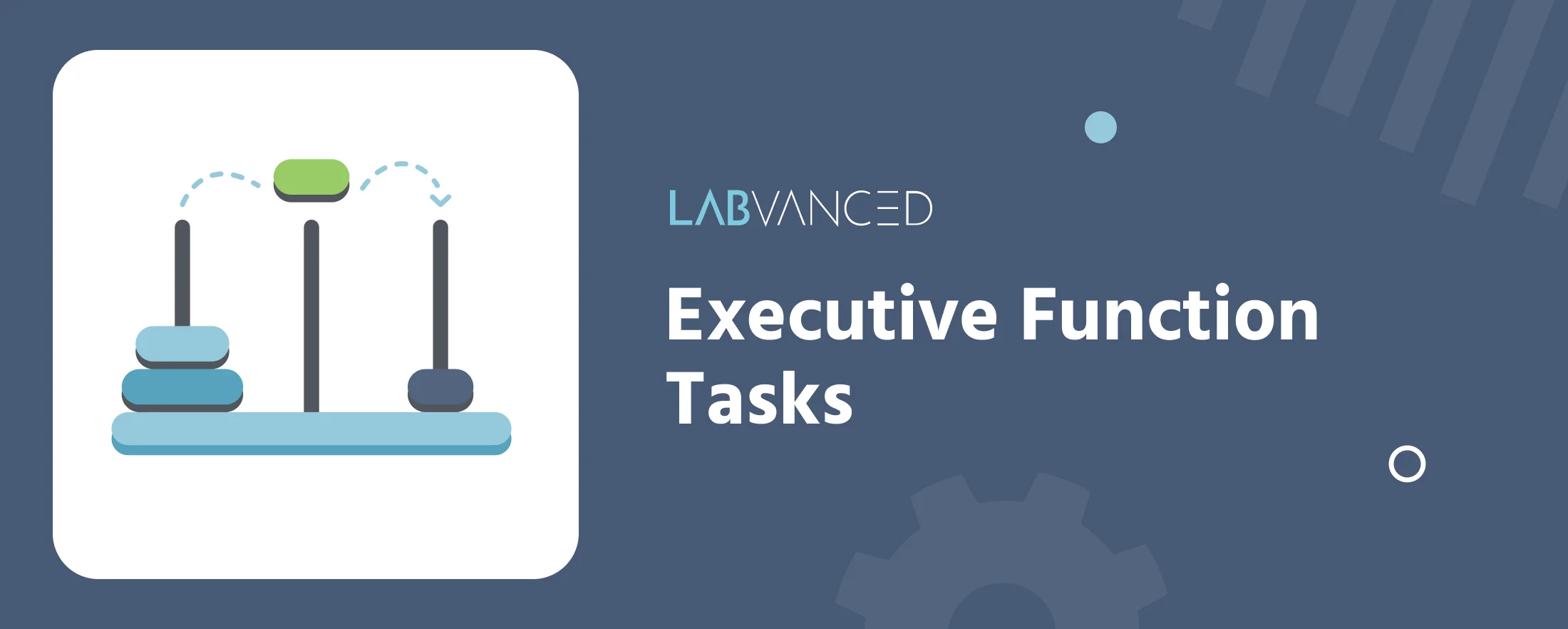
    Tower of London pegs with a disk being moved beside the title Executive Function Tasks
    Compare the executive function tasks and start from a ready-to-run template.

    Why Timing and Setting Matter

    Most executive function measures are differences between conditions: an interference effect is the reaction time gap between incongruent and congruent trials, and a switch cost is the gap between switch and repeat trials. Because these effects are differences between condition averages, timing error that varies between trials or devices adds noise directly to the measure.

    Labvanced's stimulus timing is grounded in peer-reviewed methods for precise JavaScript display timing (Lukács & Gartus, 2022). The technology page on millisecond-accurate timing describes the mechanism.

    Setting matters for the same reason. A battery that runs identically online, at home, and in the lab makes it possible to compare results across those settings, because the tasks, timing, and data format are the same.

    Examples of Tasks in Labvanced

    These tasks are available as importable templates in Labvanced, and each one can be customized to fit your study.

    Stroop Test

    Participants view color words shown in congruent or incongruent font colors and respond to the text color rather than the word meaning, measuring inhibitory control.

    N-Back Task

    Participants indicate whether the current stimulus matches the one shown two steps earlier, measuring working memory updating. Training trials and immediate feedback support learning.

    Card Sorting Test

    Participants sort cards by a rule that changes without warning, measuring cognitive flexibility through how well they discover the new rule and avoid repeating the old one.

    Tower of London Test

    Participants rearrange colored balls across three pegs to match a target configuration in as few moves as possible, measuring planning. Thinking time, movement time, and accuracy against the optimal solution are captured.

    Designing a Battery

    A battery can focus on one component or characterize several. Four designs cover most studies.

    • Single component: one task for one construct, such as the Stroop Test alone for inhibitory control.
    • Updating battery: N-Back, Digit Span, and Corsi Block Tapping together give three converging measures of working memory, so the result no longer depends on one stimulus format.
    • Flexibility and planning battery: Card Sorting, Trail Making, and Tower of London cover set-shifting and planning in one session, a pairing common in clinical and developmental batteries.
    • Full profile: one task per component, for example Stroop, N-Back, Card Sorting, and Tower of London, characterizes executive function broadly without repeating a component.

    A few design decisions are worth considering when planning any battery:

    • Task order: counterbalancing the order across participants keeps fatigue and practice effects from lining up with one task.
    • Practice: a practice block before scored trials lets participants learn the task before performance is measured.
    • Consistency across settings: identical stimulus timing and response collection across online, at-home, and in-lab sessions keep results comparable.

    In Labvanced, the order of tasks within a block can be fixed or randomized for each participant in the Study Design tab. The randomization and balancing guide covers the further options.

    Extend the Design

    A battery can gain a second data channel or reach populations a lab-only setup cannot. These capabilities attach to the same study without rebuilding it.

    Webcam eye tracking added to an executive function task in Labvanced

    Webcam Eye Tracking

    Add gaze data to a planning task such as Tower of London to see where participants look before their first move. Validated against the EyeLink 1000 in a peer-reviewed comparison.
    Mouse tracking in a Labvanced study

    Mouse Tracking

    Record the cursor's X and Y position during mouse-response tasks, stored next to your reaction times, to examine the path as well as the final choice.
    Longitudinal study design with repeated sessions in Labvanced

    Longitudinal Designs

    Re-test the same participants across days, weeks, or years to study change or test-retest reliability, with scheduling and reminders handled for you.
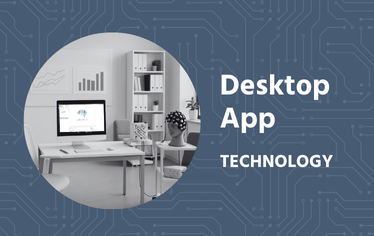
    The Labvanced Desktop App used to run an executive function battery in the lab

    Desktop App

    Run the same battery in the lab and connect external devices such as EEG, so online and in-lab sessions use one study.
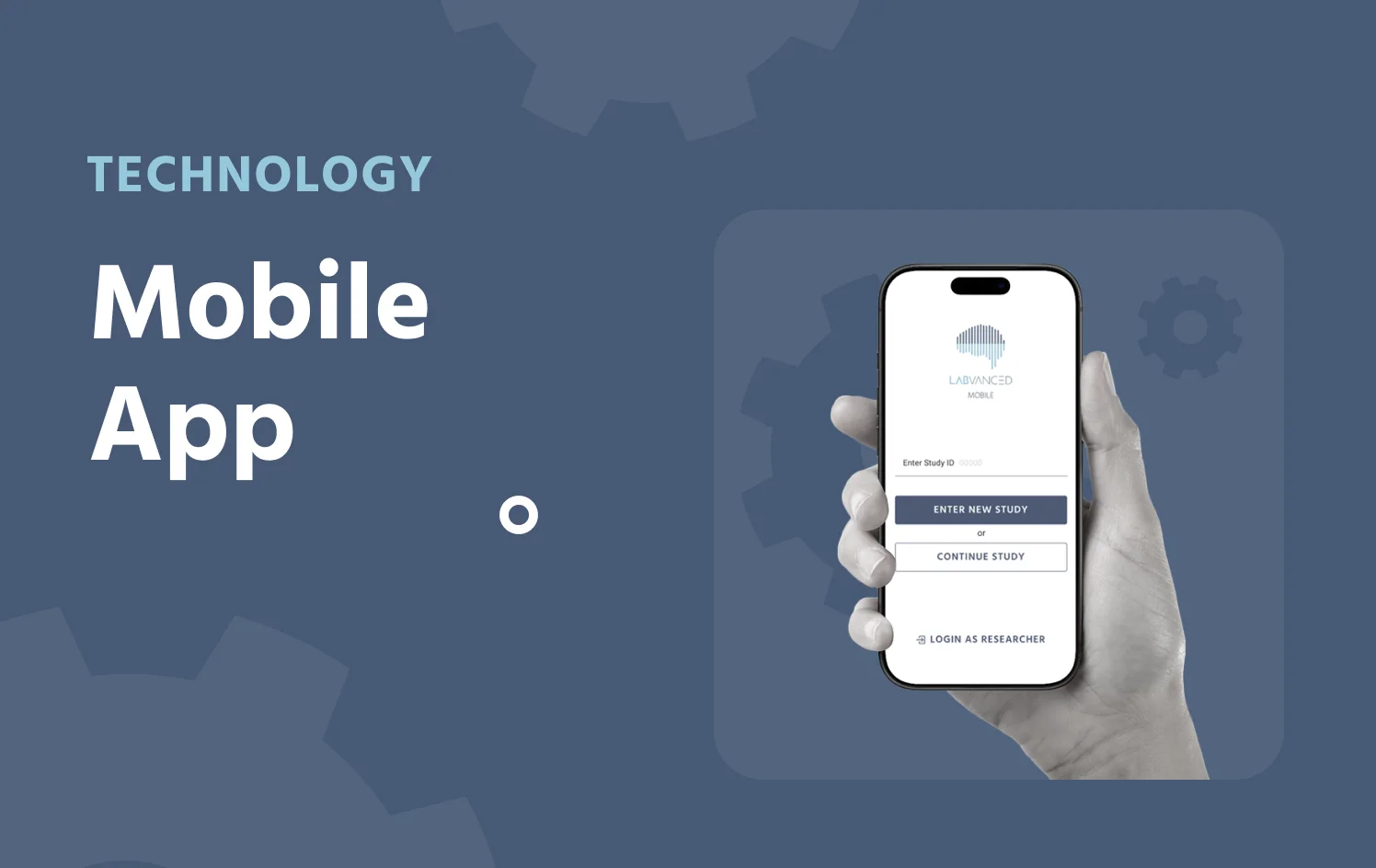
    The Labvanced mobile app for offline data collection

    Mobile App

    Collect data offline in the field, for participants who cannot sit at a lab computer.
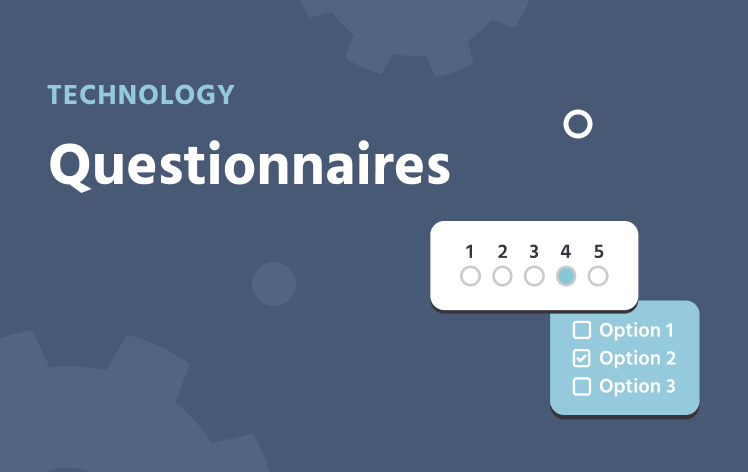
    A questionnaire paired with an executive function task in Labvanced

    Questionnaires

    Pair a performance task with a validated self-report instrument in the same study, with no separate survey tool.


    Studies that need an arousal measure across a long battery can also add remote heart rate measurement from the webcam.

    Executive Function Research Using Labvanced

    Executive function and related cognitive control studies run on Labvanced include the papers below. More cognitive psychology work run on Labvanced is collected on the cognitive psychology publications page.

    Limits on selecting multiple items from working memory: The role of context and item competition
    Tiferet-Dweck, C., Zamora-Romero, S., & Unger, K. (2025)
    Frontiers in Cognition
    https://doi.org/10.3389/fcogn.2025.1668316

    The role of motor inhibition in implicit negation processing: two Go/No-Go behavioral studies
    Montalti, M., Calbi, M., Umiltà, M. A., Gallese, V., & Cuccio, V. (2024)
    Psychological Research
    https://doi.org/10.1007/s00426-024-01941-0

    Developmental trajectories of executive and semantic flexibility using task-switching
    Viviani, G., Ambrosini, E., Porru, A., et al. (2025)
    Research Square (preprint)
    https://doi.org/10.21203/rs.3.rs-7965304/v1

    Testing three models of cognitive stress effects: visual perception, response inhibition and cognitive flexibility
    Weckesser, L. J., Großkopf, C. M., Weber, B., Soylu, S., Endrass, T., & Miller, R. (2026)
    arXiv (preprint)
    https://doi.org/10.48550/arXiv.2601.10515

    See More Publications
    • Harvard University
    • Stanford University
    • Cambridge University
    • Carnegie Mellon University
    • NYU
    • UCL
    • National University of Singapore
    • TU Munich
    • ENS Paris
    • LMU Munich
    • UCLA
    • UC Santa Barbara
    • UC Santa Cruz
    • Cleveland State University
    • Northwestern University
    • Grand Valley State University
    • Penn State
    • University of St Andrews
    • Heriot-Watt University
    • University of Liverpool
    • University of Manchester
    • Aix-Marseille University
    • Université Gustave Eiffel
    • Université Paris Cité
    • SNCF
    • Max Planck Institute
    • Helmholtz Association
    • ZAS Berlin
    • DIE
    • TU Berlin
    • TU Dresden
    • University of Trier
    • CIBR
    • University of Hong Kong
    • Nanyang Technological University
    • Tohoku University
    • Seoul National University
    • Ewha Womans University
    • University of Padova
    • University of Alberta
    • BBCL
    • Ben-Gurion University
    • Charles University
    • University of Granada

    Trusted by researchers at 1,500+ universities worldwide

    Cognitive and neuro psychology research use case

    Cognitive & Neuro

    Attention, working memory, and perception research.

    Developmental psychology research use case

    Developmental Psychology

    Participants of all ages, including longitudinal designs.

    Clinical and digital health research use case

    Clinical & Digital Health

    Healthy and vulnerable populations, from research to practice.

    Social and personality psychology research use case

    Social & Personality

    Personality, surveys, and multi-user studies in social settings.


    Build Your Study

    There are three ways to start, depending on how much of the build you want to do yourself.

    1. Start from a template.
      Import any of the seven executive function tasks from the executive function tasks page and combine them in one study.
    2. Have the team build it.
      The study building service designs, configures, and launches the study for you.
    3. Talk through feasibility first.
      Describe the design and the team will tell you what is possible.

    Questions about your study design or platform fit?

    Book a Call Write to Us

    If you write to us, it helps to bring:

    • the executive function components you want to measure
    • your population, including age range and any clinical group
    • the number of participants and your timeline
    • where data will be collected: online, at home, in the lab, or a mix
    • any additional measures, such as eye tracking, EEG, or questionnaires

    Frequently Asked Questions

    How do you measure executive function in an experiment?
    Each executive function is converted into a measurable outcome with a behavioral task. Inhibition is read from the reaction time and accuracy difference between congruent and incongruent trials, updating from hit rate and false alarms, flexibility from switch costs and perseverative errors, and planning from planning time and moves compared with the optimal solution.
    Can executive function tasks run online?
    Yes. Labvanced provides ready-to-run templates for seven executive function tasks (Stroop, N-Back, Digit Span, Corsi Block Tapping, Card Sorting, Trail Making, and Tower of London). Each one runs on the same visually built template across web, desktop, and mobile.
    How many tasks should an executive function battery include?
    A broad executive function profile uses one task per executive function. Converging evidence for a single function uses several tasks that target it, for example N-Back, Digit Span, and Corsi Block Tapping for working memory updating.
    Can I add eye tracking or EEG to an executive function task?
    Webcam eye tracking is built in and was validated against the EyeLink 1000 in a peer-reviewed comparison, with 1.3° accuracy at center-screen (Kaduk et al., 2024). The Desktop App runs the same study in the lab and connects external devices such as EEG.

    References

    • Diamond, A. (2013). Executive functions. Annual Review of Psychology, 64, 135-168. https://doi.org/10.1146/annurev-psych-113011-143750

    • Kaduk, T., Goeke, C., Finger, H., & König, P. (2024). Webcam eye tracking close to laboratory standards: Comparing a new webcam-based system and the EyeLink 1000. Behavior Research Methods, 56(5), 5002-5022. https://doi.org/10.3758/s13428-023-02237-8

    • Lukács, G., & Gartus, A. (2022). Precise display time measurement in JavaScript for web-based experiments. Behavior Research Methods. https://doi.org/10.3758/s13428-022-01835-2