labvanced logoLabVanced
Contact
    • Remote Physiological Measurements
    • Eye Tracking
    • Head & Face-Tracking
    • Emotion Detection
    • Heart Rate Detection (rPPG)
    • Generative AI
    • Audio Transcription
    • EEG & Hardware Integrations
    • Decision Making
    • Reaction Times
    • Keyboard Inputs
    • Mouse Tracking
    • Mobile / Touch
    • Questionnaires
    • Gamepad / Joystick Integration
    • Audio Recordings
    • Audio Transcription
    • Video Recordings
    • Screen Recordings
    • Photos / Snapshots
    • Video Conferencing
    • Canvas Drawings
    • Build with AI
    • Build with Spreadsheets
    • Using the Experiment Editor
    • Coding
    • Creating Questionnaires
    • Balancing & Randomization
    • UX & Website Testing
    • Single Session Studies
    • Factorial Designs
    • Longitudinal & Multi-session Studies
    • Individual & Case Studies
    • Real-time Multi-user Studies
    • Interviews & Video Calls
    • Surveys & Questionnaires
    • Experience Sampling & Diaries
    • Classroom & Group Testing
    • Interventions & Clinical Trials
    • In the Browser
    • Mobile App
    • Desktop App
    • WebBridge Chrome Extension
    • Stroop Test
    • Flanker Task
    • N-back Task
    • Implicit Association Test
    • Trail Making Test
    • Digit Span
    • Corsi Block Tapping
    • Tower of London
    • Balloon Analog Risk Task
    • Preferential Looking
    • Browse more →
    • DASS-21
    • GAD-7
    • Rosenberg Self-Esteem Scale
    • PHQ-9
    • Ten-Item Personality Inventory
    • Big Five Personality Test
    • Adult ADHD Self-Report Scale
    • Browse more →
    • Building a Multi-user Study
    • Webcam Eye Tracking with AOIs
    • Website Frame Eye Tracking
    • Conditional Eye Tracking Opt-in
    • ChatGPT Study
    • Desktop App Study with EEG
    • Between-subjects Group Balancing
    • Building a Reading Study
    • Stroop Task
    • Lexical Decision Task
    • Browse more →
    Public Experiment Library
    • Arts Research
    • Clinical Psychology & Neuropsychology Medicine
    • Cognitive Psychology
    • Developmental Psychology
    • Behavioral Economics & Decision Science
    • Educational Research & Psychology
    • HCI & Human Factors
    • Linguistics & Language Sciences
    • Consumer & Marketing Research
    • Social & Personality Psychology
    • Sport & Movement Science
    • UX & Website Testing
    • Executive Functions
    • Language & Reading
    • Decision-Making & Reasoning
    • Attention
    • Overview
    • HCI & Human Factors
    • UX & Website Testing
    • Consumer & Marketing Research
    • White-Label App
    • PageGazer
    • Webcam vs. Lab Eye Tracking in InfantsAnna Banki & Gabriela Markova
    • Eye Tracking for Influencer MarketingDr. Alexander Edeling
    • Eye Tracking Infant Word ComprehensionDr. Giulia Calignano
    • Sentence Reading and Grammar JudgmentsDr. Jonathan Mirault
    • Regulating Emotions with MusicDr. Katrin Starcke
    • Game-Based Grammar Learning in ChildrenDr. Mireia Marimon
    • Gaze Cueing and AutismMax Soares Miehstein
    • Personality and Hearing in NoiseDr. Malte Wöstmann
    • All interviews →
    • Lab Notes
    • How to Cite Labvanced
    • Labvanced Platform Paper (2017)
    • Webcam Eye Tracking Validation (2024)
    • Webcam Eye Tracking Studies
    • Cognitive Psychology Studies
    • Developmental Psychology Studies
    • Linguistics Studies
    • See all publications →
    • Getting Started
    • Guide
    • Video Tutorials
    • Walkthroughs
    • Live Chat
    • Webinars & Onboarding Calls
    • AI Assistant
    • FAQ
    • Importing Templates Guide
    • Test Templates
    • Live Eye Tracking Metrics
    • Mouse Tracking Demo
    • ChatGPT Demo
    • Audio Recording Object Demo
    • Adding Image Stimuli Demo
    • Score & Feedback Demo
    • Browse all technical demos →
    • Timing Precision
    • Stimuli Presentation
    • Headphone Checks
    • Bot Checks
    • Participant Management
    • Comparisons
    • Research Blog
    • Prolific Integration
    • CloudResearch Integration
    • Sona Systems Integration
    • BeSample Integration
    • Panelabs Integration
    • Clickworker Integration
    • Labvanced Webhook API
    • Labvanced REST API
    • About Us
    • Newsletter Archive
    • Terms & Conditions
    • Data Security & Data Privacy
    • Technical & Organisational Measures
    • Accessibility
    • W-8BEN-E Form
    • Data Processing Agreement Template
    LinkedInYouTubeDiscord
    • Individual
    • Lab
    • Department / Consortium
    • Teaching
    • Campus
    • Commercial
    Top-Ups
    • Overview
    • Study Building
    • Subject Recruitment
    • Dedicated Support
    Checkout
  • Contact
    • EN
      • 中國人
      • Deutsch
      • Français
      • Español
      • English
      • 日本語
    • Appgo to app icon
    • Loginlogin icon
    Platform
    Labvanced makes it easy to implement the most advanced study design and reliably collect your data.
    Biosignals & AI
    Remote Physiological MeasurementsEye TrackingHead & Face-TrackingEmotion DetectionHeart Rate Detection (rPPG)Generative AIAudio TranscriptionEEG & Hardware Integrations
    Behavioral Recordings
    Decision MakingReaction TimesKeyboard InputsMouse TrackingMobile / TouchQuestionnairesGamepad / Joystick Integration
    Media Recordings
    Audio RecordingsAudio TranscriptionVideo RecordingsScreen RecordingsPhotos / SnapshotsVideo ConferencingCanvas Drawings
    Implementation Techniques
    Build with AIBuild with SpreadsheetsUsing the Experiment EditorCodingCreating QuestionnairesBalancing & RandomizationUX & Website Testing
    Study Formats

    Your study can take whatever format your research needs. Here are a few popular examples.

    Single Session StudiesFactorial DesignsLongitudinal & Multi-session StudiesIndividual & Case StudiesReal-time Multi-user StudiesInterviews & Video CallsSurveys & QuestionnairesExperience Sampling & DiariesClassroom & Group TestingInterventions & Clinical Trials
    Where Studies Run

    Run your study online in the browser, on mobile or tablet with the mobile app, or in-lab with the desktop app.

    In the BrowserMobile AppDesktop AppWebBridge Chrome Extension
    Tests
    Explore cognitive tests, questionnaires, walkthroughs, and our public experiment library: a starting point for your next study.
    Popular Cognitive Tests
    Stroop TestFlanker TaskN-back TaskImplicit Association TestTrail Making TestDigit SpanCorsi Block TappingTower of LondonBalloon Analog Risk TaskPreferential Looking
    Browse more →
    Questionnaires & Scales
    DASS-21GAD-7Rosenberg Self-Esteem ScalePHQ-9Ten-Item Personality InventoryBig Five Personality TestAdult ADHD Self-Report Scale
    Browse more →
    Public Experiment Library

    Take a look at what other researchers in the community are doing through our extensive, open catalog of shared studies.

    Open the public library →
    Walkthroughs

    Step-by-step builds of complete studies, from a blank project to a running experiment, that you can follow along or adapt.

    Building a Multi-user StudyWebcam Eye Tracking with AOIsWebsite Frame Eye TrackingConditional Eye Tracking Opt-inChatGPT StudyDesktop App Study with EEGBetween-subjects Group BalancingBuilding a Reading StudyStroop TaskLexical Decision Task
    Browse more →
    Research
    One platform for students, academics, and industry researchers studying human behavior.
    Harvard UniversityStanford UniversityCambridge UniversityUCLNYUMax Planck InstituteUCLATU Munich

    Trusted by researchers at 1,500+ universities worldwide

    Academic Research
    Arts ResearchClinical Psychology & Neuropsychology MedicineCognitive PsychologyDevelopmental PsychologyBehavioral Economics & Decision ScienceEducational Research & PsychologyHCI & Human FactorsLinguistics & Language SciencesConsumer & Marketing ResearchSocial & Personality PsychologySport & Movement ScienceUX & Website Testing
    Research Areas
    Executive FunctionsLanguage & ReadingDecision-Making & ReasoningAttention
    Industry / Commercial
    OverviewHCI & Human FactorsUX & Website TestingConsumer & Marketing ResearchWhite-Label AppPageGazer
    Researcher Interviews

    Conversations with researchers about the studies they ran with Labvanced, what worked, and what they learned.

    Webcam vs. Lab Eye Tracking in InfantsAnna Banki & Gabriela MarkovaEye Tracking for Influencer MarketingDr. Alexander EdelingEye Tracking Infant Word ComprehensionDr. Giulia CalignanoSentence Reading and Grammar JudgmentsDr. Jonathan MiraultRegulating Emotions with MusicDr. Katrin StarckeGame-Based Grammar Learning in ChildrenDr. Mireia MarimonGaze Cueing and AutismMax Soares MiehsteinPersonality and Hearing in NoiseDr. Malte Wöstmann
    All interviews →
    Our Research
    Lab NotesHow to Cite Labvanced
    Peer Reviewed Studies

    A selection of peer-reviewed work built on Labvanced: our own platform and validation papers, and studies by the research community grouped by area. Hundreds more are listed on the full publications page.

    Labvanced Platform Paper (2017)Webcam Eye Tracking Validation (2024)Webcam Eye Tracking StudiesCognitive Psychology StudiesDevelopmental Psychology StudiesLinguistics Studies
    See all publications →
    Resources
    Valuable resources to help you learn the platform, stay updated, and more.
    Documentation
    Getting StartedGuideVideo TutorialsWalkthroughs
    Support
    Live ChatWebinars & Onboarding CallsAI AssistantFAQ
    Templates & Demos

    These are a few popular examples. Browse our guide and a selection of technical demos to get started with implementation.

    Importing Templates GuideTest TemplatesLive Eye Tracking MetricsMouse Tracking DemoChatGPT DemoAudio Recording Object DemoAdding Image Stimuli DemoScore & Feedback Demo
    Browse all technical demos →
    Methodology
    Timing PrecisionStimuli PresentationHeadphone ChecksBot ChecksParticipant ManagementComparisonsResearch Blog
    Integrations & APIs
    Prolific IntegrationCloudResearch IntegrationSona Systems IntegrationBeSample IntegrationPanelabs IntegrationClickworker IntegrationLabvanced Webhook APILabvanced REST API
    Company & Legal
    About UsNewsletter ArchiveTerms & ConditionsData Security & Data PrivacyTechnical & Organisational MeasuresAccessibilityW-8BEN-E FormData Processing Agreement Template
    LinkedInYouTubeDiscord
    Pricing
    Our licenses and additional services at a glance.
    Licenses
    IndividualLabDepartment / ConsortiumTeachingCampusCommercial
    Top-Ups

    Need more recordings for your lab or your own research? Simply use one of these recording top-up packages.

    Browse top-up packages →
    Additional Services

    Hire Labvanced’s expert team to quickly bring your project to the level of rigor it needs.

    OverviewStudy BuildingSubject RecruitmentDedicated Support
    Checkout

    Ready to purchase a license or top-up? Head straight to checkout.

    Go to checkout →
    • 中國人
    • Deutsch
    • Français
    • Español
    • English
    • 日本語

    Participant undergoing a headphone check during an online experiment

    What is a "Headphone Check?"

    The headphone check, to our knowledge, was first coined as a term in 2017 when Kevin Woods and colleagues created the first method of determining whether or not a participant in an online study was listening through headphones. Based on this foundational study, a headphone check is simply a task that identifies if a participant is using headphones versus some form of speaker when listening to specific stimuli.

    When research is conducted in a controlled lab setting, there is no need for a headphone check because the researcher chooses whether or not to place headphones on the participant. The listening environment is controlled and closely monitored.

    However, in online studies, there is no way to control what the participants are doing. There is only the element of trust, the “honor code” so to say, that comes from asking participants to wear headphones and hoping that they will comply.

    Why are headphone checks necessary?

    Researchers hope that participants will comply with headphone requirements for many reasons. When presenting auditory stimuli, it is crucial to standardize how your participants are hearing your audio clips. This prevents confounding variables such as “interference from background noise, the poor fidelity of laptop speakers, and environmental reverberation,” (Woods et al. 2017) as well as distance from speakers and even stereo versus mono sound.

    Within types of headphones, there is a wide variety. Participants could be using wired or wireless devices. Headphone styles include over-the-ear headphones and earbuds, as well as monaural or binaural setups. Some headphones are noise canceling and thoroughly occlude the ear canal, while others sit towards the outside of the canal and allow background sounds to still be heard. Despite this within-headphones variability, the category of headphones as a whole differs from loudspeakers in measurable ways.

    How is this measurement accomplished?

    How was the first headphone check created?

    One of the key differences between listening through headphones and listening through loudspeakers is phase cancellation. Woods and colleagues used this principle to make their determinations by using three tones: two tones with the same phase and one tone that was exactly 180 degrees out of phase as compared to the others, specifically between the stereo channels.

    Phase cancellation, also called destructive interference, occurs when two waves are identical in all aspects except phase, where they differ by 180 degrees. This difference causes the waves to cancel each other out, resulting in no sound when the waves are played at the same time.

    When listening over loudspeakers, there is a difference in the phases of sounds than there is when using headphones. Woods and colleagues found that this difference was due to the speaker(s) position and the listener’s position. The trick is that headphones do not allow the phases of the sounds to cancel out, but loudspeakers do.

    The task itself was simple: participants had to listen to 3 tones and decide which tone was the quietest of the group. The authors found that a low frequency tone (specifically 200 Hz) worked best for this measurement. Three tones were played: two at the same loudness level (measured in decibels), one of which was 180 degrees out of phase, and a third tone that was in phase with the first tone but 6 decibels quieter. The order of the tones was randomized between trials.

    Overall, the researchers found that due to phase cancellation, participants who listened through loudspeakers often incorrectly chose the tone that was out of phase as the softest tone. When using headphones, participants could often correctly identify the tone that was 6 decibels softer than the other two tones, despite being in phase with one of the louder tones. This resulted in about 70% of true headphone users passing the screening.

    New Techniques for Headphone Checks

    In the 4 years since the Woods et al. headphone check made its debut, two more methods for assessing participants’ listening technology have emerged. Though not yet as well cited, these new methods show that research is ever growing and evolving on this topic.

    Huggins Pitch

    ChaitLab from University College London, 2020

    In an effort to improve the selectivity of the Woods et al. screening (also called AP for anti-phase), the ChaitLab from UCL developed a test that resulted in the correct detection of 80% of headphone users as opposed to the previous selectivity of about 70%. However, they did note that combining the two methods resulted in even better results: a false positive rate of only about 7%.

    The Huggins Pitch also involves a phase shift, but in a slightly different way. The three stimuli used in this task are 2 identical white noise sounds, and a third one that has a “hidden” warble tone inside it. The science behind this third sound is “a white noise stimulus to one ear, and the same white noise—but with a phase shift of 180°—to the other ear” (Milne et al 2020). The trick to this task is that the hidden warble is only detectable by wearing headphones due to the binaural (or dichotic) nature of the sound being delivered to the ears. This is a detection task which, the authors note, is a lower cognitive demand than a discrimination task such as the Woods et al. screening.
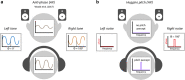
    Comparing the AP and HP methods

    Fig. 3: Comparing anti-phase and huggins pitch stimuli, from Milne et al. 2020 CC BY 4.0

    Headphone and Loudspeaker Test (HALT)

    Hanover University of Music, Drama and Media, 2022

    The HALT, developed by Wycisk et al. in 2022, is an even more sophisticated screening: results indicate that it is a reliable and efficient way to detect what kind of device the participant is using to listen to auditory stimuli, differentiating between four playback devices: two kinds of headphones and 2 kinds of speakers.

    Volume Check

    Using a musical excerpt, pink noise, and looped pink noise segments as the different stimuli, participants first completed a series of volume calibration tasks. Next, the participants completed a counting task involving different numbers of “noise events.” For the task to be marked correct, participants should only hear a specific number of events: between 5 and 7 of the 9 presented events. If they heard less, their volume was too soft, and hearing more meant the volume was too loud. The task was then repeated later to ensure that the participant had not adjusted their volume in the meantime (they were instructed not to do so).

    Stereo vs. Mono Check

    To determine if the participant’s playback device was stereo or mono, they were instructed to count all of the pink noise segments they heard on the right side only. For mono, all events would be audible, but only a few (a random number) would be perceived in the stereo setup.

    Low Frequency Limit

    The HALT also checked for what the lowest pitch was that the playback device would output to help determine what device was being used. The participants head a series of pure tones and had to report how many they heard, assuming that number would correspond to their device’s capabilities.

    To norm the test, researchers conducted electroacoustic analysis on their own equipment and compared the results of controls to the experimental participants.

    Results of the HALT followed a normal distribution and indicated high reliability in predicting if participants had adjusted their volume, were listening through stereo or mono setups, and what type of device they were using (headphones or speakers).

    Headphone Checks in Labvanced

    The Woods et al. 2017 headphone check involving anti-phase stimuli is implemented in Labvanced and is available for your use. Simply visit our Sample Studies page and click import to copy it to your account!
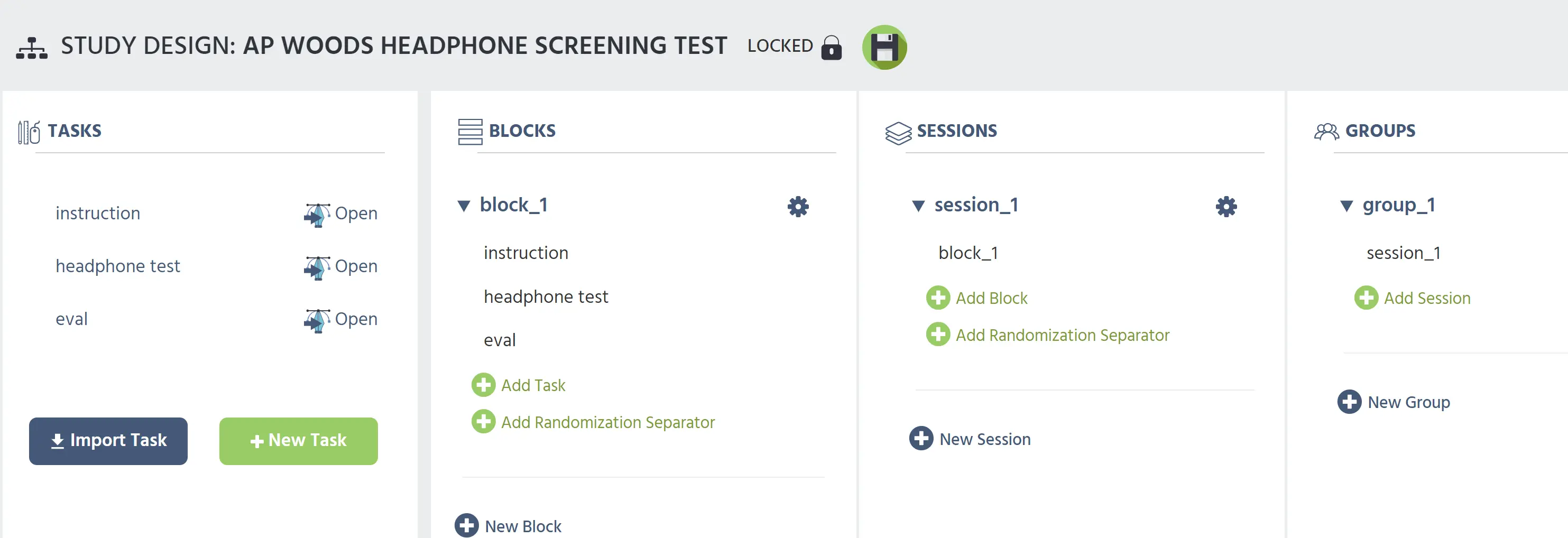
    The AP headphone check in Labvanced
    Fig. 4: The headphone check designed by Woods et al. 2017, now available in Labvanced!

    Although the Huggins Pitch headphone screening from ChaitLab was originally implemented in Gorilla, this screener is also available in Labvanced. The authors provided the full project on the ChaitLabUCL GitHub which allowed our team to create this version for your use. It is also on the Sample Studies page and is available to import!
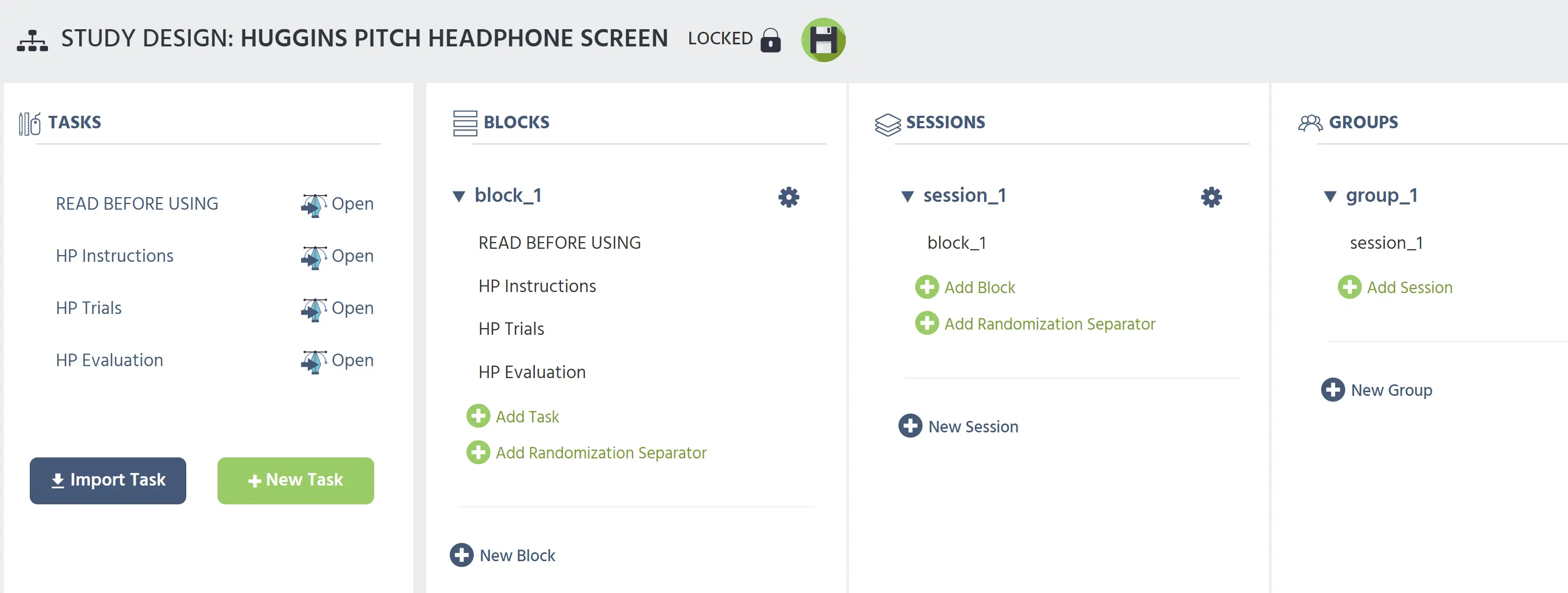
    The HP headphone check in Labvanced
    Fig. 5: The headphone check designed by the ChaitLab from UCL, now available in Labvanced!

    Last but not least, the HALT Part 1 is also available on GitHub thanks to Kilian Sander. If you would like to see this test in Labvanced as well, please send us a message via Discord or to [email protected]!
    Sign up for Labvanced and use our headphone check features.

    Conclusion

    All of the headphone checks presented here have been validated by data, but science is always evolving and improving. Each check has its own advantages and disadvantages and is useful in its own way. We recommend trying each check and combining their methods to match the experiment that you are conducting.

    References

    Milne, A. E., Bianco, R., Poole, K. C., Zhao, S., Oxenham, A. J., Billig, A. J., & Chait, M. (2021). An online headphone screening test based on dichotic pitch. Behavior research methods, 53(4), 1551–1562. https://doi.org/10.3758/s13428-020-01514-0

    Woods, K., Siegel, M. H., Traer, J., & McDermott, J. H. (2017). Headphone screening to facilitate web-based auditory experiments. Attention, perception & psychophysics, 79(7), 2064–2072. https://doi.org/10.3758/s13414-017-1361-2

    Wycisk, Y., Kopiez, R., Bergner, J. et al. The Headphone and Loudspeaker Test – Part I: Suggestions for controlling characteristics of playback devices in internet experiments. Behav Res (2022). https://doi.org/10.3758/s13428-022-01859-8