
Developmental and Educational Psychology Research with Labvanced
Labvanced has a strong foundation and a broad user base in academic research, particularly within developmental psychology.
With features tailored to this field, such as infant eye tracking and longitudinal studies, researchers can explore a wide range of psychological and cognitive development-related topics on our platform. From experiment design to implementation, data collection and export, Labvanced’s trusted and peer-reviewed technology is here to help streamline your research process.
Popular Areas of Research in Developmental and Educational Psychology
Below are some examples of popular areas where Developmental Psychologists have conducted studies using Labvanced:
- Attention Studies
- Language Development & Comprehension Studies
- Social and Emotional Development Studies
- Learning and Memory
We will discuss them, provide examples of real research that was done in these areas, before moving on to discuss popular features and functionalities.
Attention Studies
Attention Studies capture how attention processes change and develop throughout a person's lifespan. Labvanced’s flexibility allows for the implementation of endless tasks that developmental psychologists can use to study attention as well as use advanced features like webcam-based eye tracking, head tracking, and precise reaction time measurements.
The tasks and paradigms developed to evaluate attention are numerous. Here are a few popular ones:
- Stroop Task
- Preferential Looking Paradigm with Webcam Eye Tracking
- Visual Search Tasks
- Prosodic Awareness Task
The video above demonstrates a part of the Prosodic Awareness Task in Labvanced where the participant is recorded saying the word out loud, then selects which syllable they paid attention to most and intonated.
📌 Publication Highlight: Investigating Attention Mechanisms: An Eye Tracking study with Labvanced (Carnevali et al., 2024)
A study by Carnevali et al. (2024) explored the role of affective touch in enhancing infants' attention towards complex visual scenes, emphasizing the integration of multisensory information in early development.
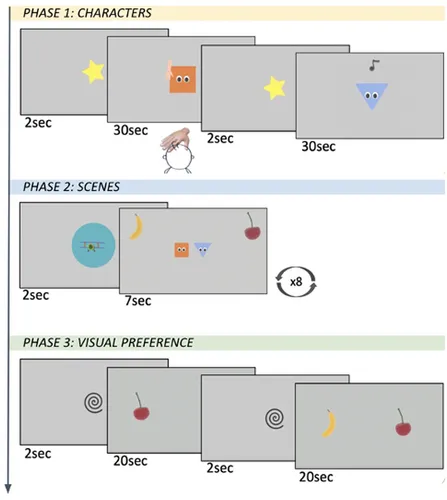
Preview of the 3 phases of experimental design implemented in Labvanced
The researchers used Labvanced for:
- Task Design: A three-phase experimental task to assess the impact of affective and non-affective touch on infants' attention to visual stimuli.
- Materials: Animated characters (square and triangle) paired with auditory (musical note) and tactile (hand touch) stimuli to create engaging multisensory experiences.
- Data Collection:
- Infants' looking times were recorded during familiarization and visual presentation phases to measure attention and engagement;
- Video recordings of the sessions allowed for offline coding of infants' responses.
Findings of the study showed that affective touch plays a significant role in modulating infants' visual attention towards complex visual scenes by predisposing them to explore their environment and facilitating sustained attention.
Reference: Carnevali, L., Della Longa, L., Dragovic, D., & Farroni, T. (2024). Touch and look: The role of affective touch in promoting infants' attention towards complex visual scenes. Infancy, 29(2), 271-283. https://doi.org/10.1111/infa.12580
Language Development & Comprehension
Language development tasks are used to study how children acquire language, understand grammar, and communicate effectively, as well as how language shapes thought and how these abilities change over time.
The video above shows the Dual Lexical Decision Task in Labvanced presents a series of two-stimuli pairings and asks the participant to indicate with a keypress if one of the items is not a real word in the target language.
Some examples of Language tasks that can be implemented in Labvanced include the following:
- Word Learning Tasks
- Word Games
- Digital / Reading Comprehension Tasks
- Receptive Vocabulary Training
- Word Monitoring Serial Reaction Time Task
- Lexical Decision Task
📌 Publication Spotlight: Language comprehension research with Labvanced (Krenca et al., 2024)
Krenca et al. (2024) aimed to understand how digital reading environments, with features such as scrolling and hyperlinks, affect children's reading comprehension.
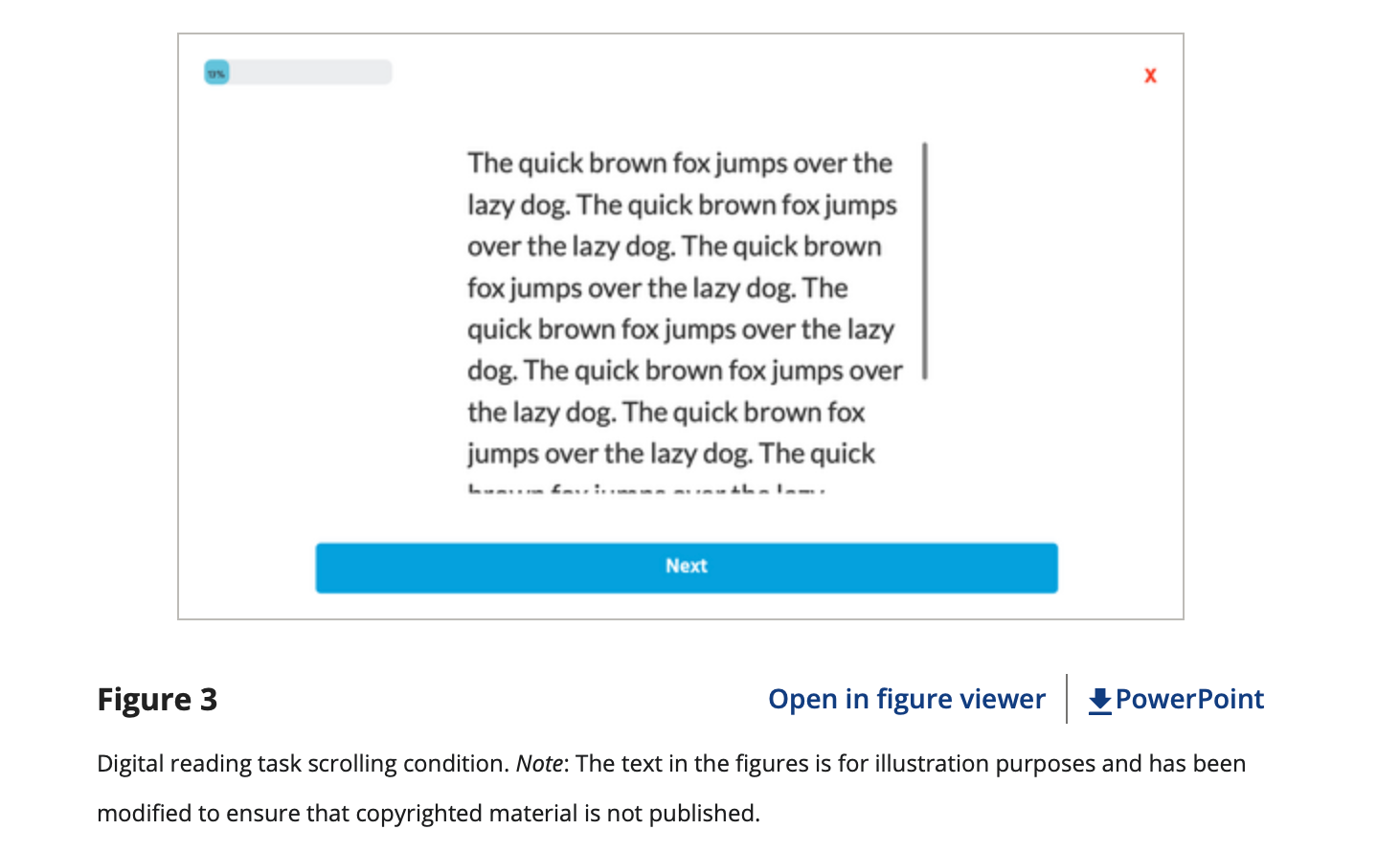
Example of the scrolling condition from the Digital Reading Task implemented in Labvanced
The researchers used Labvanced for:
- Task Design: It included the integration of different conditions (clicking, scrolling, hyperlink, and combined).
- Navigation Features: Navigation buttons (e.g., next, back, back to story) and hyperlink functionalities to mimic common digital reading experiences.
- Participant Monitoring: Facilitation of remote participation, allowing children to complete the tasks from home while being monitored by research assistants via video conferencing tools.
- Data Collection: Metrics, such as the time participants spent reading each passage, the time taken to reference the text while answering questions, and the frequency of back button activations.
Findings of the study showed that when children interacted with hovering hyperlinks for definitions, it negatively impacted their reading comprehension, whereas scrolling did not have any adverse effects on comprehension.
Reference: Krenca, K., Taylor, E., & Deacon, S. H. (2024). Scrolling and hyperlinks: The effects of two prevalent digital features on children's digital reading comprehension. Journal of Research in Reading, 47(3), 269-291.https://doi.org/10.1111/1467-9817.12468
Social & Emotional Development
Social and emotional development studies assess changes across the lifespan, exploring how relationships, emotional regulation, self-concept, and behavior within social groups are shaped. Some examples of language tasks that can be implemented in Labvanced include the following:
- Theory of Mind Tasks
- Emotional Recognition
- Social Problem-Solving
- Game-based Tasks for studying cooperation / competition
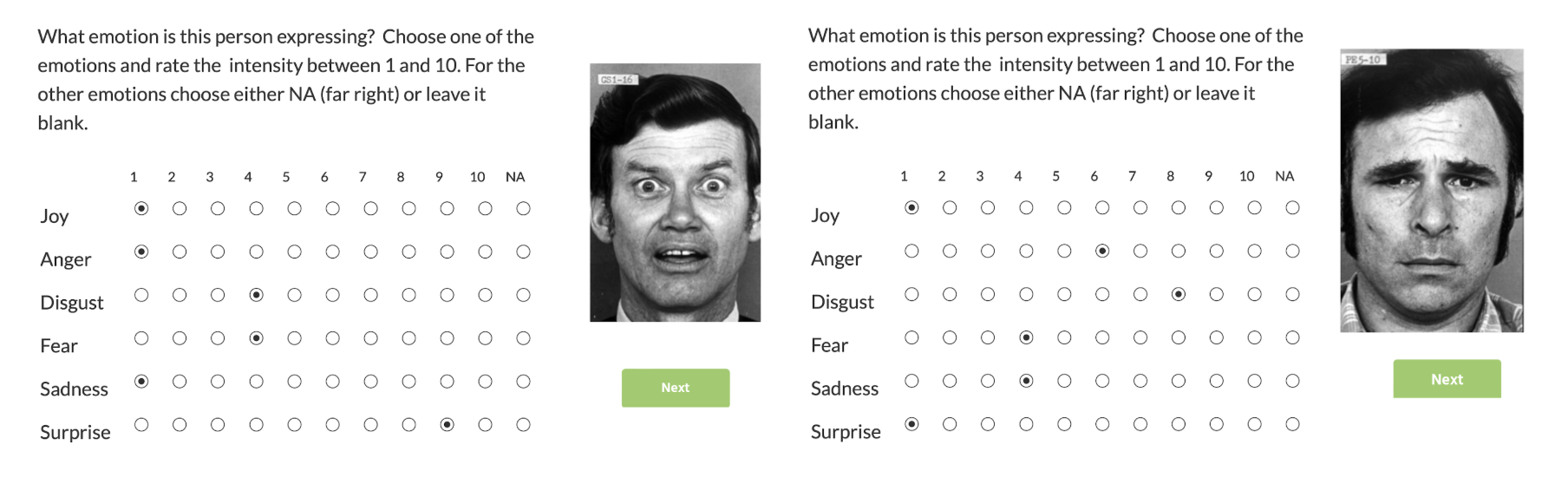
Example of two trials for an Emotional Recognition Task in Labvanced with a Matrix survey element.
📌 Publication Highlight: Social Development: A storytelling experiment in Labvanced with moral scenarios
In the study by Schuhmacher et al. (2023) the researchers investigated how children aged 4 to 8 make helping decisions in complex socio-moral contexts. The study used a repeated-measure design with four conditions (helping friend & moral outcome, helping friend & immoral outcome, helping stranger & moral outcome, and helping stranger & immoral outcome).
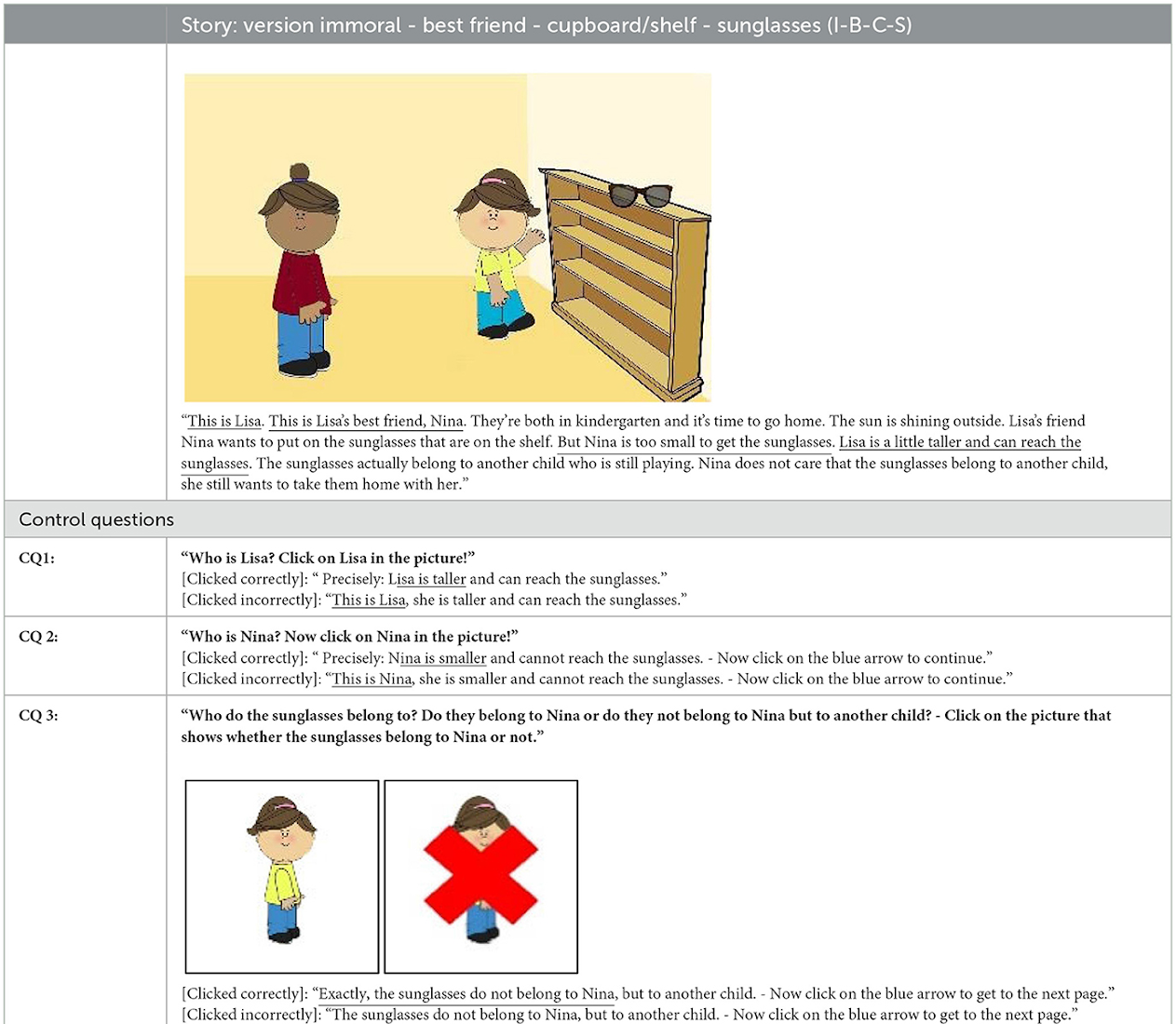
Example of the vignette used in helping friend and immoral outcome condition implemented using Labvanced.
The researchers used Labvanced for:
- Task Design: Utilized picture-based vignettes to present scenarios suitable for young children.
- Interactive Guidance: Implemented an animated digital experimenter, Luna, who provided voice instructions to guide children through the tasks and responses.
- Navigation Control: Enabled response options only after children listened to the relevant voice recordings.
- Data Collection: Data on children's helping decisions, performance on control questions, and the specific vignette conditions presented to each child were recorded.
Findings of the study showed that both younger and older children demonstrated a lower likelihood of offering help in immoral contexts than what would be expected by random chance, irrespective of whether the helper was a friend or a stranger.
Reference: Schuhmacher, N., Rack, N., Beckmann, L., & Kärtner, J. (2023). Is helping always the preferred decision? Preschool-and elementary school-aged children's helping decisions in complex social situations. Frontiers in Developmental Psychology, 1, 1278034. https://doi.org/10.3389/fdpys.2023.1278034
Labvanced Toolkit: Popular Features & Functionalities of Labvanced Among Developmental Psychologists
Labvanced offers many options that you can use when designing your experiment in order to present the stimuli you need, control the progress and logic of your experiment, and record data, all without having to code.
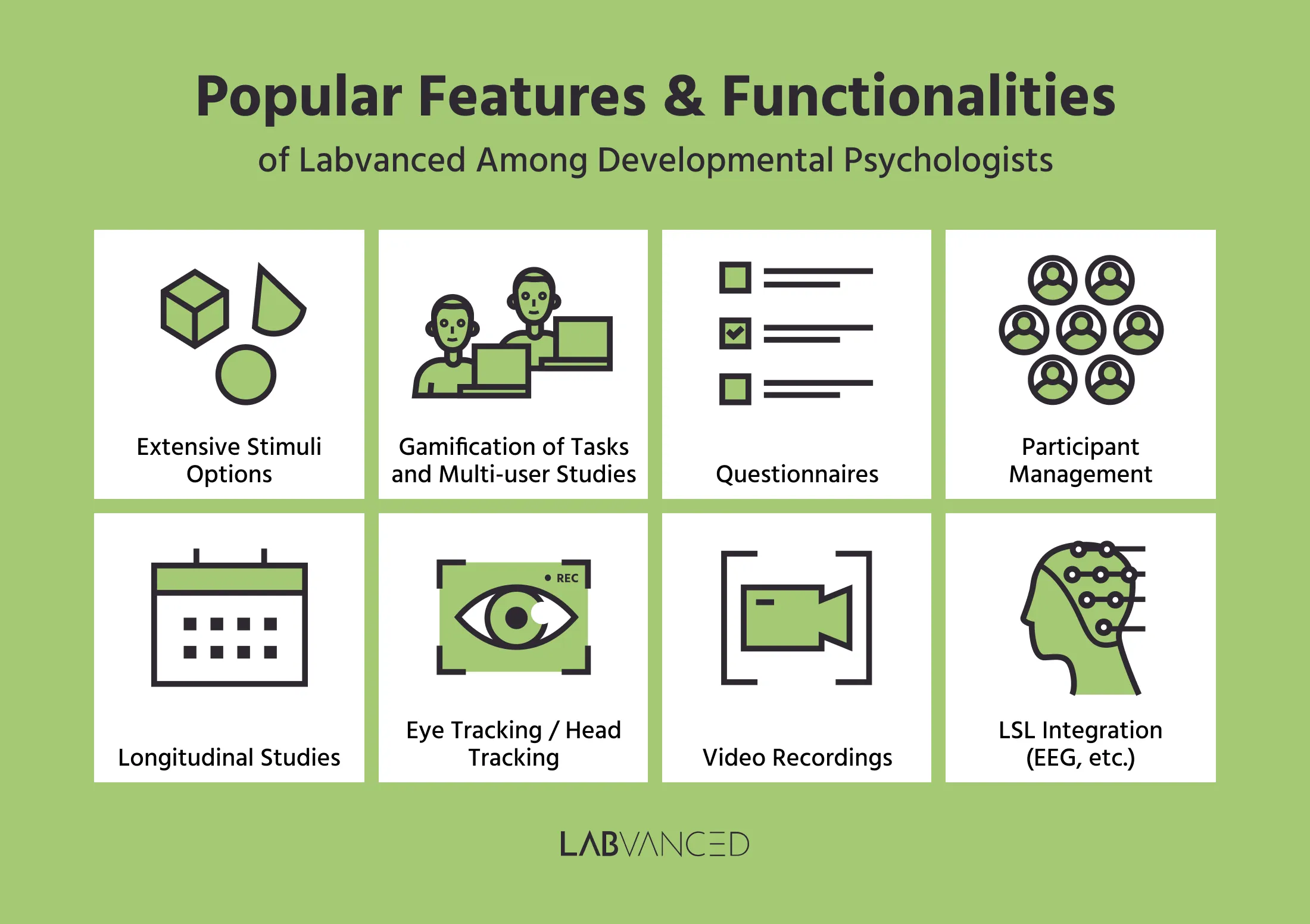
Here are a few elements and designs that Developmental Psychologists have in their Labvanced experiment toolkit when building studies and tasks:
- Extensive Stimuli Options
- Gamification of Tasks and Multi-user Studies
- Questionnaires
- Participant Management
- Longitudinal Studies
- Eye Tracking / Head Tracking
- Video Recordings
- Integration with External Devices (Desktop App)
Extensive Stimuli Options
With an extensive range of stimuli options embedded via Objects in Labvanced, researchers could design experiments with precision and adaptability that align with diverse study goals. Here are some examples of commonly used stimuli:
- Auditory stimuli
- Visual stimuli
- Videos
- SVGs and custom drawings
Labvanced allows you to present your stimuli with exceptional precision, supported by peer-reviewed research that validates its efficiency. The platform enables you to control exactly which stimuli are presented and for how long, ensuring precise timing in your experiments. Additionally, Labvanced lets you create conditions with dynamic logic under which specific stimuli are presented.
The image below illustrates stimuli presentation from a study (Trouillet et al., 2024) conducted using Labvanced, incorporating both visual and auditory stimuli.
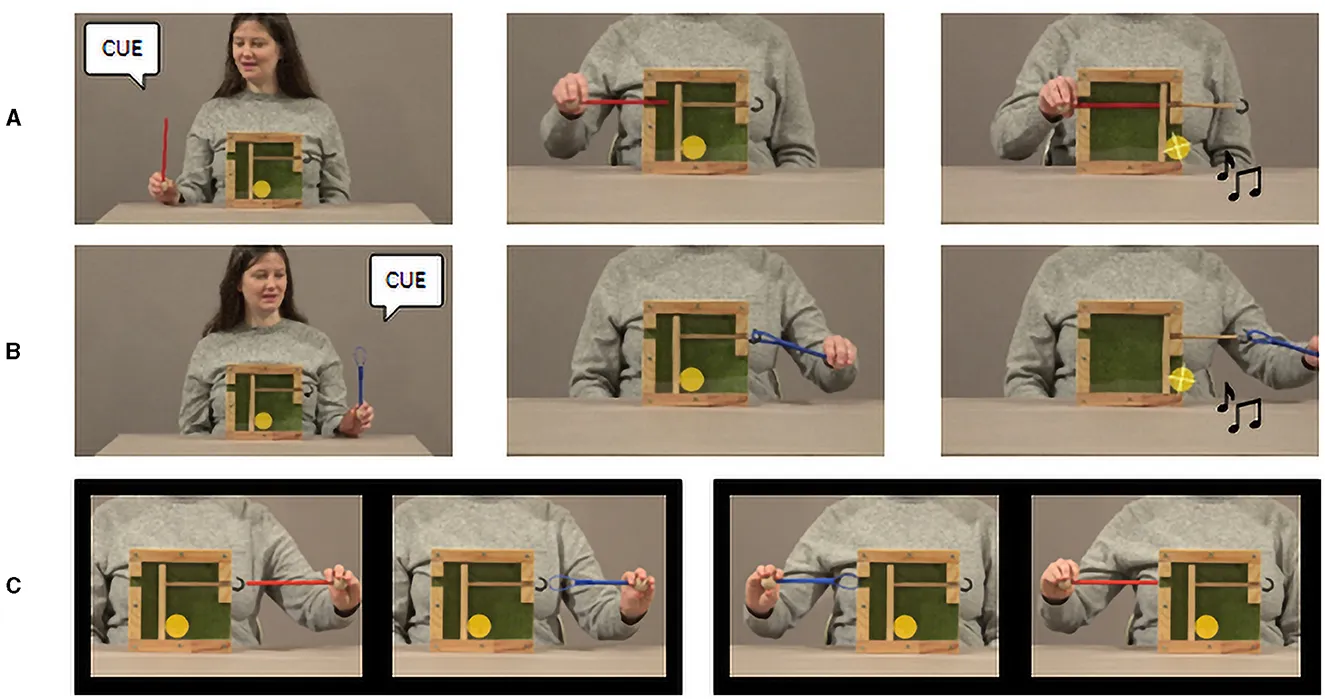
Exemplary still frames of learning phase videos and test trial pictures of tasks implemented using Labvanced.
Reference: Trouillet, L., Bothe, R., Mani, N., & Elsner, B. (2024). Investigating the role of verbal cues on learning of tool-use actions in 18-and 24-month-olds in an online looking time experiment. Frontiers in Developmental Psychology, 2, 1411276. https://doi.org/10.3389/fdpys.2024.1411276
Gamification of Tasks
Labvanced enables you to create engaging game-based tasks, whether for single-player or multiplayer setups. You can even include a virtual, automated opponent to enhance the experience. Its flexibility allows for a wide range of game-based designs, including more complex setups that utilize probabilities.
2-Player Animal Word Search Game in Labvanced
Player 1 = Green; Player 2 = Pink
Questionnaires
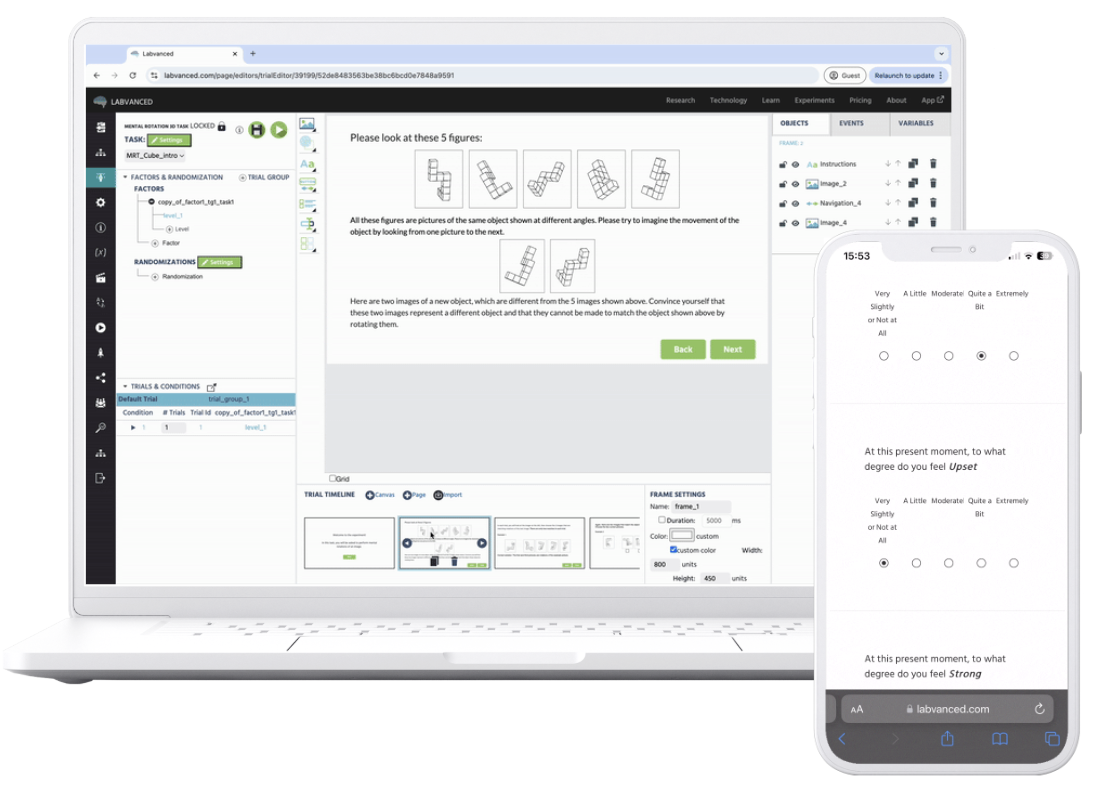
Questionnaires are another popular method for collecting data where you can ask caregivers questions about the child/toddler or even have the children fill out the questionnaires themselves. You can also have questionnaires at the main core of your experiment where a particular answer determines how the study flows.
Questionnaires in Labvanced are capable of many things, including:
- Self-report measures
- Longitudinal administration
- Randomization
- Branching logic
- Participant feedback
Participant Management
Labvanced provides tools to manage and view participants who are currently taking part in your study or have already completed it via the Participants Tab. When children are the main participants in a study, Labvanced helps you communicate effectively with parents and caregivers, ensuring they stay informed and engaged throughout the process. The platform also allows you to send questionnaires to gather important data about children or toddlers, helping to determine if they meet the participation criteria. Additionally, you can customize invitation and announcement emails, maintaining a professional and personalized approach at every step of the study.
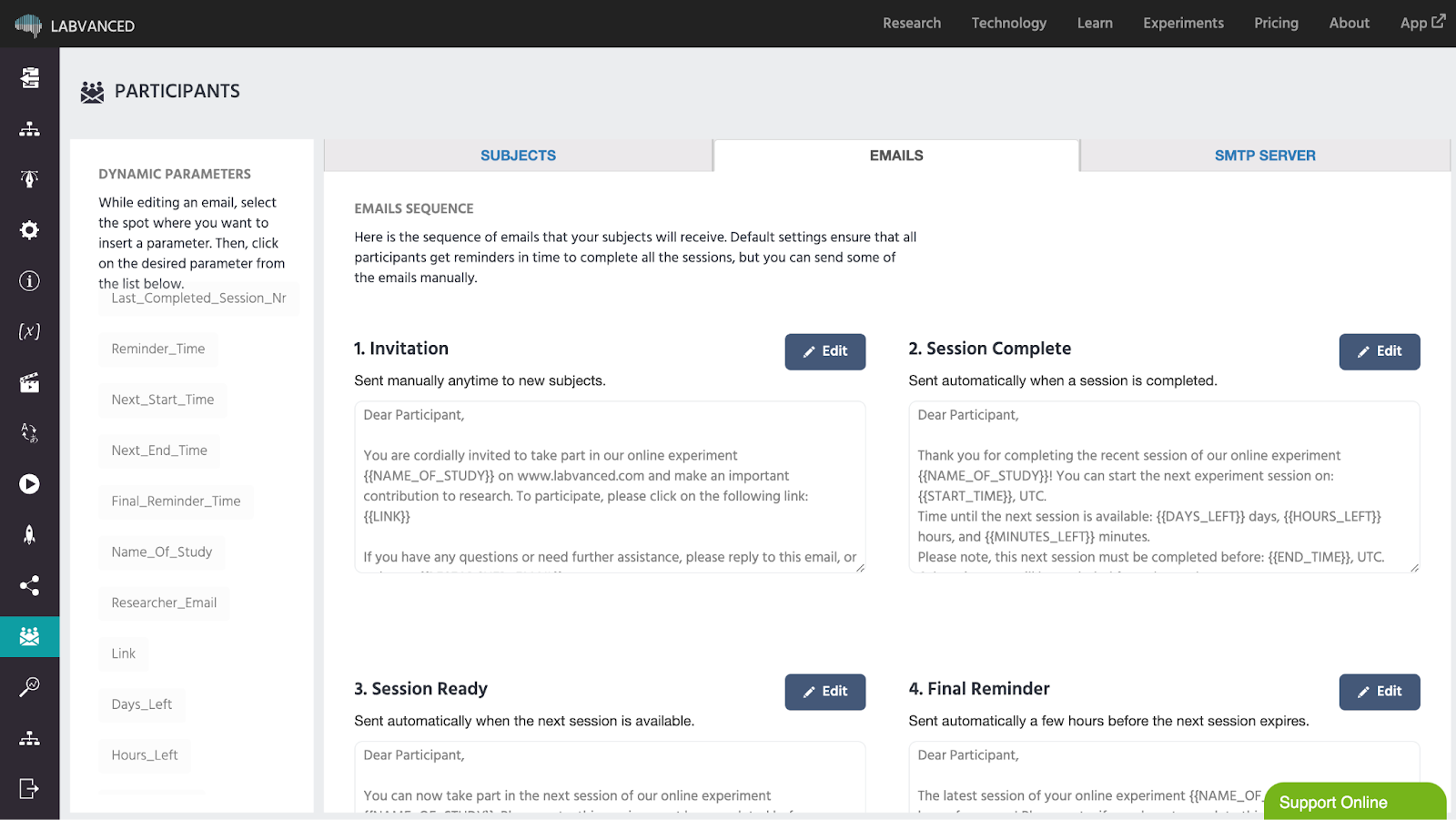
E-mail customization options in Labvanced.
Longitudinal Design
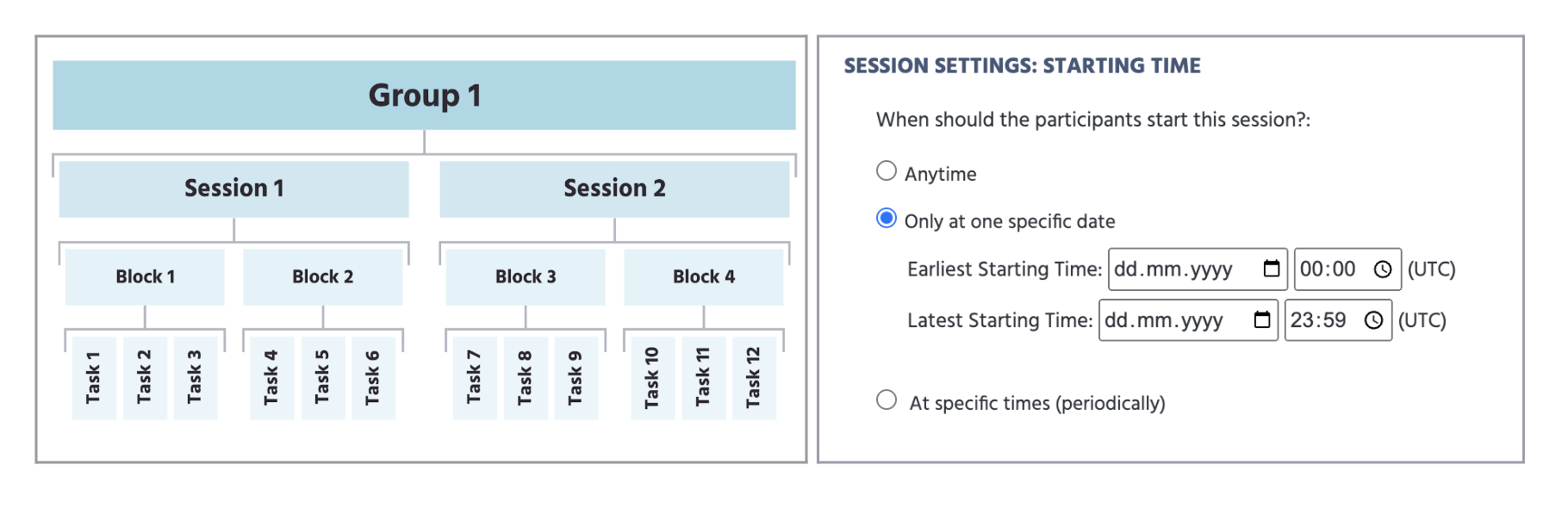
Longitudinal studies involve repeated observations and collection of data from the same subjects over a period of time to track changes and trends. Labvanced lets you create multiple sessions, assign them to specific groups, and schedule their dates. Participants receive emails with links to each session. You can also control the timing of each session and set up custom email reminders to keep participants engaged.
Additionally, Labvanced offers a mobile app that you can use to administer your experiment, if you have a mobile study, and participants can download the app straight to their phones.
Preferential Looking Paradigm
The Preferential Looking Paradigm is a method used to assess infants' cognitive and perceptual abilities by measuring their visual attention and orientation to different stimuli.
In Labvanced, this paradigm can be implemented using several advanced tools:
- Webcam-based eye tracking
- Head tracking
- Video recording
Webcam-based Eye Tracking: Infant-friendly Mode
Together with leading researchers and Developmental Psychology labs, we have created a handful of useful features dedicated towards improving remote eye tracking research for infants / children. Here are some of them:
- Customized calibration with more engaging stimuli (animal icons)
- Additional sounds playback to trigger the child's attention on a new fixation point during calibration
- A more flexible virtual chintest that can dynamically be turned off if the child gets too fuzzy.
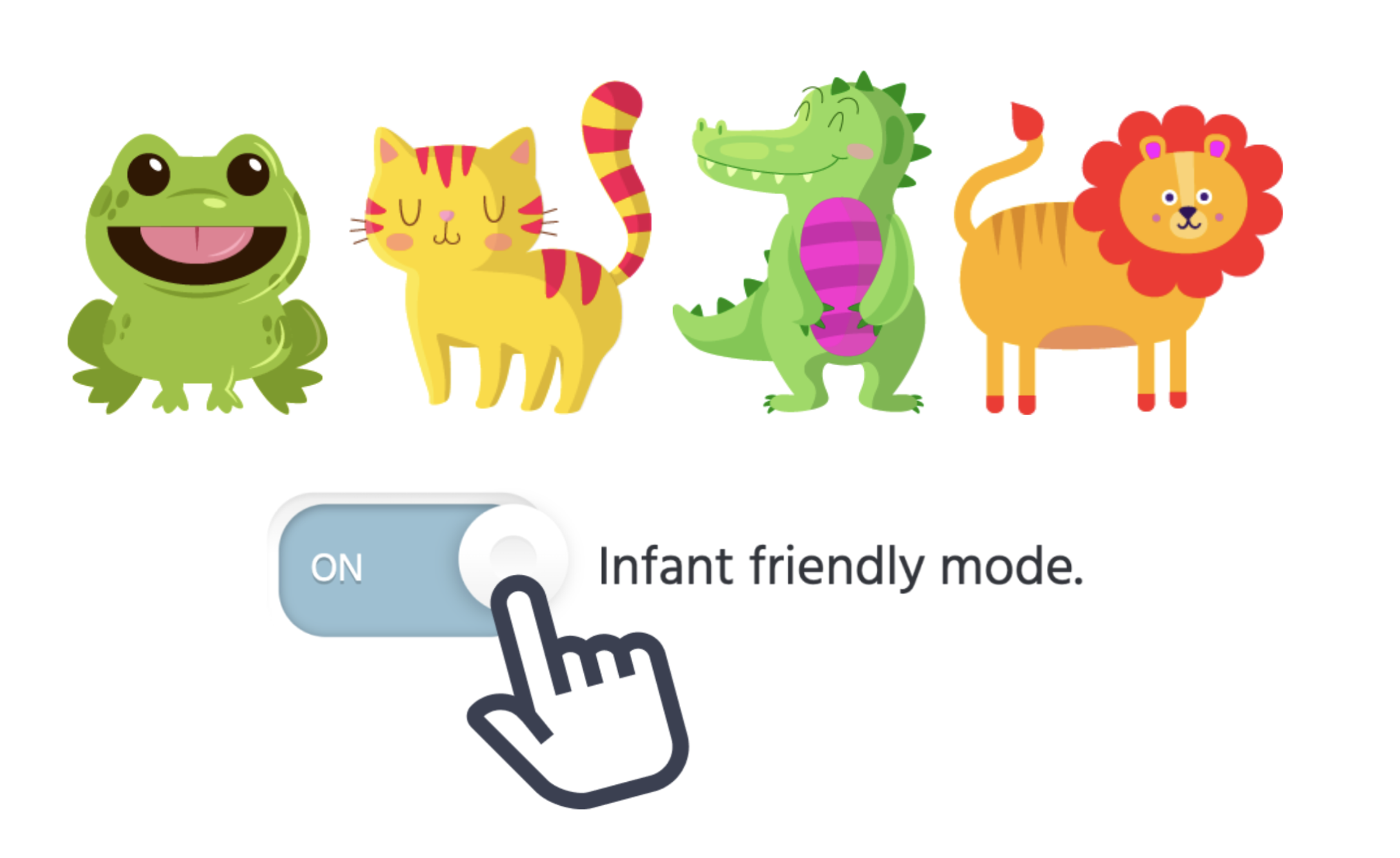
Infant-friendly mode is a setting that can be turned on with just a button click under the ‘Study Settings’ tab.
An Example of Settings & Calibration for Eye Tracking
Proper settings and calibration are crucial for accurate eye-tracking data collection. The details below highlight the differences in setups for various age groups.
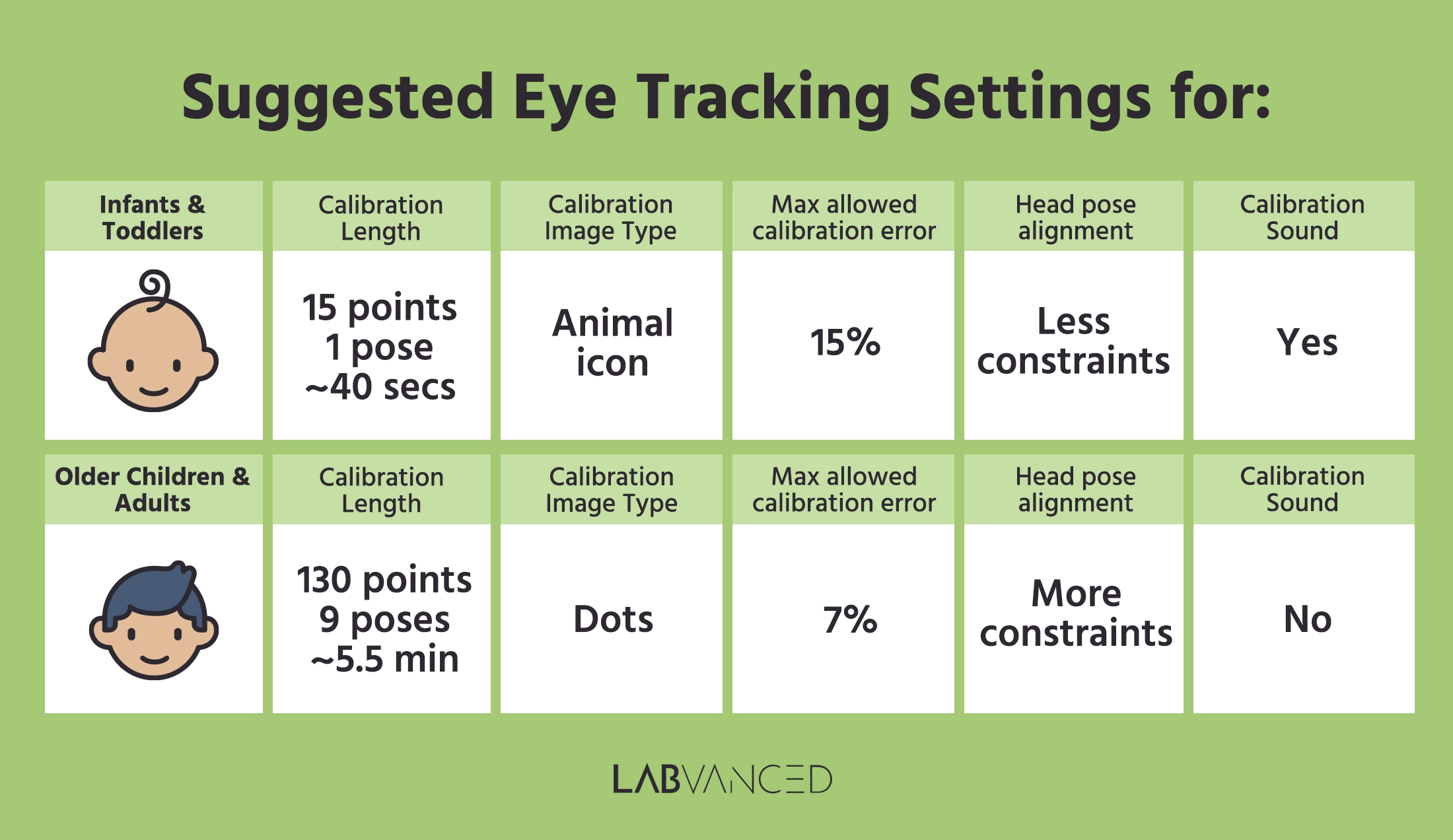
The video below demonstrates differences between infant-friendly calibration (left) and regular calibration (right).
Head Tracking
The head tracking feature is used to study head orientation, position, and attentional processes. Because head tracking requires less calibration and is easier to implement in sensitive populations like children, it is a useful tool for remote studies that want to measure physiological data quickly.
The demo below gives a preview of how head position can be quantified using data-drive range elements that move based on the head coordinates in space. Try it out here.
Video Recording
The Video recording feature helps in recording videos of participants and enables coding of behaviors offline. Some researchers prefer to code attention and behavior on their own, instead of using webcam-based eye tracking or head tracking. To assist them in this, we have a flexible solution for video recording. Developmental psychologists often make use of this feature to record the participant(s) and then code behaviors and required data later.
Case Studies
Labvanced has been used in a variety of developmental psychology studies, utilizing a wide range of features, and has provided valuable insights into different developmental processes. A few of these studies are discussed below:
Reaction Time & Linguistics
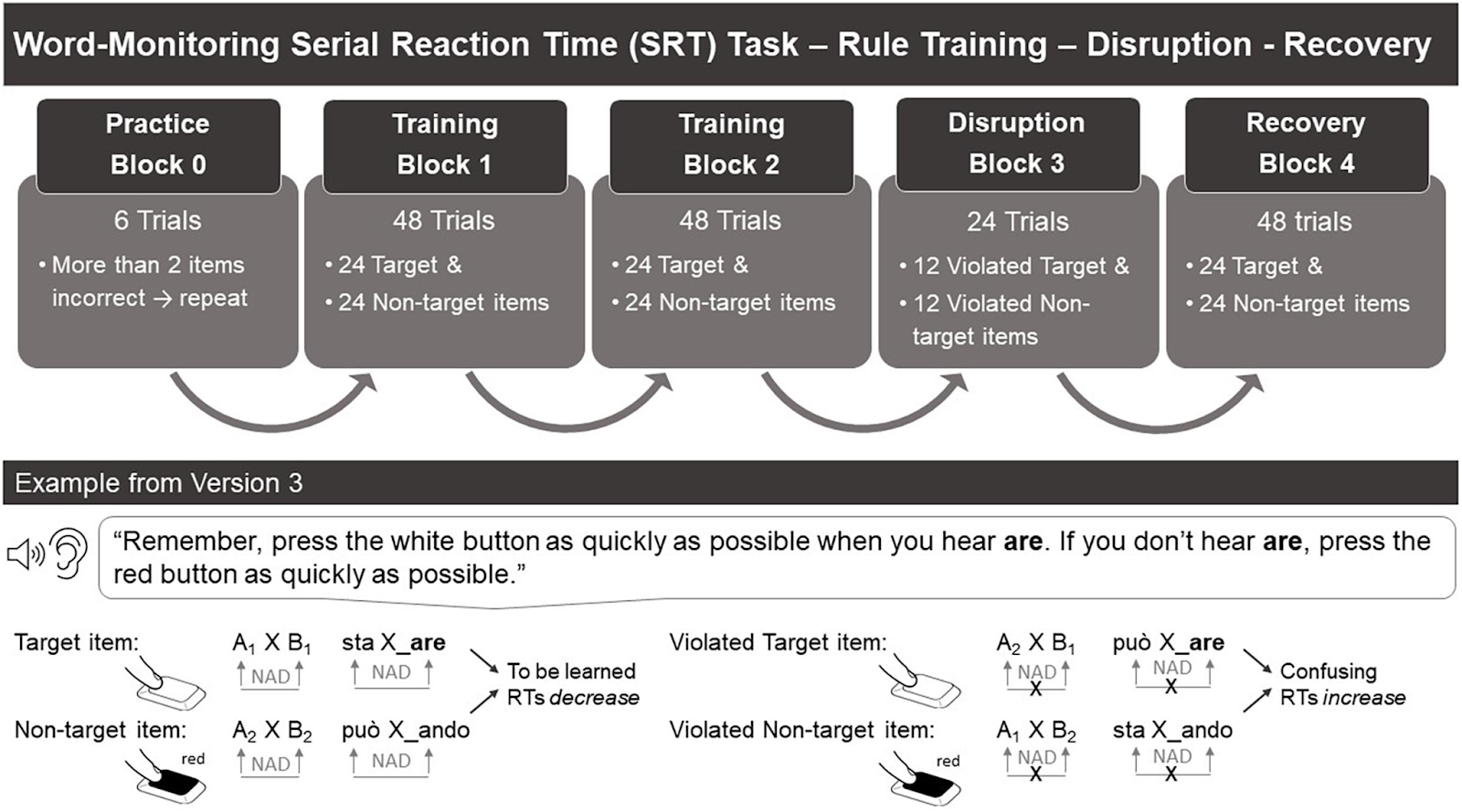
Block types within word-monitoring SRT task, trial and item distribution, and an example draft of the procedure of a study implemented using Labvanced.
Marimon et al. (2021) in their study aimed to determine if children aged 4-8 years could learn non-adjacent dependencies (NADs) through web-based game-like tasks. The study included two tasks:
- In the Serial Reaction Time (SRT) Task, children monitored a sequence of syllables and responded to a target syllable by pressing a button.
- In the Stem Completion (SC) Task, children applied or transferred the internal rule structure of the NAD learned during the SRT task by actively identifying the missing second element of the NAD when given the first element and verb stem.
The collected data includes reaction times, accuracy of participants' choices, and feedback from the participants.
Findings showed that children aged 4–8 years are capable of learning non-adjacent dependencies (NADs) in a web-based game-like task, and exhibited learning in both the SRT task SC task.
Reference: Marimon, M., Hofmann, A., Veríssimo, J., Männel, C., Friederici, A. D., Höhle, B., & Wartenburger, I. (2021). Children’s Learning of Non-adjacent Dependencies Using a Web-Based Computer Game Setting. Frontiers in Psychology, 12, 734877. https://doi.org/10.3389/fpsyg.2021.734877
Cooperation & Competition
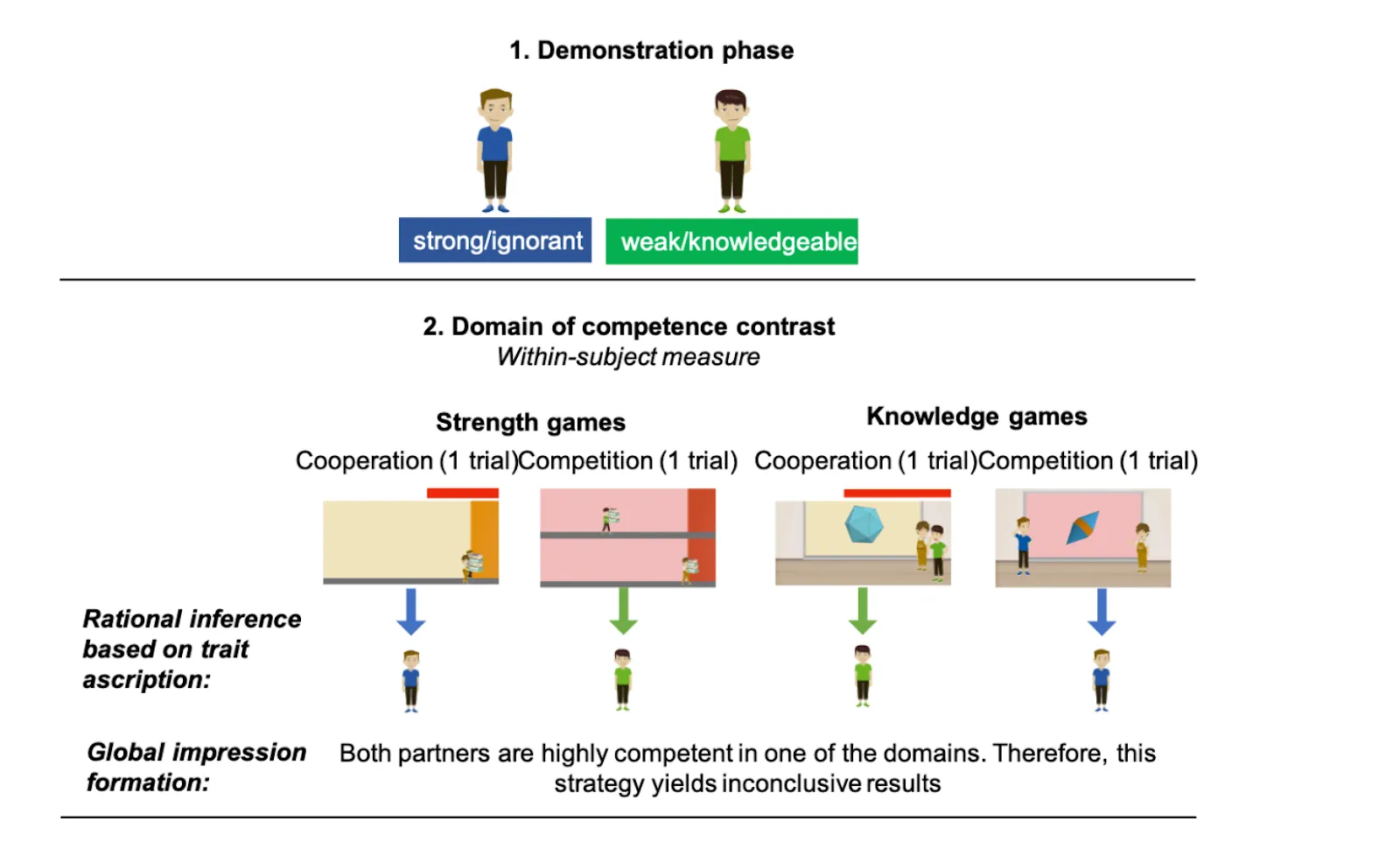
A schematic rationale of a game-based experiment (Exp. #2, described below) administered via Labvanced.
A study by Titchener et al., (2023) investigated how children aged 4 to 7 evaluate and select partners for cooperative and competitive tasks, focusing on their reasoning strategies.
The study included two experiments:
- In experiment 1, children interacted with two models differing in physical strength (one strong, one weak) in cooperative and competitive strength games.
- In experiment 2, children chose between a strong but ignorant model and a weak but knowledgeable one.
Data collected included Partner Recruitment Choices, Justification Responses, Performance Metrics, and Inter-coder Reliability.
Findings showed that children can strategically choose partners in cooperative contexts, but their performance in competitive contexts is inconsistent, often due to challenges in processing multiple partner attributes.
Reference: Titchener, R., Hermes, J., Fischer, J., & Keupp, S. (2023). Social evaluation of co-action partners: Children’s partner recruitment in cooperation and competition tasks. Pre-Print. https://osf.io/preprints/psyarxiv/c3gwu_v1
Webcam-based Eye Tracking
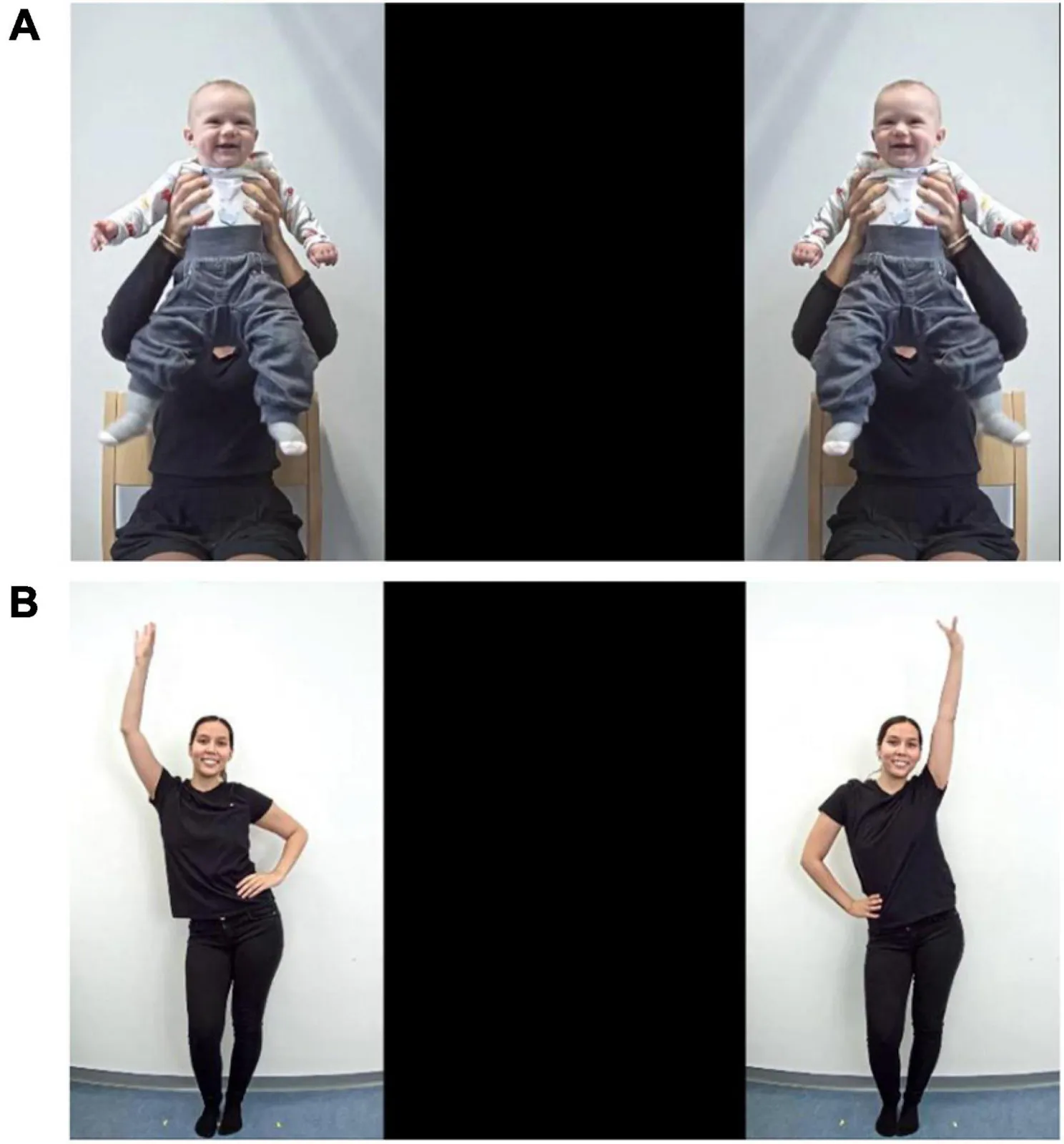
Simple and complex video stimuli during an experimental trial implemented using Labvanced.
A study by Bánki et al., (2022) compares the quality of webcam-based eye-tracking with laboratory-based eye-tracking for assessing infants’ audio-visual synchrony perception. The experimental task involved two conditions: simple and complex.
- In the simple condition, infants viewed two videos of an infant bouncing to a children’s song.
- In the complex condition, infants viewed two videos of a woman performing complex choreography to the same children’s song.
The data collected include eye-tracking measurements (gaze durations, fixation, and gaze synchronization), video-coded viewing behaviors, device and technical metrics, questionnaire responses, and calibration accuracy.
Findings showed that with careful data quality control, online eye-tracking can be a promising tool for conducting preferential looking studies with infants online.
Reference: Bánki, A., de Eccher, M., Falschlehner, L., Hoehl, S., & Markova, G. (2022). Comparing online webcam-and laboratory-based eye-tracking for the assessment of infants’ audio-visual synchrony perception. Frontiers in psychology, 12, 733933. https://doi.org/10.3389/fpsyg.2021.733933
Game-based Tasks + Probabilities
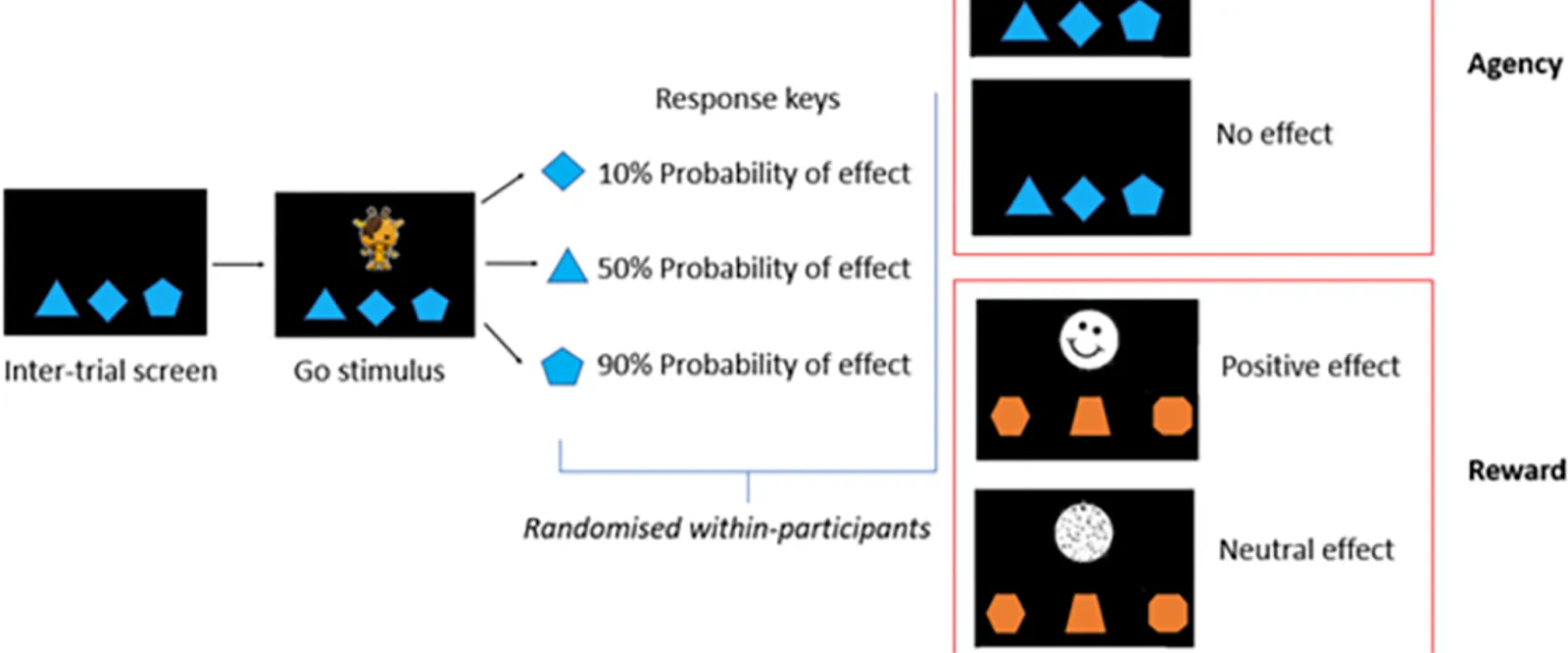
A schematic representation of the Agency and Reward Task implemented using Labvanced.
Valori et al. (2023) aimed to investigate the role of agency and reward in driving action selection.
The experimental paradigm consisted of two main tasks:
- In the Agency Task, participants selected from three geometric figures (response keys) to feed an animal. Each key was associated with different probabilities (10%, 50%, and 90%) of producing a neutral effect (e.g., a black and white circle).
- In the Reward Task, participants again selected from the same figures, but this time the probabilities were linked to producing a positive effect (e.g., a smiley face).
The data collected include Choices and Reaction times.
Findings showed that all participants preferred options with higher positive probabilities. Autistic individuals avoided uncertain choices, had shorter and more variable reaction times.
Reference: Valori, I., Carnevali, L., & Farroni, T. (2023). Agency and reward across development and in autism: A free-choice paradigm. Plos one, 18(4), e0284407. https://doi.org/10.1371/journal.pone.0284407
Conclusion
With Labvanced, developmental psychologists have implemented a wide range of psychology experiments utilizing various approaches and features, all without having to code. Educational psychologists have also utilized the platforms in order to study the mechanisms and cognitive processes behind how participants learn and remember materials.