labvanced logoLabVanced
Contact
    • Remote Physiological Measurements
    • Eye Tracking
    • Head & Face-Tracking
    • Emotion Detection
    • Heart Rate Detection (rPPG)
    • Generative AI
    • Audio Transcription
    • EEG & Hardware Integrations
    • Decision Making
    • Reaction Times
    • Keyboard Inputs
    • Mouse Tracking
    • Mobile / Touch
    • Questionnaires
    • Gamepad / Joystick Integration
    • Audio Recordings
    • Audio Transcription
    • Video Recordings
    • Screen Recordings
    • Photos / Snapshots
    • Video Conferencing
    • Canvas Drawings
    • Build with AI
    • Build with Spreadsheets
    • Using the Experiment Editor
    • Coding
    • Creating Questionnaires
    • Balancing & Randomization
    • UX & Website Testing
    • Single Session Studies
    • Factorial Designs
    • Longitudinal & Multi-session Studies
    • Individual & Case Studies
    • Real-time Multi-user Studies
    • Interviews & Video Calls
    • Surveys & Questionnaires
    • Experience Sampling & Diaries
    • Classroom & Group Testing
    • Interventions & Clinical Trials
    • In the Browser
    • Mobile App
    • Desktop App
    • WebBridge Chrome Extension
    • Stroop Test
    • Flanker Task
    • N-back Task
    • Implicit Association Test
    • Trail Making Test
    • Digit Span
    • Corsi Block Tapping
    • Tower of London
    • Balloon Analog Risk Task
    • Preferential Looking
    • Browse more →
    • DASS-21
    • GAD-7
    • Rosenberg Self-Esteem Scale
    • PHQ-9
    • Ten-Item Personality Inventory
    • Big Five Personality Test
    • Adult ADHD Self-Report Scale
    • Browse more →
    • Building a Multi-user Study
    • Webcam Eye Tracking with AOIs
    • Website Frame Eye Tracking
    • Conditional Eye Tracking Opt-in
    • ChatGPT Study
    • Desktop App Study with EEG
    • Between-subjects Group Balancing
    • Building a Reading Study
    • Stroop Task
    • Lexical Decision Task
    • Browse more →
    Public Experiment Library
    • Arts Research
    • Clinical Psychology & Neuropsychology Medicine
    • Cognitive Psychology
    • Developmental Psychology
    • Behavioral Economics & Decision Science
    • Educational Research & Psychology
    • HCI & Human Factors
    • Linguistics & Language Sciences
    • Consumer & Marketing Research
    • Social & Personality Psychology
    • Sport & Movement Science
    • UX & Website Testing
    • Executive Functions
    • Language & Reading
    • Decision-Making & Reasoning
    • Attention
    • Overview
    • HCI & Human Factors
    • UX & Website Testing
    • Consumer & Marketing Research
    • White-Label App
    • PageGazer
    • Webcam vs. Lab Eye Tracking in InfantsAnna Banki & Gabriela Markova
    • Eye Tracking for Influencer MarketingDr. Alexander Edeling
    • Eye Tracking Infant Word ComprehensionDr. Giulia Calignano
    • Sentence Reading and Grammar JudgmentsDr. Jonathan Mirault
    • Regulating Emotions with MusicDr. Katrin Starcke
    • Game-Based Grammar Learning in ChildrenDr. Mireia Marimon
    • Gaze Cueing and AutismMax Soares Miehstein
    • Personality and Hearing in NoiseDr. Malte Wöstmann
    • All interviews →
    • Lab Notes
    • How to Cite Labvanced
    • Labvanced Platform Paper (2017)
    • Webcam Eye Tracking Validation (2024)
    • Webcam Eye Tracking Studies
    • Cognitive Psychology Studies
    • Developmental Psychology Studies
    • Linguistics Studies
    • See all publications →
    • Getting Started
    • Guide
    • Video Tutorials
    • Walkthroughs
    • Live Chat
    • Webinars & Onboarding Calls
    • AI Assistant
    • FAQ
    • Importing Templates Guide
    • Test Templates
    • Live Eye Tracking Metrics
    • Mouse Tracking Demo
    • ChatGPT Demo
    • Audio Recording Object Demo
    • Adding Image Stimuli Demo
    • Score & Feedback Demo
    • Browse all technical demos →
    • Timing Precision
    • Stimuli Presentation
    • Headphone Checks
    • Bot Checks
    • Participant Management
    • Comparisons
    • Research Blog
    • Prolific Integration
    • CloudResearch Integration
    • Sona Systems Integration
    • BeSample Integration
    • Panelabs Integration
    • Clickworker Integration
    • Labvanced Webhook API
    • Labvanced REST API
    • About Us
    • Newsletter Archive
    • Terms & Conditions
    • Data Security & Data Privacy
    • Technical & Organisational Measures
    • Accessibility
    • W-8BEN-E Form
    • Data Processing Agreement Template
    LinkedInYouTubeDiscord
    • Individual
    • Lab
    • Department / Consortium
    • Teaching
    • Campus
    • Commercial
    Top-Ups
    • Overview
    • Study Building
    • Subject Recruitment
    • Dedicated Support
    Checkout
  • Contact
    • JA
      • 中國人
      • Deutsch
      • Français
      • Español
      • English
      • 日本語
    • Appgo to app icon
    • Loginlogin icon
    Platform
    Labvanced makes it easy to implement the most advanced study design and reliably collect your data.
    Biosignals & AI
    Remote Physiological MeasurementsEye TrackingHead & Face-TrackingEmotion DetectionHeart Rate Detection (rPPG)Generative AIAudio TranscriptionEEG & Hardware Integrations
    Behavioral Recordings
    Decision MakingReaction TimesKeyboard InputsMouse TrackingMobile / TouchQuestionnairesGamepad / Joystick Integration
    Media Recordings
    Audio RecordingsAudio TranscriptionVideo RecordingsScreen RecordingsPhotos / SnapshotsVideo ConferencingCanvas Drawings
    Implementation Techniques
    Build with AIBuild with SpreadsheetsUsing the Experiment EditorCodingCreating QuestionnairesBalancing & RandomizationUX & Website Testing
    Study Formats

    Your study can take whatever format your research needs. Here are a few popular examples.

    Single Session StudiesFactorial DesignsLongitudinal & Multi-session StudiesIndividual & Case StudiesReal-time Multi-user StudiesInterviews & Video CallsSurveys & QuestionnairesExperience Sampling & DiariesClassroom & Group TestingInterventions & Clinical Trials
    Where Studies Run

    Run your study online in the browser, on mobile or tablet with the mobile app, or in-lab with the desktop app.

    In the BrowserMobile AppDesktop AppWebBridge Chrome Extension
    Tests
    Explore cognitive tests, questionnaires, walkthroughs, and our public experiment library: a starting point for your next study.
    Popular Cognitive Tests
    Stroop TestFlanker TaskN-back TaskImplicit Association TestTrail Making TestDigit SpanCorsi Block TappingTower of LondonBalloon Analog Risk TaskPreferential Looking
    Browse more →
    Questionnaires & Scales
    DASS-21GAD-7Rosenberg Self-Esteem ScalePHQ-9Ten-Item Personality InventoryBig Five Personality TestAdult ADHD Self-Report Scale
    Browse more →
    Public Experiment Library

    Take a look at what other researchers in the community are doing through our extensive, open catalog of shared studies.

    Open the public library →
    Walkthroughs

    Step-by-step builds of complete studies, from a blank project to a running experiment, that you can follow along or adapt.

    Building a Multi-user StudyWebcam Eye Tracking with AOIsWebsite Frame Eye TrackingConditional Eye Tracking Opt-inChatGPT StudyDesktop App Study with EEGBetween-subjects Group BalancingBuilding a Reading StudyStroop TaskLexical Decision Task
    Browse more →
    Research
    One platform for students, academics, and industry researchers studying human behavior.
    Harvard UniversityStanford UniversityCambridge UniversityUCLNYUMax Planck InstituteUCLATU Munich

    Trusted by researchers at 1,500+ universities worldwide

    Academic Research
    Arts ResearchClinical Psychology & Neuropsychology MedicineCognitive PsychologyDevelopmental PsychologyBehavioral Economics & Decision ScienceEducational Research & PsychologyHCI & Human FactorsLinguistics & Language SciencesConsumer & Marketing ResearchSocial & Personality PsychologySport & Movement ScienceUX & Website Testing
    Research Areas
    Executive FunctionsLanguage & ReadingDecision-Making & ReasoningAttention
    Industry / Commercial
    OverviewHCI & Human FactorsUX & Website TestingConsumer & Marketing ResearchWhite-Label AppPageGazer
    Researcher Interviews

    Conversations with researchers about the studies they ran with Labvanced, what worked, and what they learned.

    Webcam vs. Lab Eye Tracking in InfantsAnna Banki & Gabriela MarkovaEye Tracking for Influencer MarketingDr. Alexander EdelingEye Tracking Infant Word ComprehensionDr. Giulia CalignanoSentence Reading and Grammar JudgmentsDr. Jonathan MiraultRegulating Emotions with MusicDr. Katrin StarckeGame-Based Grammar Learning in ChildrenDr. Mireia MarimonGaze Cueing and AutismMax Soares MiehsteinPersonality and Hearing in NoiseDr. Malte Wöstmann
    All interviews →
    Our Research
    Lab NotesHow to Cite Labvanced
    Peer Reviewed Studies

    A selection of peer-reviewed work built on Labvanced: our own platform and validation papers, and studies by the research community grouped by area. Hundreds more are listed on the full publications page.

    Labvanced Platform Paper (2017)Webcam Eye Tracking Validation (2024)Webcam Eye Tracking StudiesCognitive Psychology StudiesDevelopmental Psychology StudiesLinguistics Studies
    See all publications →
    Resources
    Valuable resources to help you learn the platform, stay updated, and more.
    Documentation
    Getting StartedGuideVideo TutorialsWalkthroughs
    Support
    Live ChatWebinars & Onboarding CallsAI AssistantFAQ
    Templates & Demos

    These are a few popular examples. Browse our guide and a selection of technical demos to get started with implementation.

    Importing Templates GuideTest TemplatesLive Eye Tracking MetricsMouse Tracking DemoChatGPT DemoAudio Recording Object DemoAdding Image Stimuli DemoScore & Feedback Demo
    Browse all technical demos →
    Methodology
    Timing PrecisionStimuli PresentationHeadphone ChecksBot ChecksParticipant ManagementComparisonsResearch Blog
    Integrations & APIs
    Prolific IntegrationCloudResearch IntegrationSona Systems IntegrationBeSample IntegrationPanelabs IntegrationClickworker IntegrationLabvanced Webhook APILabvanced REST API
    Company & Legal
    About UsNewsletter ArchiveTerms & ConditionsData Security & Data PrivacyTechnical & Organisational MeasuresAccessibilityW-8BEN-E FormData Processing Agreement Template
    LinkedInYouTubeDiscord
    Pricing
    Our licenses and additional services at a glance.
    Licenses
    IndividualLabDepartment / ConsortiumTeachingCampusCommercial
    Top-Ups

    Need more recordings for your lab or your own research? Simply use one of these recording top-up packages.

    Browse top-up packages →
    Additional Services

    Hire Labvanced’s expert team to quickly bring your project to the level of rigor it needs.

    OverviewStudy BuildingSubject RecruitmentDedicated Support
    Checkout

    Ready to purchase a license or top-up? Head straight to checkout.

    Go to checkout →
    • 中國人
    • Deutsch
    • Français
    • Español
    • English
    • 日本語
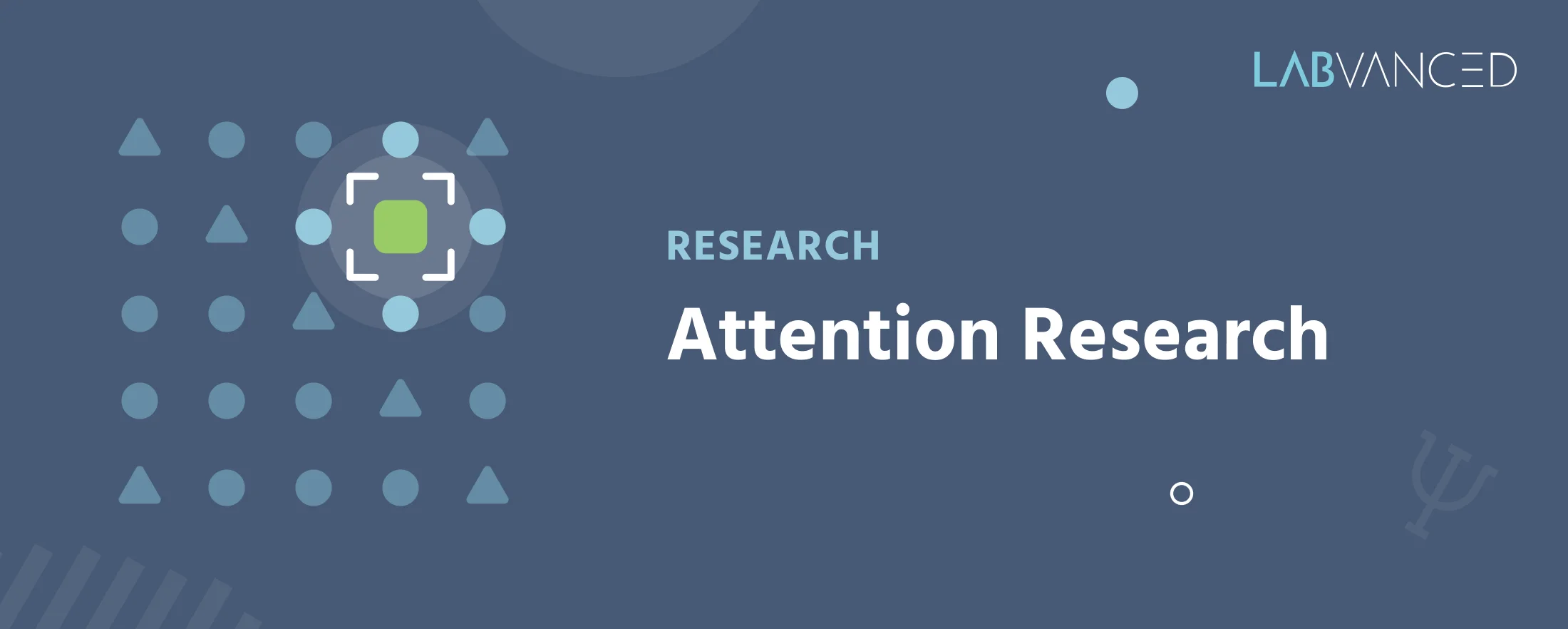
    注意研究というタイトルのバナー

    Labvancedによる注意研究

    注意研究は、人々が対象を求めてシーンをどのように検索し、キューされた場所に注意を移動させ、気を散らす情報を無視し、ある刺激を他の刺激よりも優先するかを測定します。Labvancedは、これらの質問ごとに即実行可能なタスクを提供し、ミリ秒単位での刺激のタイミングを精密に行います。

    目次

    • 注意研究が測定するもの
    • タイミングとプレゼンテーションが重要な理由
    • Labvancedにおけるタスクの例
    • 注意研究のデザイン
    • デザインの拡張
    • 査読済み研究

    注意研究が測定するもの

    注意研究は複数の種類の質問を行い、それぞれが異なる測定および手法の家系に適応します。視覚検索は、気を散らす要素の中から対象がどれだけ効率的に見つけられるかを問います(Treisman & Gelade, 1980)。空間的方向付けは、キューがどのように注意を場所に移動させ、その結果、反応の速度に何が起こるかを問います(Posner, 1980)。対立下の選択的注意は、無関係な傍観項目が中央の対象への反応にどれだけ干渉するかを問います(Eriksen & Eriksen, 1974)。注意バイアスは、脅威関連または感情的に充満した画像など、特定の刺激が中立のものよりも注意を引くかどうかを問います(MacLeod et al., 1986)。

    研究の焦点研究の質問典型的な測定手法の家系と即実行可能なタスク
    視覚検索気を散らす要素の中から対象はどれだけ効率的に見つけられるか?対象が存在する場合と存在しない場合の反応時間と精度、気を散らす要素の数が変わるごとに検索パラダイム: 視覚検索タスク
    空間的方向付けキューはどのように注意を場所に移動させ、それがそこにおける反応に何をもたらしますか?妥当な、無妥当な、そして中立なキューの試行における反応時間、およびそれらの間のキュー効果空間的キューイングパラダイム: Posnerキューイングタスク
    対立下の選択的注意無関係な傍観項目が中央の対象への反応をどれだけ妨げますか?一致した試行と不一致な試行における反応時間と精度、およびそれらの間の傍観者効果気を散らす干渉パラダイム: フランカータスク
    注意バイアス特定の刺激は中立のものよりも注意を引きますか?対象カテゴリー画像または中立の画像を置き換えるプローブに対する反応時間注意バイアスパラダイム: ドットプローブタスク
    視覚的好み二つの刺激のうち、人々はどちらの刺激をよく見ますか?各刺激に対する視線行動と注視時間、ウェブカメラ眼球追跡からのデータ選好視覚パラダイム: 選好視覚テスト

    最後のコラムのタスクは、Labvancedにおいて即実行可能なテンプレートとして利用できます。抑制や認知コントロールを測定する関連するパラダイムについては、ストループテストおよびサイモンタスクを参照してください。

    タイミングとプレゼンテーションが重要な理由

    注意の測定は、条件間の違いです。キュー効果は無妥当および妥当なキューの試行間の反応時間の差であり、フランカー効果は不一致および一致した試行の間の差であり、注意バイアススコアは対象カテゴリー画像を置き換えるプローブと中立の画像を置き換えるプローブの間の差です。各効果は条件平均間の違いであるため、試行やデバイス間で変動するタイミングエラーは、測定に直接ノイズを追加します。

    空間キューイングおよびドットプローブパラダイムでは、キューまたは画像ペアとプローブの間の間隔自体が操作の一部であるため、刺激の開始タイミングは反応と同じくらい注意深く制御する必要があります。Labvancedの刺激タイミングは、精密なJavaScript表示タイミングのための査読済みの方法に基づいています(Lukács & Gartus, 2022)。ミリ秒精度のタイミングに関する技術ページでは、そのメカニズムが説明されています。

    プレゼンテーションが重要な理由は同様です。視覚検索、Posnerキューイング、フランカー、およびドットプローブタスクは、それぞれキーボード応答のデスクトップ版とタッチ応答のモバイル版があるため、同じパラダイムをどちらのデバイスでも実施できます。

    Labvancedにおけるタスクの例

    これらのタスクはLabvancedでインポート可能なテンプレートとして利用可能であり、それぞれが研究に合わせてカスタマイズできます。

    選好視覚テスト

    参加者は、ウェブカメラ眼球追跡がどこを見ているかを記録しながら、横に並んだ二つの刺激を眺め、視線行動を通じて視覚的好みを測定します。

    ポズナーキューイングタスク

    参加者は、妥当な、無効な、または中立の矢印キューの後にターゲットの位置に応答し、キューイング効果を通じて空間的な方向付けを測定します。

    フランカータスク

    参加者は中心の矢印の方向を報告し、フランキングシンボルを無視し、フランカー効果を通じて選択的注意を測定します。

    ドットプローブタスク

    参加者は、二つの画像のいずれかが表示された場所に現れたプ probe に応答し、ターゲットカテゴリの刺激に対する注意のバイアスを測定します。

    注意研究のデザイン

    注意研究は一つの質問に焦点を当てるか、いくつかを組み合わせることができます。三つのデザインがほとんどの研究をカバーします。

    • 単一タスク: 一つの質問に対する一つのタスク、たとえば空間的な方向付けのためのポズナーキューイングタスクのみ。
    • 方向付けと対立のバッテリー: ポズナーキューイングとフランカーは、気を散らす干渉と空間的な方向付けを組み合わせており、研究が効果が一つの注意メカニズムに特有であることを示す必要がある時に有用です。
    • 自己報告によるバイアス研究: ドットプローブタスクと質問票を組み合わせ、同じセッション内で自己報告の尺度に対する注意のバイアススコアを関連付けます。

    注意研究を計画する際に考慮すべきいくつかのデザイン上の決定があります:

    • 練習: スコア付きの試行の前に練習ブロックを設けることで、参加者はパフォーマンスが測定される前に応答マッピングを学べます。視覚探索タスクとフランカータスクのテンプレートには、どちらも含まれています。
    • 試行のバランス: 妥当なキュー試行と無効なキュー試行の比率が、キューの有益さを設定し、フランカータスクでの一致した試行と不一致な試行をバランスさせることで、試行の種類が応答に影響を与えないようにします。
    • 応答マッピング: 参加者間でどのキーが存在するかまたは存在しないか、あるいは左右を反転させることで、キーの好みが効果として現れないようにします。視覚探索タスクは、参加者間での存在するかまたは存在しないかのマッピングを反転させています。

    Labvanced では、ブロック内のタスクの順序を Study Design タブで各参加者ごとに固定またはランダム化できます。ランダム化とバランスガイドではさらに選択肢が説明されています。

    デザインの拡張

    注意研究は第二のデータチャネルを得たり、ラボ専用の設定では到達できない設定に到達することができます。

    Labvanced の注意タスクに追加されたウェブカメラの目の追跡

    ウェブカメラの目の追跡

    追加のハードウェアなしで、内蔵のピアレビュー済みウェブカメラの目の追跡を使用して、視覚探索またはキューイングタスクに視線データを追加します。
    Labvanced 注意研究における頭部および顔の追跡

    頭部および顔の追跡

    キャリブレーションなしで、ウェブカメラからの頭の向き、位置、および距離を受動的な注意の測定として記録します。
    Labvanced の注意研究との EEG ハードウェア統合

    EEG とハードウェア統合

    各キュー、ターゲット、および応答で Lab Streaming Layer マーカーを送信し、タスクに EEG 記録をタイムロックします。
    Labvanced 注意研究におけるマウストラッキング

    マウストラッキング

    マウス応答タスク中のカーソルの X および Y 位置を記録し、イベントと同期します。
    Labvanced の注意タスクと組み合わされた質問票

    質問票

    注意タスクと同じ研究内で妥当化された自己報告の尺度をペアリングし、別の調査ツールは必要ありません。
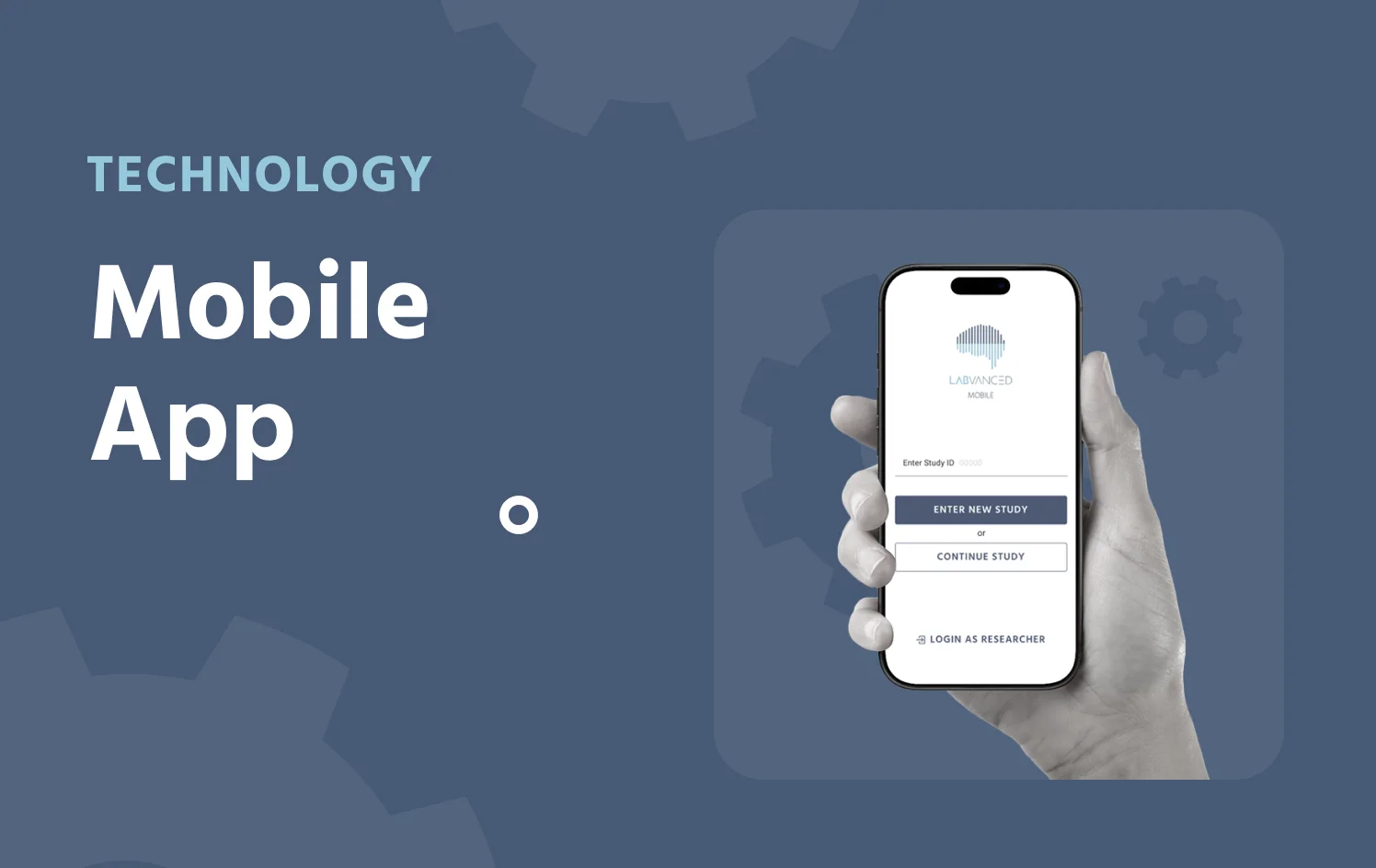
    オフラインデータ収集のための Labvanced モバイルアプリ

    モバイルアプリ

    注意タスクのタッチスクリーン版をオフラインで電話で実行します。


    Labvancedを使用した注意研究

    Labvanced で実施された注意研究には以下の論文が含まれます。Labvanced で行われた他の認知心理学研究は、認知心理学の出版物ページに集められています。

    自己報告された欲望と好意の不均衡は、低ニコチン依存の喫煙者における喫煙関連刺激への注意バイアスの程度と関連しています
    File, D., Petro, B., Kojouharova, P., Kővári, L., Gaál, Z. A., Demetrovics, Z., & Czigler, I. (2024)
    Frontiers in Psychology
    https://doi.org/10.3389/fpsyg.2024.1356434

    高齢者と若年者における社会的ロボットから背面で見える視線キューイング
    Morillo-Mendez, L., Mozos, O. M., & Schrooten, M. G. (2023)
    Cognitive Systems Research
    https://doi.org/10.1016/j.cogsys.2023.101149

    注意の視線キューイングの調整因子としての言語的アイデンティティ
    Lorenzoni, A., Calignano, G., Dalmaso, M., & Navarrete, E. (2023)
    Scientific Reports
    https://doi.org/10.1038/s41598-023-37875-7

    L2の多モーダル性における注意と学習:ウェブカメラを用いた目の追跡研究
    Zhang, P., & Zhang, S. (2025)
    Language Learning & Technology
    https://doi.org/10.64152/10125/73626

    さらに多くの出版物を見る
    • Harvard University
    • Stanford University
    • Cambridge University
    • Carnegie Mellon University
    • NYU
    • UCL
    • National University of Singapore
    • TU Munich
    • ENS Paris
    • LMU Munich
    • UCLA
    • UC Santa Barbara
    • UC Santa Cruz
    • Cleveland State University
    • Northwestern University
    • Grand Valley State University
    • Penn State
    • University of St Andrews
    • Heriot-Watt University
    • University of Liverpool
    • University of Manchester
    • Aix-Marseille University
    • Université Gustave Eiffel
    • Université Paris Cité
    • SNCF
    • Max Planck Institute
    • Helmholtz Association
    • ZAS Berlin
    • DIE
    • TU Berlin
    • TU Dresden
    • University of Trier
    • CIBR
    • University of Hong Kong
    • Nanyang Technological University
    • Tohoku University
    • Seoul National University
    • Ewha Womans University
    • University of Padova
    • University of Alberta
    • BBCL
    • Ben-Gurion University
    • Charles University
    • University of Granada

    Trusted by researchers at 1,500+ universities worldwide
    認知心理学の研究ケース

    認知心理学

    注意、作業記憶、および知覚に関する研究。

    臨床心理学の研究ケース

    臨床心理学&神経心理学医学

    健康な人口と脆弱な人口、研究から実践へ。

    発達心理学の研究ケース

    発達心理学

    縦断的デザインを含む、すべての年齢の参加者。

    消費者とマーケティングの研究ケース

    消費者&マーケティング

    消費者行動、広告、製品研究。


    あなたの研究を構築する

    どの程度までの構築を自分で行いたいかによって、始め方は3通りあります。

    1. テンプレートから始める。
      タスクライブラリから注意課題をインポートし、例えばポズナーキューイングタスクや視覚検索タスクなど、1つの研究に組み合わせます。
    2. チームに構築してもらう。
      研究構築サービスが研究を設計・構成し、実施します。
    3. まずは実現可能性を話し合う。
      デザインを説明すると、チームが可能なことを教えてくれます。

    Questions about your study design or platform fit?

    Book a Call Write to Us

    私たちに連絡する際は、以下の点を持参することが役立ちます:

    • 測定したい注意の側面
    • 年齢範囲や臨床グループを含む人口
    • 参加者数とタイムライン
    • データを収集する場所:オンライン、自宅、ラボ、またはそのミックス
    • 追加の測定方法、例えば眼球追跡、EEG、または質問票など

    よくある質問

    実験で注意をどのように測定しますか?
    各質問は、行動タスクで測定可能な結果に変換されます。検索効率は、気を散らす要素の数が変化するにつれて反応時間から読み取られ、空間的方向付けはキュー効果から、気を散らす要素の干渉はフランカー効果から、注意の偏りは目標カテゴリおよび中立位置に対するプローブへの反応時間から測定されます。
    参加者が注意タスク中にどこを見るか記録できますか?
    はい。ウェブカメラによる眼球追跡は、ピアレビューされた比較でEyeLink 1000に対して確認され、中央画面での1.3°の精度を達成しました(Kaduk et al., 2024)。頭と顔の追跡は、キャリブレーションなしで頭の向き、位置、距離を追加します。
    どのタスクが注意の偏りを測定しますか?
    ドットプローブタスク が注意の偏りを測定します。プローブが2つの画像のうちの1つ(目標カテゴリからのものと中立のもの)を置き換え、2つのプローブ位置間の反応時間の違いが偏りを指標します(MacLeod et al., 1986)。
    注意タスクはオンラインとラボで同じように実行されますか?
    各タスクは、ウェブ、デスクトップ、モバイル全てで同じ視覚的に構築されたテンプレートで実行されます。視覚検索、ポズナーキューイング、フランカー、ドットプローブテンプレートには、キーボード応答のデスクトップバージョンとタッチ応答のモバイルバージョンが含まれています。

    参考文献

    • Eriksen, B. A., & Eriksen, C. W. (1974). Effects of noise letters upon the identification of a target letter in a nonsearch task. Perception & Psychophysics, 16(1), 143-149. https://doi.org/10.3758/BF03203267

    • Kaduk, T., Goeke, C., Finger, H., & König, P. (2024). Webcam eye tracking close to laboratory standards: Comparing a new webcam-based system and the EyeLink 1000. Behavior Research Methods, 56(5), 5002-5022. https://doi.org/10.3758/s13428-023-02237-8

    • Lukács, G., & Gartus, A. (2022). Precise display time measurement in JavaScript for web-based experiments. Behavior Research Methods. https://doi.org/10.3758/s13428-022-01835-2

    • MacLeod, C., Mathews, A., & Tata, P. (1986). Attentional bias in emotional disorders. Journal of Abnormal Psychology, 95(1), 15-20. https://doi.org/10.1037/0021-843X.95.1.15

    • Posner, M. I. (1980). Orienting of attention. Quarterly Journal of Experimental Psychology, 32(1), 3-25. https://doi.org/10.1080/00335558008248231

    • Treisman, A. M., & Gelade, G. (1980). A feature-integration theory of attention. Cognitive Psychology, 12(1), 97-136. https://doi.org/10.1016/0010-0285(80)90005-5

    さらに読む
    Labvancedでの実行機能研究

    実行機能

    抑制、作業記憶の更新、認知的柔軟性、計画を1つのバッテリーで、オンライン、自宅、またはラボで研究します。
    Labvancedでの言語研究

    言語

    ウェブカメラの眼球追跡と発話応答を用いて、単語認識、文の読解、音の象徴性を研究します。
    Labvancedでの意思決定研究

    意思決定

    リスク、衝動性、証拠収集、戦略的選択を研究し、意思決定プロセスデータとリアルタイムの経済ゲームを用います。