labvanced logoLabVanced
Contact
    • Remote Physiological Measurements
    • Eye Tracking
    • Head & Face-Tracking
    • Emotion Detection
    • Heart Rate Detection (rPPG)
    • Generative AI
    • Audio Transcription
    • EEG & Hardware Integrations
    • Decision Making
    • Reaction Times
    • Keyboard Inputs
    • Mouse Tracking
    • Mobile / Touch
    • Questionnaires
    • Gamepad / Joystick Integration
    • Audio Recordings
    • Audio Transcription
    • Video Recordings
    • Screen Recordings
    • Photos / Snapshots
    • Video Conferencing
    • Canvas Drawings
    • Build with AI
    • Build with Spreadsheets
    • Using the Experiment Editor
    • Coding
    • Creating Questionnaires
    • Balancing & Randomization
    • UX & Website Testing
    • Single Session Studies
    • Factorial Designs
    • Longitudinal & Multi-session Studies
    • Individual & Case Studies
    • Real-time Multi-user Studies
    • Interviews & Video Calls
    • Surveys & Questionnaires
    • Experience Sampling & Diaries
    • Classroom & Group Testing
    • Interventions & Clinical Trials
    • In the Browser
    • Mobile App
    • Desktop App
    • WebBridge Chrome Extension
    • Stroop Test
    • Flanker Task
    • N-back Task
    • Implicit Association Test
    • Trail Making Test
    • Digit Span
    • Corsi Block Tapping
    • Tower of London
    • Balloon Analog Risk Task
    • Preferential Looking
    • Browse more →
    • DASS-21
    • GAD-7
    • Rosenberg Self-Esteem Scale
    • PHQ-9
    • Ten-Item Personality Inventory
    • Big Five Personality Test
    • Adult ADHD Self-Report Scale
    • Browse more →
    • Building a Multi-user Study
    • Webcam Eye Tracking with AOIs
    • Website Frame Eye Tracking
    • Conditional Eye Tracking Opt-in
    • ChatGPT Study
    • Desktop App Study with EEG
    • Between-subjects Group Balancing
    • Building a Reading Study
    • Stroop Task
    • Lexical Decision Task
    • Browse more →
    Public Experiment Library
    • Arts Research
    • Clinical Psychology & Neuropsychology Medicine
    • Cognitive Psychology
    • Developmental Psychology
    • Behavioral Economics & Decision Science
    • Educational Research & Psychology
    • HCI & Human Factors
    • Linguistics & Language Sciences
    • Consumer & Marketing Research
    • Social & Personality Psychology
    • Sport & Movement Science
    • UX & Website Testing
    • Executive Functions
    • Language & Reading
    • Decision-Making & Reasoning
    • Attention
    • Overview
    • HCI & Human Factors
    • UX & Website Testing
    • Consumer & Marketing Research
    • White-Label App
    • PageGazer
    • Webcam vs. Lab Eye Tracking in InfantsAnna Banki & Gabriela Markova
    • Eye Tracking for Influencer MarketingDr. Alexander Edeling
    • Eye Tracking Infant Word ComprehensionDr. Giulia Calignano
    • Sentence Reading and Grammar JudgmentsDr. Jonathan Mirault
    • Regulating Emotions with MusicDr. Katrin Starcke
    • Game-Based Grammar Learning in ChildrenDr. Mireia Marimon
    • Gaze Cueing and AutismMax Soares Miehstein
    • Personality and Hearing in NoiseDr. Malte Wöstmann
    • All interviews →
    • Lab Notes
    • How to Cite Labvanced
    • Labvanced Platform Paper (2017)
    • Webcam Eye Tracking Validation (2024)
    • Webcam Eye Tracking Studies
    • Cognitive Psychology Studies
    • Developmental Psychology Studies
    • Linguistics Studies
    • See all publications →
    • Getting Started
    • Guide
    • Video Tutorials
    • Walkthroughs
    • Live Chat
    • Webinars & Onboarding Calls
    • AI Assistant
    • FAQ
    • Importing Templates Guide
    • Test Templates
    • Live Eye Tracking Metrics
    • Mouse Tracking Demo
    • ChatGPT Demo
    • Audio Recording Object Demo
    • Adding Image Stimuli Demo
    • Score & Feedback Demo
    • Browse all technical demos →
    • Timing Precision
    • Stimuli Presentation
    • Headphone Checks
    • Bot Checks
    • Participant Management
    • Comparisons
    • Research Blog
    • Prolific Integration
    • CloudResearch Integration
    • Sona Systems Integration
    • BeSample Integration
    • Panelabs Integration
    • Clickworker Integration
    • Labvanced Webhook API
    • Labvanced REST API
    • About Us
    • Newsletter Archive
    • Terms & Conditions
    • Data Security & Data Privacy
    • Technical & Organisational Measures
    • Accessibility
    • W-8BEN-E Form
    • Data Processing Agreement Template
    LinkedInYouTubeDiscord
    • Individual
    • Lab
    • Department / Consortium
    • Teaching
    • Campus
    • Commercial
    • Browse recording top-ups →
    • Browse AI token top-ups →
    • Overview
    • Study Building
    • Subject Recruitment
    • Dedicated Support
    Checkout
  • Contact
    • JA
      • 中國人
      • Deutsch
      • Français
      • Español
      • English
      • 日本語
    • Logout
    • Loginlogin icon
    Platform
    Labvanced makes it easy to implement the most advanced study design and reliably collect your data.
    Biosignals & AI
    Remote Physiological MeasurementsEye TrackingHead & Face-TrackingEmotion DetectionHeart Rate Detection (rPPG)Generative AIAudio TranscriptionEEG & Hardware Integrations
    Behavioral Recordings
    Decision MakingReaction TimesKeyboard InputsMouse TrackingMobile / TouchQuestionnairesGamepad / Joystick Integration
    Media Recordings
    Audio RecordingsAudio TranscriptionVideo RecordingsScreen RecordingsPhotos / SnapshotsVideo ConferencingCanvas Drawings
    Implementation Techniques
    Build with AIBuild with SpreadsheetsUsing the Experiment EditorCodingCreating QuestionnairesBalancing & RandomizationUX & Website Testing
    Study Formats

    Your study can take whatever format your research needs. Here are a few popular examples.

    Single Session StudiesFactorial DesignsLongitudinal & Multi-session StudiesIndividual & Case StudiesReal-time Multi-user StudiesInterviews & Video CallsSurveys & QuestionnairesExperience Sampling & DiariesClassroom & Group TestingInterventions & Clinical Trials
    Where Studies Run

    Run your study online in the browser, on mobile or tablet with the mobile app, or in-lab with the desktop app.

    In the BrowserMobile AppDesktop AppWebBridge Chrome Extension
    Tests
    Explore cognitive tests, questionnaires, walkthroughs, and our public experiment library: a starting point for your next study.
    Popular Cognitive Tests
    Stroop TestFlanker TaskN-back TaskImplicit Association TestTrail Making TestDigit SpanCorsi Block TappingTower of LondonBalloon Analog Risk TaskPreferential Looking
    Browse more →
    Questionnaires & Scales
    DASS-21GAD-7Rosenberg Self-Esteem ScalePHQ-9Ten-Item Personality InventoryBig Five Personality TestAdult ADHD Self-Report Scale
    Browse more →
    Public Experiment Library

    Take a look at what other researchers in the community are doing through our extensive, open catalog of shared studies.

    Open the public library →
    Walkthroughs

    Step-by-step builds of complete studies, from a blank project to a running experiment, that you can follow along or adapt.

    Building a Multi-user StudyWebcam Eye Tracking with AOIsWebsite Frame Eye TrackingConditional Eye Tracking Opt-inChatGPT StudyDesktop App Study with EEGBetween-subjects Group BalancingBuilding a Reading StudyStroop TaskLexical Decision Task
    Browse more →
    Research
    One platform for students, academics, and industry researchers studying human behavior.
    Harvard UniversityStanford UniversityCambridge UniversityUCLNYUMax Planck InstituteUCLATU Munich

    Trusted by researchers at 1,500+ universities worldwide

    Academic Research
    Arts ResearchClinical Psychology & Neuropsychology MedicineCognitive PsychologyDevelopmental PsychologyBehavioral Economics & Decision ScienceEducational Research & PsychologyHCI & Human FactorsLinguistics & Language SciencesConsumer & Marketing ResearchSocial & Personality PsychologySport & Movement ScienceUX & Website Testing
    Research Areas
    Executive FunctionsLanguage & ReadingDecision-Making & ReasoningAttention
    Industry / Commercial
    OverviewHCI & Human FactorsUX & Website TestingConsumer & Marketing ResearchWhite-Label AppPageGazer
    Researcher Interviews

    Conversations with researchers about the studies they ran with Labvanced, what worked, and what they learned.

    Webcam vs. Lab Eye Tracking in InfantsAnna Banki & Gabriela MarkovaEye Tracking for Influencer MarketingDr. Alexander EdelingEye Tracking Infant Word ComprehensionDr. Giulia CalignanoSentence Reading and Grammar JudgmentsDr. Jonathan MiraultRegulating Emotions with MusicDr. Katrin StarckeGame-Based Grammar Learning in ChildrenDr. Mireia MarimonGaze Cueing and AutismMax Soares MiehsteinPersonality and Hearing in NoiseDr. Malte Wöstmann
    All interviews →
    Our Research
    Lab NotesHow to Cite Labvanced
    Peer Reviewed Studies

    A selection of peer-reviewed work built on Labvanced: our own platform and validation papers, and studies by the research community grouped by area. Hundreds more are listed on the full publications page.

    Labvanced Platform Paper (2017)Webcam Eye Tracking Validation (2024)Webcam Eye Tracking StudiesCognitive Psychology StudiesDevelopmental Psychology StudiesLinguistics Studies
    See all publications →
    Resources
    Valuable resources to help you learn the platform, stay updated, and more.
    Documentation
    Getting StartedGuideVideo TutorialsWalkthroughs
    Support
    Live ChatWebinars & Onboarding CallsAI AssistantFAQ
    Templates & Demos

    These are a few popular examples. Browse our guide and a selection of technical demos to get started with implementation.

    Importing Templates GuideTest TemplatesLive Eye Tracking MetricsMouse Tracking DemoChatGPT DemoAudio Recording Object DemoAdding Image Stimuli DemoScore & Feedback Demo
    Browse all technical demos →
    Methodology
    Timing PrecisionStimuli PresentationHeadphone ChecksBot ChecksParticipant ManagementComparisonsResearch Blog
    Integrations & APIs
    Prolific IntegrationCloudResearch IntegrationSona Systems IntegrationBeSample IntegrationPanelabs IntegrationClickworker IntegrationLabvanced Webhook APILabvanced REST API
    Company & Legal
    About UsNewsletter ArchiveTerms & ConditionsData Security & Data PrivacyTechnical & Organisational MeasuresAccessibilityW-8BEN-E FormData Processing Agreement Template
    LinkedInYouTubeDiscord
    Pricing
    Our licenses and additional services at a glance.
    Licenses
    IndividualLabDepartment / ConsortiumTeachingCampusCommercial
    Top-Ups

    Need more recordings for your lab or your own research? Simply use one of these recording top-up packages.

    Browse recording top-ups →

    Need more AI tokens for the AI assistant and study translations? Simply use one of these AI token top-up packages.

    Browse AI token top-ups →
    Additional Services

    Hire Labvanced’s expert team to quickly bring your project to the level of rigor it needs.

    OverviewStudy BuildingSubject RecruitmentDedicated Support
    Checkout

    Ready to purchase a license or top-up? Head straight to checkout.

    Go to checkout →
    • 中國人
    • Deutsch
    • Français
    • Español
    • English
    • 日本語
    ヘッドフォンを通してBKB文を聞いている女性.

    BKB文テスト

    Bamford-Kowal-Bench文、または単にBKB文テストは、誰かがスピーチを理解する能力を測定するためのツールです。BKB文は、1979年にJohn Bench、Åse Kowal、Joan Bamfordによって最初に開発されました。名前の 'BKB' は著者の姓から作られた頭字語です。このテストはもともと部分的に聴覚に障害のある子供たちのスピーチ認識を評価するために設計されました(Bench et al., 1979)。これは日常の簡単で理解しやすい文を使用しており、特に子供やより複雑な言語に苦しむ可能性のある個人に適しています。

    時が経つにつれ、BKB文は他の言語や文脈で使用するために適応されてきました。例えば、ノイズ環境での補聴器の性能を評価するために、BKB文構造に基づいて開発されたHearing in Noise Test(HINT)があります(Nilsson et al., 1994)。

    BKB刺激と実験タスク

    BKB文タスクは、シンプルな文を理解する能力を評価するためのスピーチ認識タスクです。参加者はシンプルな文を聞き、その文を繰り返すか、最後に聞いた単語が何かを示すように求められます。

    BKBは、聴覚処理やスピーチ理解を評価するために、オーディオロジー、スピーチ・ランゲージ病理学、認知心理学、神経心理学など、さまざまな分野で広く使用されているツールです。

    BKB-SIN(スピーチ・イン・ノイズ)

    BKB文が背景ノイズ(例:多人数の話し声)と共に実施されると、これをBKB-SIN(スピーチ・イン・ノイズ)と呼びます。

    刺激とは何ですか?

    BKB文テストの刺激は、明確に話された短いシンプルな文のリストです。

    テストのモードに応じて、参加者は全体の文を繰り返すように求められるか、単に最後に話された単語を示すように求められます:

    • 完全な文を繰り返す: 正しく繰り返されたキーワード(上の例で下線が引かれている)に基づいてパフォーマンスがスコアされ、参加者は正しく話されたキーワードの数に応じて1ポイントが与えられます。
    • 最後に話された単語を示す: このアプローチは、聴覚能力をスクリーニングし、参加者が実際の実験タスクに進む前に良好に聞こえるかどうかを「はい/いいえ」で判断する手段として研究で見られます(Requena-Komuro et al., 2022)。

    BKB文テストの刺激の主要な特徴は何ですか?

    これらの文にはいくつかの重要な特性があります(Moossavi et al., 2017; Xi et al., 2023)

    • シンプルな語彙: 文は限られた共通の語彙を使用しており、異なる年齢層や言語の背景にかかわらず理解しやすくしています(ただし、テストは通常、参加者の母国語で実施されます)。
    • 短い長さ: 文は短く、通常は数語しか含まれません。
    • キーワード: 各文には、参加者が文を繰り返すときの正確性に基づいてスコアが付けられる特定の数の「キーワード」が含まれています。文中の他の単語は文脈を提供するものの、通常はスコアリングされません。
    • 複数のリスト: 複数の同等のBKB文のリストが利用可能です。これにより、参加者が特定の文を記憶するリスクなしに再テストが可能です。

    サンプル集団

    BKBは以下に適用できます:

    • 部分的に聴覚障害のある8歳以上の子供(Bench et al., 1979)。
    • 脳内インプラント使用者(Vickers et al., 2009)。
    • 正常な聴力の子供、5歳以上(Holder et al., 2016)。
    • 正常な聴力の大人(22歳から28歳)(Ng et al., 2011)。
    • 聴力に問題のある大人(18歳から30歳)(Wilson et al., 2007)。

    心理学研究におけるBKB文テスト

    BKB文は、心理学研究のさまざまな分野で使用されています。

    • 聴覚認知とスピーチ理解: これは主な用途です。研究者はBKB文を用いて、スピーチの理解レベルと雑音がスピーチ知覚に与える影響を理解します(Billings et al., 2024, February)。

    • 認知心理学: スピーチ知覚は、個人の認知機能にリンクしていることが示されています。BKB文は、さまざまな集団の認知スキルやプロセスを探るために使用できます(Chen et al., 2022)。

    • 発達心理学: 前述のように、BKBタスクは子供たちのスピーチ知覚能力を追跡し、異なる年齢層で比較するために利用されています(Gavin et al., 2021)。

    • 臨床心理学および神経心理学: BKB文は、臨床集団における聴覚処理やスピーチ知覚を理解するため、また外傷性脳損傷などの神経的状態においても使用されます(James et al., 2022; Papesh et al., 2021)。

    • 言語学: 研究者は、特定の言語的特性を持つBKB文を使用し、文の構造や言語的文脈がスピーチ知覚に与える影響を研究します(Xu et al., 2021)。

    研究におけるBKBテストの価値

    BKB文は心理学研究において貴重なツールです。特に効果的な特徴がいくつかあります。

    • 標準化されている: BKBテストは、確立された標準化された測定であり、研究や集団間の比較を可能にします。
    • 生態的妥当性: 雑音の中でのスピーチ理解を文を用いてテストすることは、孤立した単語や音節を使用するよりも、現実のコミュニケーションをより代表的に示します。
    • 多様性: 提示条件(例:ノイズのタイプ、信号対ノイズ比)を変えることで、異なる集団や研究の質問に適応できます。

    BKB文とLabvancedに関する研究:ケーススタディ

    Labvancedは研究者が実行可能なオンラインBKBタスクを実施することを可能にしました。研究者がどのようにLabvancedを使用してBKBタスクの研究を行ったかのいくつかの例を見てみましょう。

    オンラインでのスピーチ・イン・ノイズ研究における聴取精度と努力の主観的および客観的測定の関係; Wiggins et al., 2025

    このスピーチ・イン・ノイズの研究では、研究者は参加者にLabvancedで実験に参加するよう求め、聴取精度と努力の主観的および客観的測定を特定しました。67人の参加者(正常の聴力を持つ42人と聴力に問題のある25人を含む)が努力評価スケール(EAS)と文認識タスクを完了しました。BKB文は、信号対ノイズ比(SNR)が-8、-4、0、+4、+8、+20 dBのスピーチノイズの中で提示されました。参加者は文を声に出して繰り返し、その回答はウェブカメラを通じて記録され、研究助手によってスコアが付けられました。この研究では、客観的理解度、主観的理解度、主観的リスニング努力、主観的なリスニングをあきらめる傾向、口頭応答時間(VRT)など、精度とリスニング努力を評価するためにいくつかの結果測定が使用されました。主観的リスニング努力が、悪化するSNRに対して最初に感度を示し、その後主観的理解度、客観的理解度、主観的リスニングあきらめの傾向、VRTが続きました。

    認知症研究のためのリモートvs対面神経心理学テスト:アルツハイマー病、前頭側頭型認知症、健康な高齢者の人々における比較研究; Requena-Komuro et al., 2022

    特定のケースでは、主要な実験の試行に進む前に、聴覚刺激の基本的な可聴性を確認することが重要かもしれません。この研究では、認知症研究のためのリモートと対面の神経心理学テストの実行可能性を比較するため、研究は参加者にLabvancedでBamford-Kowal-Bench(BKB)リストの10文を聞くように求めることから始めました。
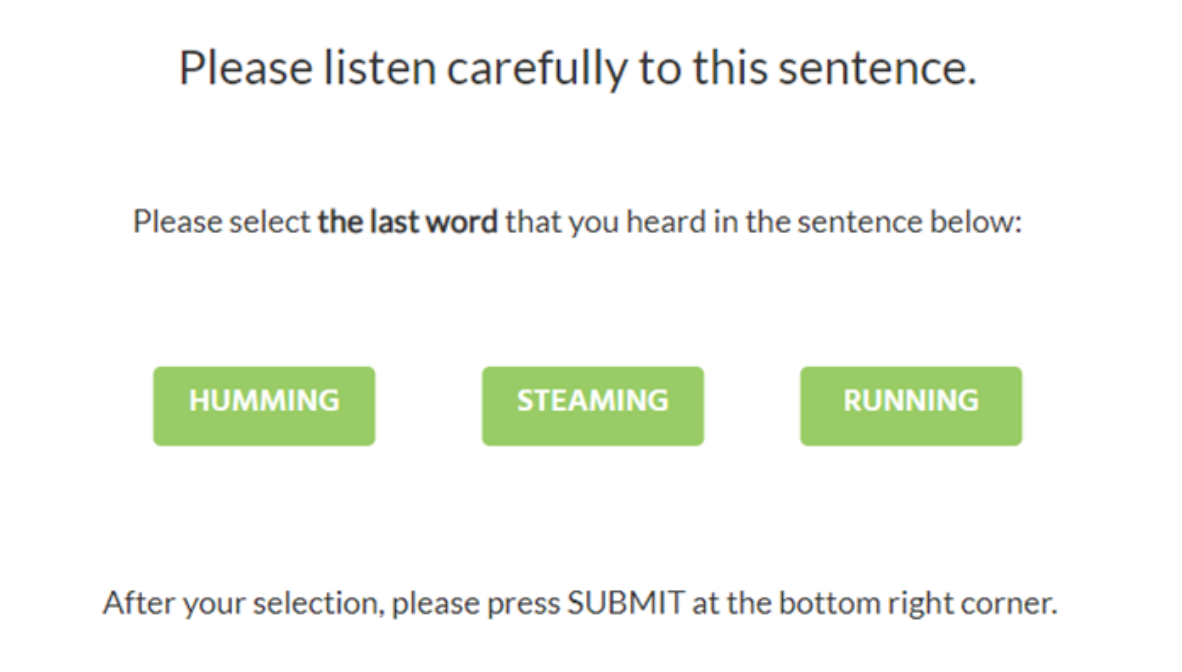
    Labvancedで実施されたBKB文テストの例。
    Requena-Komuro et al., 2022 再利用はCC BYの下で許可されています。BMJにより発表されました。 CC BY 4.0

    上の例では、話された文は「The car engine’s running」で、参加者は聞いた最後の単語を示す必要がありました。各文には、ターゲットと一緒に表示される2つのフォイルがあり、どちらもターゲットを置き換えた際に文の中で意味を成しました。また、フォイルの1つはターゲット単語におおよそ韻を踏んで選ばれました(例えば、ここでは「humming」になります)。

    Labvancedライブラリで公開されたこの修正されたBKBタスクをご覧ください!

    参考文献

    Bench, J., Kowal, Å., & Bamford, J. (1979). The BKB (Bamford-Kowal-Bench) sentence lists for partially-hearing children. British Journal of Audiology, 13(3), 108–112.

    Billings, C. J., Olsen, T. M., Charney, L., Madsen, B. M., & Holmes, C. E. (2024, February). Speech-in-noise testing: An introduction for audiologists. In Seminars in Hearing (Vol. 45, No. 01, pp. 055–082). Thieme Medical Publishers, Inc.

    Chen, Y., Wong, L. L., Chan, S. S., & Yu, J. (2022). Speech perception in noise is associated with different cognitive abilities in Chinese-speaking older adults with and without hearing aids. Frontiers in Psychology, 12, 640300.

    Gavin, K., Eckert, A., & Gural-Toth, V. (2021). Incorporating Speech-in-Noise Testing in the Pediatric Test Battery. The Hearing Journal, 74(7), 16.

    Holder, J. T., Sheffield, S. W., & Gifford, R. H. (2016). Speech understanding in children with normal hearing: Sound field normative data for BabyBio, BKB-SIN, and QuickSIN. Otology & Neurotology, 37(2), e50–e55.

    Moossavi, A., Mehrkian, S., Karami, F., Biglarian, A., & Bakhtiari, B.M. (2017). Developing of Persian version of the BKB sentences and content validity assessment. Auditory and Vestibular Research, 26, 27–33.

    Nilsson, M., Soli, S. D., & Sullivan, J. A. (1994). Development of the Hearing in Noise Test for the measurement of speech reception thresholds in quiet and in noise. The journal of the acoustical society of America, 95(2), 1085-1099.

    Papesh, M. A., Stefl, A. A., Gallun, F. J., & Billings, C. J. (2021). Effects of signal type and noise background on auditory evoked potential N1, P2, and P3 measurements in blast-exposed veterans. Ear and Hearing, 42(1), 106–121.

    Requena-Komuro, M. C., Jiang, J., Dobson, L., Benhamou, E., Russell, L., Bond, R. L., ... & Hardy, C. J. (2022). Remote versus face-to-face neuropsychological testing for dementia research: a comparative study in people with Alzheimer’s disease, frontotemporal dementia and healthy older individuals. BMJ Open, 12(11), e064576.

    Vickers, D., Eyles, J., Brinton, J., Glasberg, B., & Graham, J. (2009). Conversion of scores between Bamford, Kowal and Bench (BKB) sentences and Arthur Boothroyd (AB) words in quiet for cochlear implant patients. Cochlear Implants International, 10(3), 142–149.

    Wiggins, I. M., Stacey, J. E., Naylor, G., & Saunders, G. H. (2025). Relationships between subjective and objective measures of listening accuracy and effort in an online speech-in-noise study. Ear and Hearing, 10–1097.

    Xi, X., Li, J. N., Yuen, K. C., Chen, A. T., Li, S. Q., Hong, M. D., ... & Ching, T. Y. (2023). List equivalency and critical differences of a Mandarin Bamford-Kowal-Bench sentence in babble noise test for adults and preschool children with normal hearing. Journal of Speech, Language, and Hearing Research, 66(12), 5061–5070.

    Xu, J., & Cox, R. M. (2021). Interactions between cognition and hearing aid compression release time: Effects of linguistic context of speech test materials on speech-in-noise performance. Audiology Research, 11(2), 129–149.