labvanced logoLabVanced
Contact
    • Remote Physiological Measurements
    • Eye Tracking
    • Head & Face-Tracking
    • Emotion Detection
    • Heart Rate Detection (rPPG)
    • Generative AI
    • Audio Transcription
    • EEG & Hardware Integrations
    • Decision Making
    • Reaction Times
    • Keyboard Inputs
    • Mouse Tracking
    • Mobile / Touch
    • Questionnaires
    • Gamepad / Joystick Integration
    • Audio Recordings
    • Audio Transcription
    • Video Recordings
    • Screen Recordings
    • Photos / Snapshots
    • Video Conferencing
    • Canvas Drawings
    • Build with AI
    • Build with Spreadsheets
    • Using the Experiment Editor
    • Coding
    • Creating Questionnaires
    • Balancing & Randomization
    • UX & Website Testing
    • Single Session Studies
    • Factorial Designs
    • Longitudinal & Multi-session Studies
    • Individual & Case Studies
    • Real-time Multi-user Studies
    • Interviews & Video Calls
    • Surveys & Questionnaires
    • Experience Sampling & Diaries
    • Classroom & Group Testing
    • Interventions & Clinical Trials
    • In the Browser
    • Mobile App
    • Desktop App
    • WebBridge Chrome Extension
    • Stroop Test
    • Flanker Task
    • N-back Task
    • Implicit Association Test
    • Trail Making Test
    • Digit Span
    • Corsi Block Tapping
    • Tower of London
    • Balloon Analog Risk Task
    • Preferential Looking
    • Browse more →
    • DASS-21
    • GAD-7
    • Rosenberg Self-Esteem Scale
    • PHQ-9
    • Ten-Item Personality Inventory
    • Big Five Personality Test
    • Adult ADHD Self-Report Scale
    • Browse more →
    • Building a Multi-user Study
    • Webcam Eye Tracking with AOIs
    • Website Frame Eye Tracking
    • Conditional Eye Tracking Opt-in
    • ChatGPT Study
    • Desktop App Study with EEG
    • Between-subjects Group Balancing
    • Building a Reading Study
    • Stroop Task
    • Lexical Decision Task
    • Browse more →
    Public Experiment Library
    • Arts Research
    • Clinical Psychology & Neuropsychology Medicine
    • Cognitive Psychology
    • Developmental Psychology
    • Behavioral Economics & Decision Science
    • Educational Research & Psychology
    • HCI & Human Factors
    • Linguistics & Language Sciences
    • Consumer & Marketing Research
    • Social & Personality Psychology
    • Sport & Movement Science
    • UX & Website Testing
    • Executive Functions
    • Language & Reading
    • Decision-Making & Reasoning
    • Attention
    • Overview
    • HCI & Human Factors
    • UX & Website Testing
    • Consumer & Marketing Research
    • White-Label App
    • PageGazer
    • Webcam vs. Lab Eye Tracking in InfantsAnna Banki & Gabriela Markova
    • Eye Tracking for Influencer MarketingDr. Alexander Edeling
    • Eye Tracking Infant Word ComprehensionDr. Giulia Calignano
    • Sentence Reading and Grammar JudgmentsDr. Jonathan Mirault
    • Regulating Emotions with MusicDr. Katrin Starcke
    • Game-Based Grammar Learning in ChildrenDr. Mireia Marimon
    • Gaze Cueing and AutismMax Soares Miehstein
    • Personality and Hearing in NoiseDr. Malte Wöstmann
    • All interviews →
    • Lab Notes
    • How to Cite Labvanced
    • Labvanced Platform Paper (2017)
    • Webcam Eye Tracking Validation (2024)
    • Webcam Eye Tracking Studies
    • Cognitive Psychology Studies
    • Developmental Psychology Studies
    • Linguistics Studies
    • See all publications →
    • Getting Started
    • Guide
    • Video Tutorials
    • Walkthroughs
    • Live Chat
    • Webinars & Onboarding Calls
    • AI Assistant
    • FAQ
    • Importing Templates Guide
    • Test Templates
    • Live Eye Tracking Metrics
    • Mouse Tracking Demo
    • ChatGPT Demo
    • Audio Recording Object Demo
    • Adding Image Stimuli Demo
    • Score & Feedback Demo
    • Browse all technical demos →
    • Timing Precision
    • Stimuli Presentation
    • Headphone Checks
    • Bot Checks
    • Participant Management
    • Comparisons
    • Research Blog
    • Prolific Integration
    • CloudResearch Integration
    • Sona Systems Integration
    • BeSample Integration
    • Panelabs Integration
    • Clickworker Integration
    • Labvanced Webhook API
    • Labvanced REST API
    • About Us
    • Newsletter Archive
    • Terms & Conditions
    • Data Security & Data Privacy
    • Technical & Organisational Measures
    • Accessibility
    • W-8BEN-E Form
    • Data Processing Agreement Template
    LinkedInYouTubeDiscord
    • Individual
    • Lab
    • Department / Consortium
    • Teaching
    • Campus
    • Commercial
    Top-Ups
    • Overview
    • Study Building
    • Subject Recruitment
    • Dedicated Support
    Checkout
  • Contact
    • ZH
      • 中國人
      • Deutsch
      • Français
      • Español
      • English
      • 日本語
    • Appgo to app icon
    • Loginlogin icon
    Platform
    Labvanced makes it easy to implement the most advanced study design and reliably collect your data.
    Biosignals & AI
    Remote Physiological MeasurementsEye TrackingHead & Face-TrackingEmotion DetectionHeart Rate Detection (rPPG)Generative AIAudio TranscriptionEEG & Hardware Integrations
    Behavioral Recordings
    Decision MakingReaction TimesKeyboard InputsMouse TrackingMobile / TouchQuestionnairesGamepad / Joystick Integration
    Media Recordings
    Audio RecordingsAudio TranscriptionVideo RecordingsScreen RecordingsPhotos / SnapshotsVideo ConferencingCanvas Drawings
    Implementation Techniques
    Build with AIBuild with SpreadsheetsUsing the Experiment EditorCodingCreating QuestionnairesBalancing & RandomizationUX & Website Testing
    Study Formats

    Your study can take whatever format your research needs. Here are a few popular examples.

    Single Session StudiesFactorial DesignsLongitudinal & Multi-session StudiesIndividual & Case StudiesReal-time Multi-user StudiesInterviews & Video CallsSurveys & QuestionnairesExperience Sampling & DiariesClassroom & Group TestingInterventions & Clinical Trials
    Where Studies Run

    Run your study online in the browser, on mobile or tablet with the mobile app, or in-lab with the desktop app.

    In the BrowserMobile AppDesktop AppWebBridge Chrome Extension
    Tests
    Explore cognitive tests, questionnaires, walkthroughs, and our public experiment library: a starting point for your next study.
    Popular Cognitive Tests
    Stroop TestFlanker TaskN-back TaskImplicit Association TestTrail Making TestDigit SpanCorsi Block TappingTower of LondonBalloon Analog Risk TaskPreferential Looking
    Browse more →
    Questionnaires & Scales
    DASS-21GAD-7Rosenberg Self-Esteem ScalePHQ-9Ten-Item Personality InventoryBig Five Personality TestAdult ADHD Self-Report Scale
    Browse more →
    Public Experiment Library

    Take a look at what other researchers in the community are doing through our extensive, open catalog of shared studies.

    Open the public library →
    Walkthroughs

    Step-by-step builds of complete studies, from a blank project to a running experiment, that you can follow along or adapt.

    Building a Multi-user StudyWebcam Eye Tracking with AOIsWebsite Frame Eye TrackingConditional Eye Tracking Opt-inChatGPT StudyDesktop App Study with EEGBetween-subjects Group BalancingBuilding a Reading StudyStroop TaskLexical Decision Task
    Browse more →
    Research
    One platform for students, academics, and industry researchers studying human behavior.
    Harvard UniversityStanford UniversityCambridge UniversityUCLNYUMax Planck InstituteUCLATU Munich

    Trusted by researchers at 1,500+ universities worldwide

    Academic Research
    Arts ResearchClinical Psychology & Neuropsychology MedicineCognitive PsychologyDevelopmental PsychologyBehavioral Economics & Decision ScienceEducational Research & PsychologyHCI & Human FactorsLinguistics & Language SciencesConsumer & Marketing ResearchSocial & Personality PsychologySport & Movement ScienceUX & Website Testing
    Research Areas
    Executive FunctionsLanguage & ReadingDecision-Making & ReasoningAttention
    Industry / Commercial
    OverviewHCI & Human FactorsUX & Website TestingConsumer & Marketing ResearchWhite-Label AppPageGazer
    Researcher Interviews

    Conversations with researchers about the studies they ran with Labvanced, what worked, and what they learned.

    Webcam vs. Lab Eye Tracking in InfantsAnna Banki & Gabriela MarkovaEye Tracking for Influencer MarketingDr. Alexander EdelingEye Tracking Infant Word ComprehensionDr. Giulia CalignanoSentence Reading and Grammar JudgmentsDr. Jonathan MiraultRegulating Emotions with MusicDr. Katrin StarckeGame-Based Grammar Learning in ChildrenDr. Mireia MarimonGaze Cueing and AutismMax Soares MiehsteinPersonality and Hearing in NoiseDr. Malte Wöstmann
    All interviews →
    Our Research
    Lab NotesHow to Cite Labvanced
    Peer Reviewed Studies

    A selection of peer-reviewed work built on Labvanced: our own platform and validation papers, and studies by the research community grouped by area. Hundreds more are listed on the full publications page.

    Labvanced Platform Paper (2017)Webcam Eye Tracking Validation (2024)Webcam Eye Tracking StudiesCognitive Psychology StudiesDevelopmental Psychology StudiesLinguistics Studies
    See all publications →
    Resources
    Valuable resources to help you learn the platform, stay updated, and more.
    Documentation
    Getting StartedGuideVideo TutorialsWalkthroughs
    Support
    Live ChatWebinars & Onboarding CallsAI AssistantFAQ
    Templates & Demos

    These are a few popular examples. Browse our guide and a selection of technical demos to get started with implementation.

    Importing Templates GuideTest TemplatesLive Eye Tracking MetricsMouse Tracking DemoChatGPT DemoAudio Recording Object DemoAdding Image Stimuli DemoScore & Feedback Demo
    Browse all technical demos →
    Methodology
    Timing PrecisionStimuli PresentationHeadphone ChecksBot ChecksParticipant ManagementComparisonsResearch Blog
    Integrations & APIs
    Prolific IntegrationCloudResearch IntegrationSona Systems IntegrationBeSample IntegrationPanelabs IntegrationClickworker IntegrationLabvanced Webhook APILabvanced REST API
    Company & Legal
    About UsNewsletter ArchiveTerms & ConditionsData Security & Data PrivacyTechnical & Organisational MeasuresAccessibilityW-8BEN-E FormData Processing Agreement Template
    LinkedInYouTubeDiscord
    Pricing
    Our licenses and additional services at a glance.
    Licenses
    IndividualLabDepartment / ConsortiumTeachingCampusCommercial
    Top-Ups

    Need more recordings for your lab or your own research? Simply use one of these recording top-up packages.

    Browse top-up packages →
    Additional Services

    Hire Labvanced’s expert team to quickly bring your project to the level of rigor it needs.

    OverviewStudy BuildingSubject RecruitmentDedicated Support
    Checkout

    Ready to purchase a license or top-up? Head straight to checkout.

    Go to checkout →
    • 中國人
    • Deutsch
    • Français
    • Español
    • English
    • 日本語
    • 入门
    • 指南
      • 入门

        • 任务编辑器
        • 框架
          • 画布框架
          • 页面框架
          • 网站框架
        • 试验时间线
        • 刺激呈现
        • 反应的正确性
        • 对象
        • 事件
        • 变量
        • 任务向导
        • AI助手
        • 试验系统
        • 实验设计
          • 创建研究
          • 在 Labvanced 中导入模板
          • 数据框模式
          • 多用户实验设计
          • 纵向实验设计
      • 特色主题

        • 随机化与平衡
        • 眼动追踪
          • 在眼动追踪任务中呈现刺激
          • 如何选择眼动追踪校准设置
          • 在任务中设置眼动追踪
          • 记录和导出注视数据
          • 使用形状作为兴趣区域 (AOI) 进行眼动跟踪
          • 参与者校准体验
        • 网络桥接
          • 选择网站 AOI | 锚点、调整和验证 AOI 跟踪
          • 在网站区域(AOI)上跟踪鼠标行为 | Web Bridge指南
        • 问卷
        • 桌面应用
        • 示例研究
        • 参与者招募
        • API访问
          • REST API
          • Webhook API
          • WebSocket API
        • 其他主题

          • 精确刺激时序
          • 多用户研究
          • 头部追踪在 Labvanced 中 | 指南
      • 主应用标签

        • 概述:主标签
        • 仪表板
        • 我的研究
        • 共享研究
        • 我的文件
        • 实验库
        • 我的账户
        • 许可与服务
      • 研究标签

        • 概述:研究特定标签
        • 研究设计
          • 任务
          • 区块
          • 会话
          • 组
        • 任务编辑器
          • 任务控制
          • 试验系统
          • 框架类型
          • 对象
          • 对象属性表
          • 变量
          • 系统变量表
          • 事件系统
          • 文本编辑器功能
          • 任务编辑器中的眼动追踪选项
          • 任务中的头部追踪
          • 多用户研究
        • 设置
        • 变量
        • 媒体
        • 文本与翻译
        • 启动与参与
        • 受试者管理
        • 数据视图与导出
    • 视频教程
      • 视频概述
      • 在Labvanced中入门
      • 创建任务
      • 元素视频
      • 事件与变量
      • 高级主题
    • 演练
      • 介绍
      • 斯特鲁普任务
      • 词汇决策任务
      • 波斯纳注视提示任务
      • 变化盲点闪烁范例
      • 眼动追踪示例研究
      • 婴儿眼动追踪研究
      • 基于鼠标跟踪的注意力捕获研究
      • 快速串行视觉呈现
      • ChatGPT研究
      • 眼动追踪演示:SVG作为AOI
      • 多用户演示:显示受试者光标
      • 游戏手柄/摇杆控制器-基础设置
      • 集成EEG的桌面应用程序研究
      • 被试间组平衡和变量设置
      • 构建多用户研究
      • 网站框架眼动追踪演练
      • 条件性网络摄像头眼动追踪
      • 文本分割研究构建
      • 构建AI研究
    • 常见问题
      • 功能
      • 支持政策和指南
      • 安全与数据隐私
      • 许可
      • Labvanced的精确度
      • 编程使用与API
      • 离线使用Labvanced
      • 故障排除
      • 研究创建问题
    Illustration of the Labvanced AI Assistant building a study in the editor

    使用 AI 助手构建研究

    本指南遵循用于通过 Labvanced AI 助手构建真实演示研究的提示:一个同意页面、两个问卷框和一个根据参与者先前答案进行分类的结果框。每个步骤展示提示、助手构建的内容以及在继续之前需要检查的内容。有关该功能的概述,请参见 Build with AI。

    Illustration of the Labvanced AI Assistant
    用 AI 构建 - 同意书和问卷

    本指南构建的库研究:使用 AI 助手创建的四个框架。将其导入到您的帐户中以检查每个元素和事件。

    目录

    • 前提知识
    • 打开 AI 助手
    • 构建研究
      • 步骤 1:同意页面
      • 步骤 2:人口统计问卷
      • 步骤 3:第二个问卷框
      • 步骤 4:JavaScript 分类
      • 步骤 5:带形状的结果框
      • 步骤 6:检查结果
    • 本次构建的提示技巧
    • 进一步阅读

    前提知识

    使用 AI 助手构建不需要技术知识,但对平台及其术语的一些熟悉是有用的。在提示中命名框架类型、元素和变量可以让助手拥有您研究的词汇,从而获得更准确的结果。助手还会回答有关 Labvanced 如何工作的提问,因此您可以在不熟悉某个术语时向其提问。以下页面涵盖本指南中最常用的三个概念。
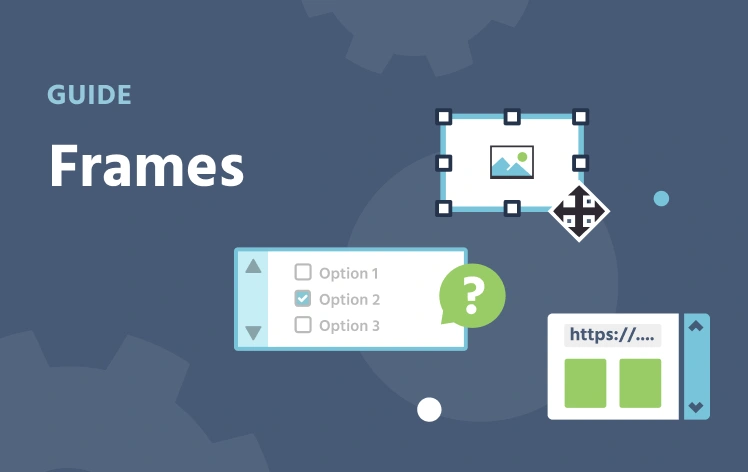

    Illustration of the three frame types in Labvanced: Canvas, Page, and Website Frame

    框架

    持有参与者在试验中每一时刻所见内容的构建块。

    Illustration of the Labvanced event system

    事件

    控制研究中发生事件的触发和动作逻辑。

    Illustration of working with variables in Labvanced

    处理变量

    数据如何在框架间录制、存储和重用。

    打开 AI 助手

    1. 打开您的研究并选择要构建的任务。
    2. 在任务编辑器的左下角,打开 AI Assistant 部分。
    3. 如果您想要一个较大的聊天窗口,请点击部分标题中的 Open in separate window 图标。通过顶部角落的 x 关闭窗口,以将聊天返回到面板。
    4. 在 Ask a question... 字段中输入您的提示,然后点击 Send。

    助手在不更改任何内容的情况下回答问题。只有在您请求更改并允许后,它才会更改您的研究,这一步骤展示了这一过程。AI 助手指南 详细描述了该面板。

    构建研究

    步骤 1:同意页面

    从一个空任务的第一个框架开始。提示请求内容、框架类型和导航,因为说明目的让助手能够合理填补空白。

    请添加一个文本框对象,标题为同意书,并提供有关参与研究的一般信息。它应该在页面框架上,并在底部包含一个“下一步”按钮,以导航到下一个框架。
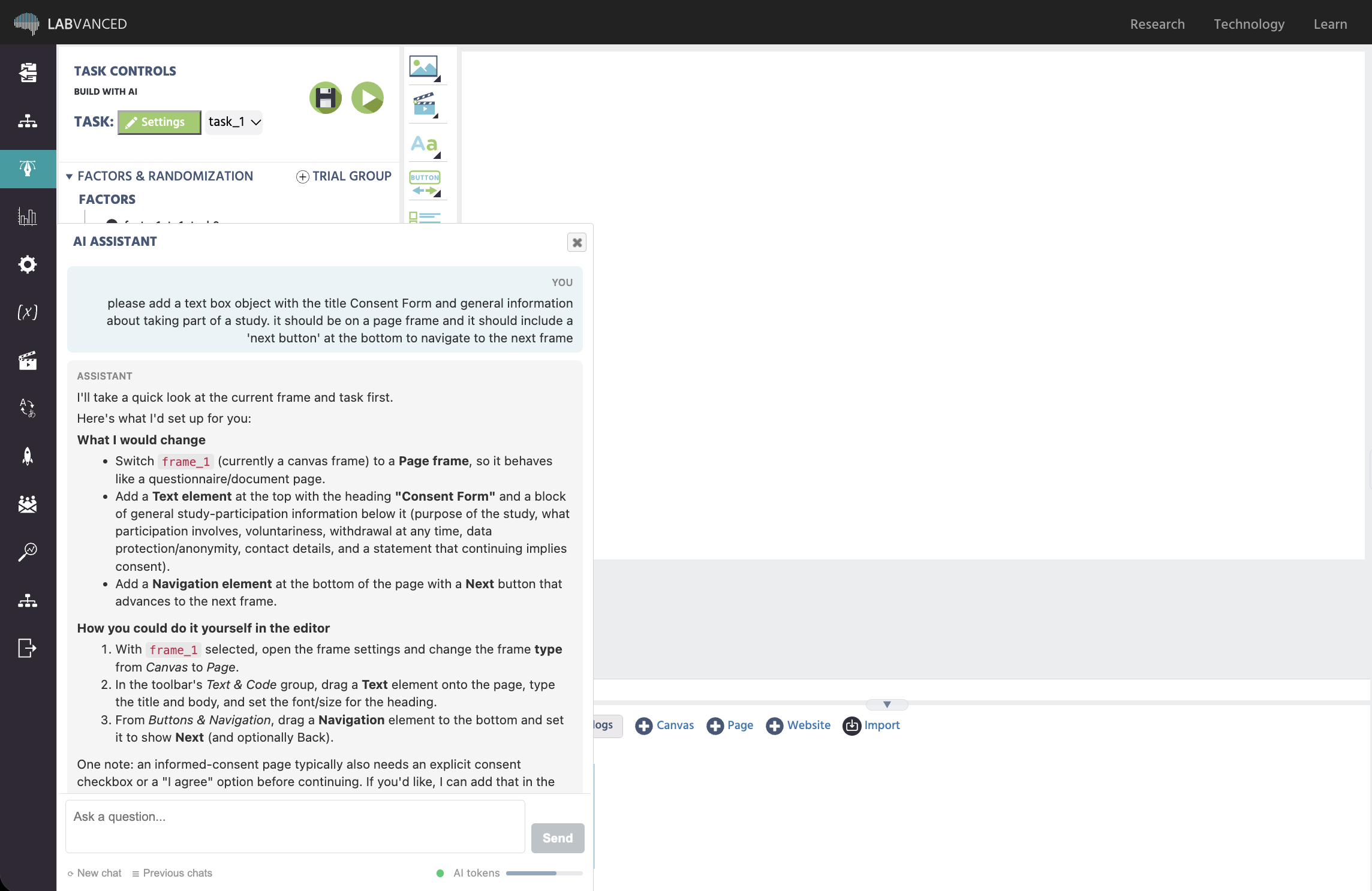
    The Labvanced AI Assistant answering the consent form prompt with a plan of what it would change
    1. 发送提示。
    2. 阅读计划。助手描述它将更改的内容以及您如何手动进行更改。
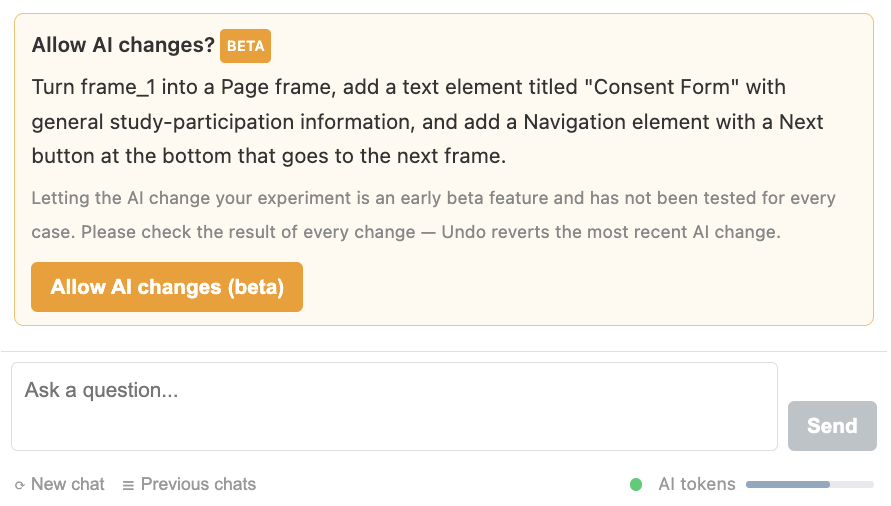
    3. 审核出现的 Allow AI changes? 卡片。它以一句话重复了更改,并携带 beta 徽章。
    4. 点击 Allow AI changes (beta)。
    The Allow AI changes beta permission card in the Labvanced AI Assistant panel

    注意:权限卡每个聊天过程中出现一次。在您允许更改后,输入框上方会显示 AI changes allowed,并有 Undo 和 Turn off 按钮。

    助手然后构建页面并报告结果。框架 1 现在是一个页面框架,具有名为 consent_text 的文本元素和名为 consent_nav 的导航元素,以及一个 Next 按钮。创建的导航元素产生了自己的事件 Go Forward,该事件跳转到下一个框架,因此不需要额外的布线。
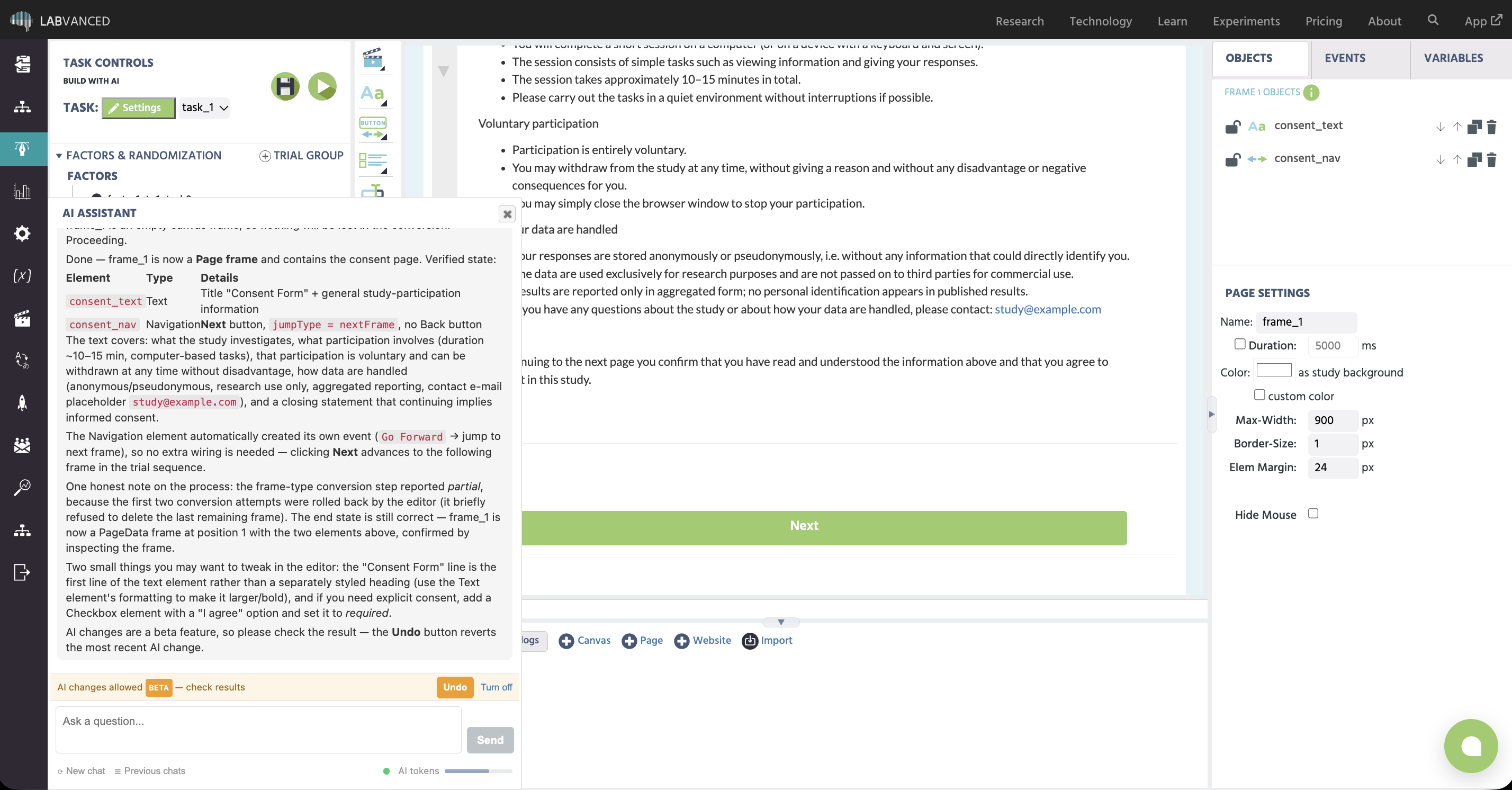
    The consent page built by the Labvanced AI Assistant next to its report listing the elements it created

    在继续之前请检查以下内容:

    1. 打开同意文本,将占位符联系地址替换为您自己的地址。
    2. 让您的伦理委员会批准最终文字。
    3. 如果您希望 Consent Form 行更大,请将其样式设为标题,因为助手将其写成文本元素的第一行。
    4. 如果您的协议要求一个明确的同意复选框,请请求添加。助手在报告中会建议这一点。

    步骤 2:人口统计问卷

    在请求助手构建之前,先向助手询问想法。

    我现在可以添加什么作为第二个框架?

    助手列出下一个框架的选项。该研究继续使用一个人口统计页面,通过将所选选项粘贴到后续提示中进行请求。

    请应用人口统计 / 筛选页面:年龄、性别、惯用手、以往经验(输入、选择、李克特元素)。
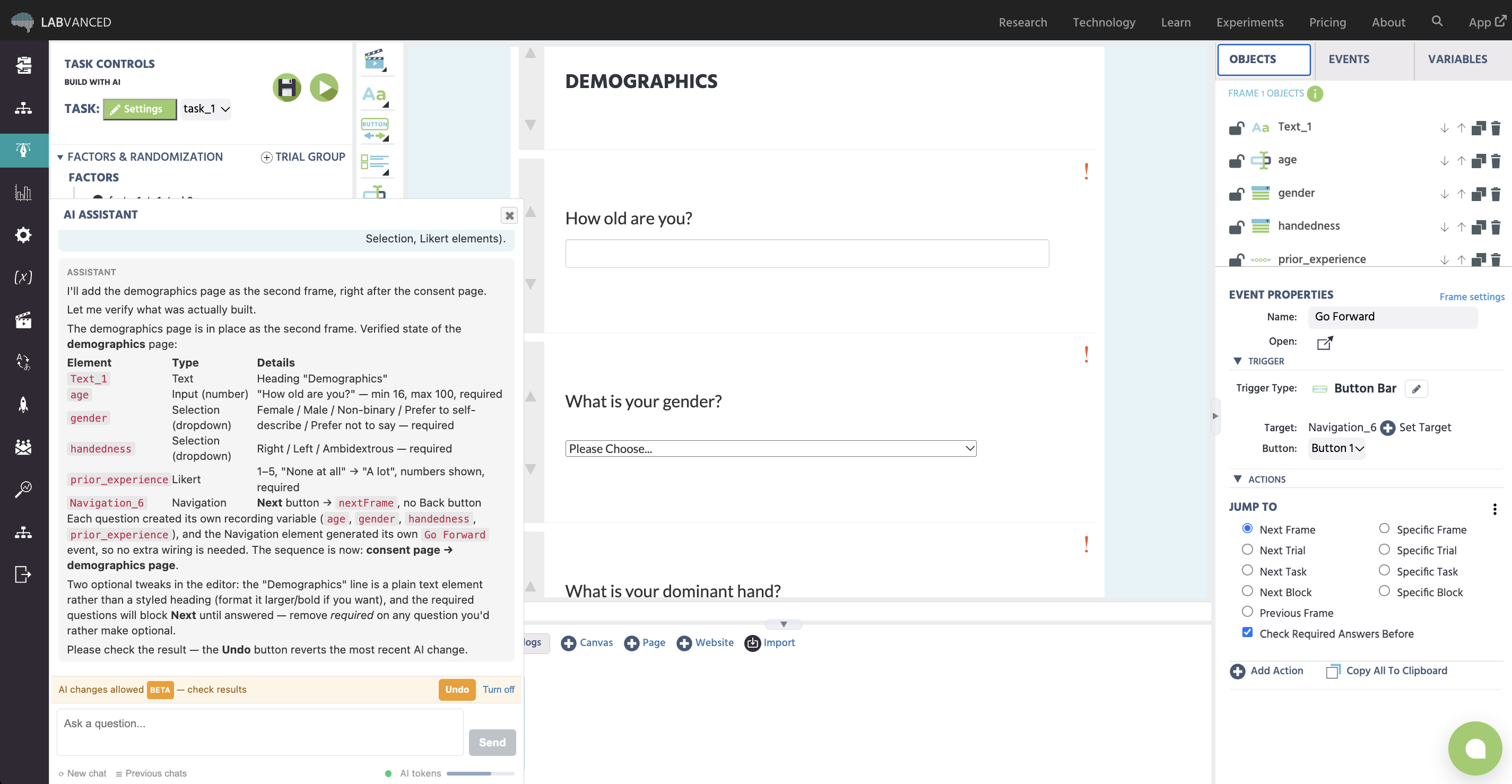
    Labvanced AI Assistant创建的人口统计框架,报告列出元素和变量

    助理在同意页面之后添加了框架 2,并报告其构建的内容:一个标题,一个名为 age 的输入元素,两个名为 gender 和 handedness 的选择元素,一个名为 prior_experience 的李克特元素,以及一个导航元素。每个问题都有其自己的记录变量,名称与元素相同,导航元素创建了其 Go Forward 事件。

    继续之前,请检查以下内容:

    1. 打开 Variables 选项卡,确认 age、gender、handedness 和 prior_experience 存在。
    2. 检查 age 输入的最小值和最大值,是否符合您的纳入标准。
    3. 移除任何参与者应该能够跳过的问题的必填标记。必填问题会阻止 Next 按钮在回答之前被点击。

    第 3 步:第二个问卷框

    请求第三个框,包含更多使用了前一个框未使用的问题类型的人口统计问题。这显示助理可以在一次请求中放置多少种问题类型。在演示研究中,此框包含一个范围元素 (computer_hours)、一个按经验领域每行设置的矩阵 (exp_videogames、exp_surveys、exp_eyetracking、exp_programming),以及六种设备类型的复选框 (device_desktop 到 device_smartwatch)。

    助理为每个范围、矩阵行和复选框创建一个记录变量,这就是为什么后面的步骤可以通过名称引用它们。

    第 4 步:JavaScript 分类

    第四个框将研究推向了问卷之外。提示以简单的语言描述了目标,并使用 Labvanced 的术语来描述机制:一个 JavaScript 动作,以及一个保存结果的链接变量。

    在第四个框中,让我们做一些更具创意的事情。比如,如果我们有一个分析几个先前答案的 JavaScript 动作,然后报告某种“分类”(这可以是一个链接变量)
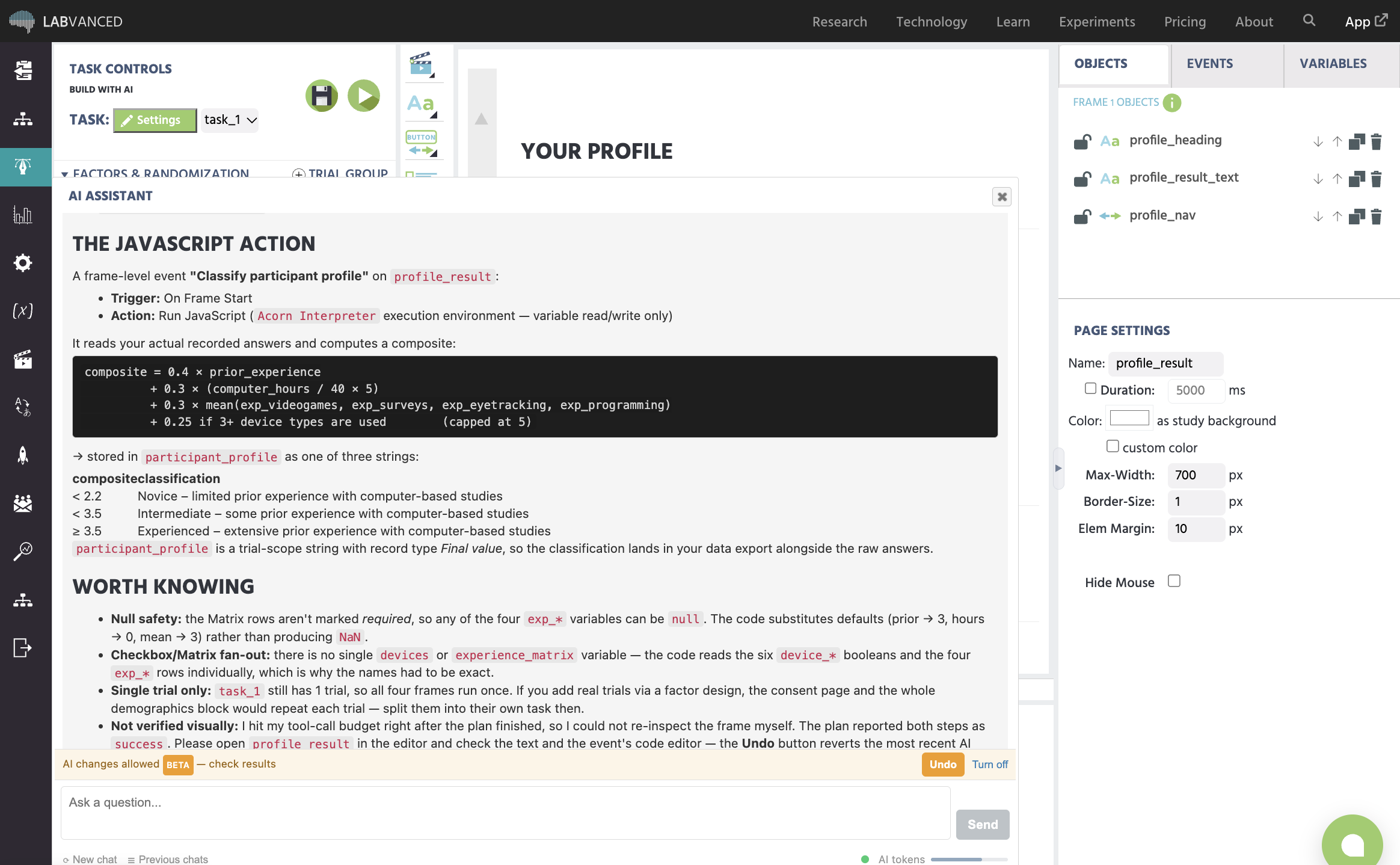
    Labvanced AI Assistant 创建的 JavaScript 动作,解释了综合得分和分类

    像 JavaScript action 和 linked variable 这样的术语告诉助理使用 Labvanced 的哪些部分。没有它们的提示可能导致与您想要的机制不同。

    助理为分类构建了一个框架级别事件。

    触发条件: On Frame Start
    动作: Run JavaScript

    该脚本读取记录的答案,计算从以往经验、每周计算机使用、四个经验评定和使用的设备类型数量中得出的加权综合得分,并将三个标签之一 (Novice、Intermediate 或 Experienced) 存储在名为 participant_profile 的变量中。该变量以最终值形式记录,因此分类会与原始答案一起出现在数据导出中。

    第 5 步:具有形状的结果框

    此框的第一个版本是一个页面框。助理继续使用该框类型,然后在尝试可视化资料时遇到了限制。

    页面框不能容纳形状(矩形/椭圆仅限于画布),所以我将其以实时仪表盘、样式化卡片和数据细分的形式呈现。

    停止助理并重新引导它得到了更好的结果。这个提示将框转换为一个可视化结果页面。

    页面框不能容纳形状,所以也许可以把它改为画布框?

    助理将结果重建为一个画布框,包含一个标题、一个显示分类的彩色徽章、一个包含三个范围的得分仪表,以及一个“这是如何计算的”细分。在经过几轮微调后,结果是一个可呈现的结果页面。
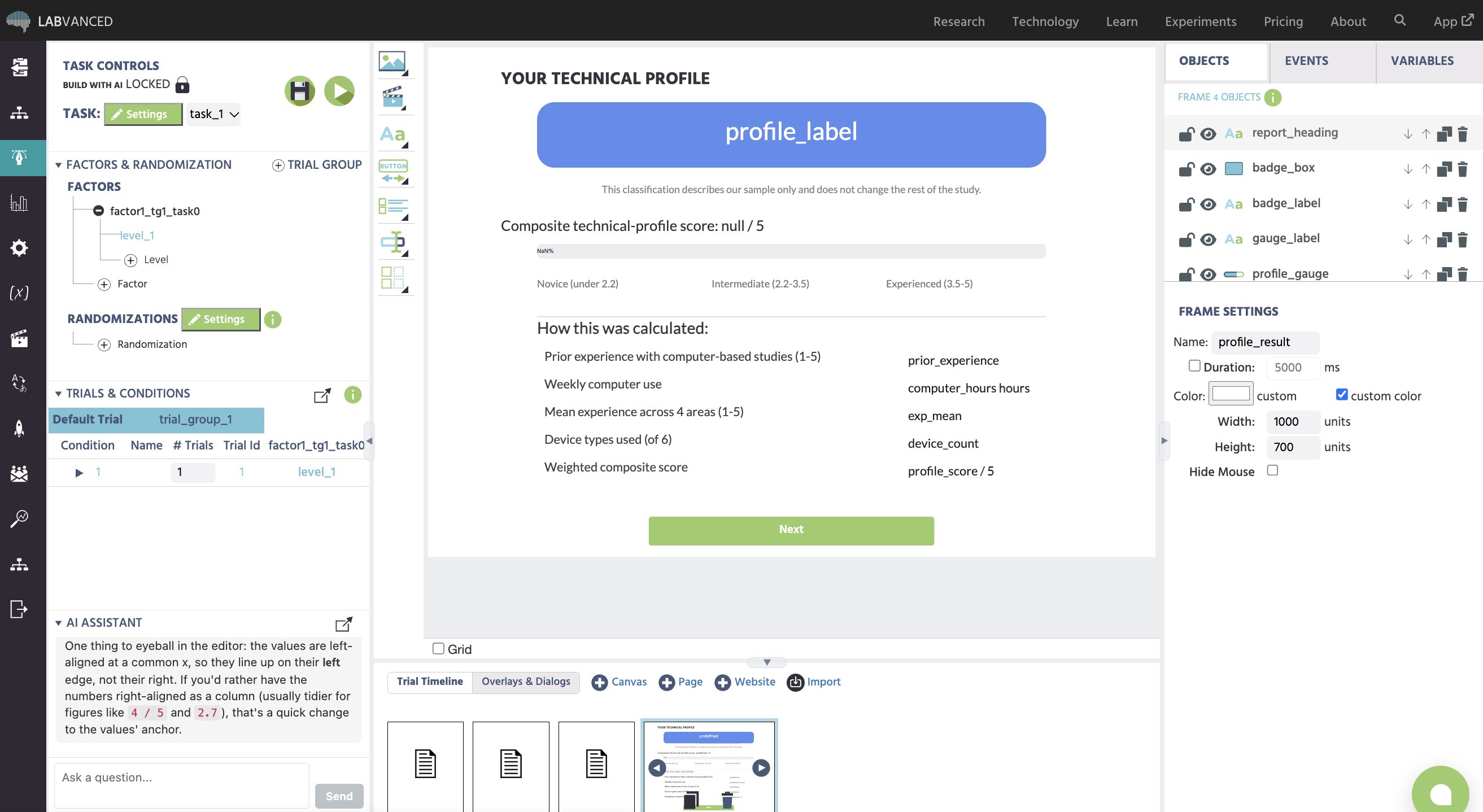
    Labvanced AI Assistant 在画布框上构建的结果框,包含徽章、仪表盘和计算细分

    注意:在编辑器中,链接到变量的字段在研究运行之前显示变量名称或空值。当参与者完成早期框时,值会出现。

    第 6 步:检查结果

    请求助理在新的操作中进行只读检查,例如 now verify frame 4,然后您自己在编辑器中打开框。在演示研究中,检查确认脚本使用的所有 13 个变量名称存在并具有匹配类型,并列出了需要了解的要点:

    • 矩阵行不是必填的,因此参与者可以在不对每个领域进行评分的情况下达到分类。脚本会替代默认值,因此分类可以在少于预期的评分上完成。
    • 结果框是任务的最后一个框,因此其 Next 按钮结束试验。
    • 该任务有一个试验。如果您后来添加试验,同意页面和人口统计框会在每个试验中重复,因此请将它们移入自己的任务中。
    • 两个文本片段在结果页面上并行运行,因为没有空格将变量标记与后面的句子分开。在标记后插入空格或换行符。

    助理在这里列出的所有内容都是需要您在编辑器中确认或修复的项目。如果更改不成功,Undo 按钮可以恢复最近的 AI 更改。

    本次构建的提示

    • 告诉目的,而不只是部分:一个带有 Next 按钮的同意页面比单独请求文本框的结果更好。
    • 使用平台术语:框类型、元素、事件和链接变量。
    • 迅速重定向:停止助理并命名您想要的框类型比让它继续在错误的框中成本更低。
    • 首先请求想法,然后选择一个并请求它。
    • 在单独的操作中检查:构建后请求只读验证。

    AI 助理指南 收集了完整的提示列表,并解释了助理回复背后的工具调用预算。
    进一步阅读

    Labvanced AI 助理指南的插图

    AI 助理

    面板如何工作、提示技巧和工具调用预算。

    Labvanced 中页面框的插图

    页面框

    用于问卷和文档风格页面的框类型。

    Labvanced 中运行 JavaScript 动作的插图

    运行 JavaScript 动作

    本研究中分类背后的动作。

    Prev
    文本分割研究构建